Agriculture led to a profound transformation of human societies. No longer did people have to travel miles to find food, they simply had to grow it in a given area. This led to the sedentarization and multiplication of human populations across the planet. Farming has never been a prestigious profession, yet no civilization has been able to do without it. You only have to look at the repercussions of years when harvests have failed to show the importance of the agricultural world.
Except that, today, agriculture no longer interests many people. For a start, because the work is hard and practically year-round, with no real opportunity for vacations. It has also been complicated by a food industry that demands high volumes, and by climate change, which greatly destabilizes production and yields. Whether it's an overabundance or lack of rainfall, the increased presence of pests in the fields, disrupted agricultural cycles or the multiplication of extreme events, the environmental situation does nothing to make farmers' work any easier.
Young people flock to agricultural technologies
And yet, while a few years ago the next generation of farmers seemed to be in peril, the current picture is less dramatic. It's not yet an ideal situation, but, against all odds, many young adults are keen to take over family production or even start up in the agri-food industry.
Why is this? Agricultural technology (agtech) undoubtedly has something to do with it. We now know that machines are radically improving in the agricultural world. The emergence of drones enables landowners to monitor their fields without having to walk over vast expanses. Applications and software are multiplying and facilitating the work of farmers, who can quickly and easily analyze soil hydration, fertilizer levels, forecast the weather ahead, and so on.
The link with youth? Their adoption of these technologies is far greater than that of their elders. Because the farming world has always been open to techniques that simplify life, but when they use means that are more technological than natural, mistrust increases. This survey of Chinese farmers shows that the state-led modernization of 2023 was viewed with some skepticism. In fact, respondents said it was important for them to be shown that it will bring tangible benefits and really make their lives easier, rather than adding tasks. Young people, meanwhile, are already seeing the potential of agtech in their farming methods and daily lives.
Among young American farmers, for example, the use of technology to pay bills, check weather forecasts or ensure they reduce the ecological footprint of their activities is clearly on the rise compared to their counterparts over 40. Analyses of the potential for, or adoption of, precision farming show that young people, whether established or just starting out in agriculture, are far more interested than their elders.
Possibilities held back by costs
Indeed, they are quick to see the possibilities of making life easier for themselves, while ensuring that their plantations or farms are more resilient. On the African continent, for example, applications created by organizations supported by the FAO (Food and Agriculture Organization of the United Nations) enable users to track the pests threatening their fields and whether they have caused any damage, or literally to obtain advice on animal care and feeding or market values.
Social networks are used by young farmers in Côte d'Ivoire and Benin to set up groups to keep abreast of prices, track fraudsters and show off their techniques and products to attract customers and new farmers. And that's not counting all the resources being created online to find out more about plants, processes, knowledge and so on. Aggregators and communities are springing up to share knowledge and help each other.
This technological openness is increasingly evident not only in the fields, but also on the school benches. Agricultural training programs all over the world are gradually integrating these tools, which will become indispensable in the coming years and decades.
What really seems to be holding back use, even among young people, is the still high cost of many technologies. Not to mention the fact that inflation, increases in the cost of certain computer components and high customs tariffs make it even harder to buy without breaking the bank.
What's more, it has to be said that the digital divide is still present in many rural communities, even in so-called wealthy countries. The difficulty of connecting to networks often prevents the use of these tools.
As a result, this generation that wants to work the land deserves material aid to support agriculture that will be more precise, eco-responsible and resilient to climate change. This democratization of technology is also enabling some city dwellers to embark on vertical farms at lower costs, offering opportunities for local produce, even in major metropolises.
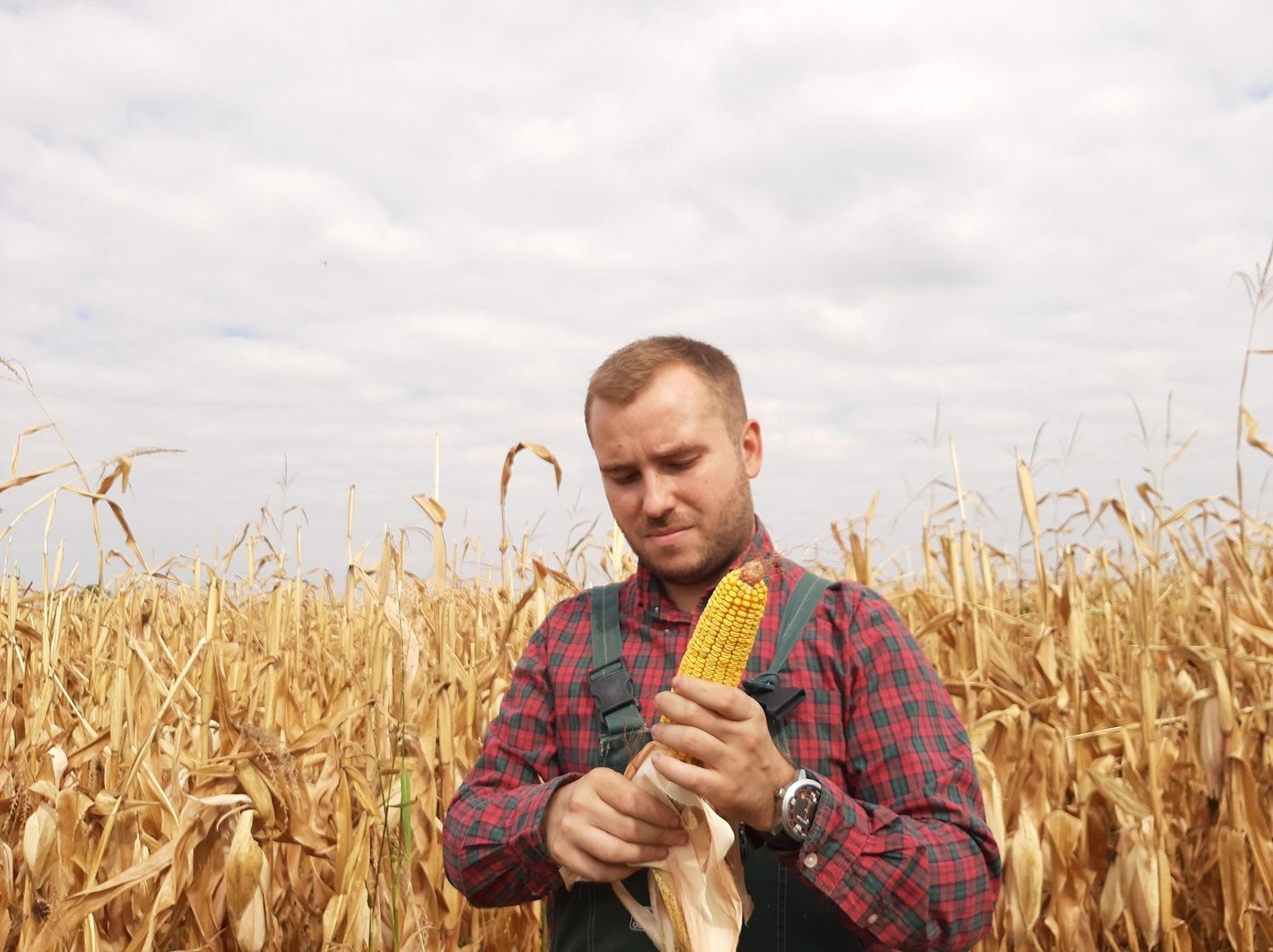
Image: Aleksandar Andjelkovic from Pixabay
References
Diversity Institute. 2025. "Technology and agriculture: adoption and barriers." Future Skills Center. December 2, 2025. https://fsc-ccf.ca/fr/recherche/ladoption-des-technologies/.
Dubey, Ritika. 2024. "Young farmers enter the industry... without a farm." Le Devoir, December 23, 2024. https://www.ledevoir.com/economie/826903/jeunes-agriculteurs-lancent-industrie-ferme?
FAO - Food and Agriculture Organization of the United Nations. 2018. "Technological innovations bring young people back to farming." FAO. August 20, 2018. https://www.fao.org/newsroom/story/Digital-innovations-are-bringing-youth-back-to-agriculture/fr.
"Farm smarts: Students dig into agtech." 2025. Australian Government. October 24, 2025. https://www.agriculture.gov.au/about/news/farm-smarts-students-dig-into-agtech.
Food and Agriculture Organization of the United Nations. 2026. "AgriTech observer #1: how farmers learn in the digital age - International day special." FAO. March 19, 2026. https://www.fao.org/digital-villages-initiative/europe/news-and-articles/news-and-articles-detail/agritech-observe-1-how-farmers-learn-in-the-digital-age-international-day-special/en.
Fulton, Murray, Marc-André Pigeon, Bill Oemichen, and Yang Yang. 2022. "A New Approach to Farming: Advanced Agricultural Technology and the Future of the Agricultural Sector." Future Skills Center. October 6, 2022. https://fsc-ccf.ca/fr/blog-agtech/.
Holbert, Bre. 2025. "Perspective: Bringing new voices into agriculture's tech frontiers." AGDAILY. November 20, 2025. https://www.agdaily.com/insights/bringing-new-voices-into-agricultures-tech-frontiers/.
"Young farmers in West Africa turn social media into tools for growth." 2025. Mastercard Foundation. September 10, 2025. https://mastercardfdn.org/fr/news/les-jeunes-agriculteurs-dafrique-de-louest-transforment-les-medias-sociaux-en-outils-de-croissance/.
Marsh, Jane. 2023. "Technology can make agriculture more accessible to young farmers." Global Ag Tech Initiative. July 20, 2023. https://www.globalagtechinitiative.com/in-field-technologies/technology-can-make-agriculture-more-accessible-to-young-farmers/.
Marston, Jennifer. 2025. "Agtech company Bushel Finds 'aggressive adoption of technology by ounger farmers' in latest report." AgFunderNews. January 7, 2025. https://agfundernews.com/agtech-company-bushel-finds-aggressive-adoption-of-technology-by-younger-farmers-in-latest-report.
Morrison, Oliver. 2024. "'Aggressive' usage of technology by young and growing farms revealed." AgTechNavigator. October 11, 2024. https://www.agtechnavigator.com/Article/2024/10/11/Aggressive-usage-of-technology-by-young-and-growing-farms-revealed/.
Wang, Tong, and Whoi Cho. 2025. "Young farmers lead the way in precision agriculture adoption, new study finds." Precision Farming Dealer, September 30, 2025. https://www.precisionfarmingdealer.com/articles/6752-young-farmers-lead-the-way-in-precision-agriculture-adoption-new-study-finds.
Zhang, Xiaoyan, Qing Yang, Abdullah Al Mamun, Mohammad Masukujjaman, and Muhammad Mehedi Masud. 2024. "Acceptance of new agricultural technology among small rural farmers." Humanities and Social Sciences Communications 11 (1). https://doi.org/10.1057/s41599-024-04163-2.
See more articles by this author