We spend three times as much time watching a live video as we do watching a pre-recorded one. And there are ten times as many interactions during a live stream. While many companies, training centers, and cultural venues are looking to boost engagement, we’re finding that raw, live content sometimes has more impact than content that’s been over-polished, endorsed by numerous experts, and made available indefinitely.
What are the reasons behind this success? What communication techniques amplify the impact of live content? That’s what we invite you to discover after a brief historical overview.
In three and a half years: many new platforms and one that disappeared.
Merkaat, a live video app, launched in 2015. Its success was meteoric. It used Twitter, allowing users to access and stream videos. Replays weren’t an option. Too bad if you missed the event!
The craze was so intense that Twitter launched its own app, Periscope, and managed to overshadow its predecessor. Merkaat disappeared just as quickly as it had emerged. But the other internet giants were quick to release their own apps. Amazon uses Twitch, and Facebook acquired Vidpresso, which allows users to produce live videos using multiple cameras if desired.
Live demos, interviews, and meet-and-greets with fans are on the rise, drawing large and engaged audiences.
Live content isn’t limited to videos. Snapchat and Instagram, for example, let users create their own “stories.” Built up over the course of the day, these stories often feature plenty of smileys, emojis, and fonts straight out of a 1990s PowerPoint presentation—and that’s likely by design. Immediacy doesn’t sit well with an overly polished aesthetic. Short videos are also common. What matters is spontaneity, a sense of connection, the unexpected, and closeness to the few dozen, hundreds, thousands, or more lucky viewers who have the good fortune to be there at just the right moment!
What We Love About Live Streaming
The success of these apps lies partly in these four letters: FOMO(fear of missing out). With live streaming, something can happen at any moment: an unexpected event, a slip-up, a shared emotional moment...
Live streaming offers a moment free of fakery, post-production, or editing. The images and content are raw or have been enhanced using standard filters and simple text overlays. There’s a certain rhetoric of the moment, and users sometimes go to great lengths to make it seem like everything is improvised! It’s not enough just to go live—you also have to make it seem like, five minutes earlier, no one had any idea they’d be sharing anything on social media.
Live streaming is also a moment of connection. The video apps we listed above offer interactive features—a few words, hearts floating away like balloons… There’s little room for elaborate reflection. But that’s enough to give us the feeling that we, too, are taking action—that we’re part of the show. Even better, I can ask questions, offer technical assistance by confirming that the sound is good, or even expand on what the speaker is saying.
Just like at the theater, we feel a sense of closeness. What’s said to me live resonates more deeply than when it’s recorded. I feel like they’re really talking to me!

Using Live Streaming to Foster Engagement
This sense of connection, this feeling of authenticity, and the interactions that live streaming encourages have not gone unnoticed by marketing and communications specialists. Taylor Loren and Stéphanie Gibert offer a few tips:
Digital community managers can leverage a highly effective storytelling technique. Showing behind-the-scenes footage, the people working behind the scenes, and explaining what happens backstage… There’s a playful aspect to seeing the kitchens, the technical areas, and the inner workings that explain how things operate. People you come across feign surprise when the camera is on them, and doors are cracked open to reveal people hard at work. It’s a rare privilege for the viewer—like when a museum guard lets you into a room normally off-limits to the public!
Testimonials from customers, users, or students are more convincing when they’re spoken or expressed live. Working “without a safety net” means presenting yourself without pretense, with complete honesty. This could be a live video, but it could also be a selection of tweets from a live-tweet event, beautifully laid out. Or maybe not quite so beautifully, for that matter, since the goal is to create a sense of spontaneity.
Recipes and demonstrations presented in stunning, polished videos can’t win over a hesitant beginner. Going live and putting yourself on the spot is the best way to prove that what you’re offering works or to demonstrate your talent. Almost every day,
Kim Jung GI draws live murals featuring dozens of characters contorting themselves from high-angle or low-angle perspectives.
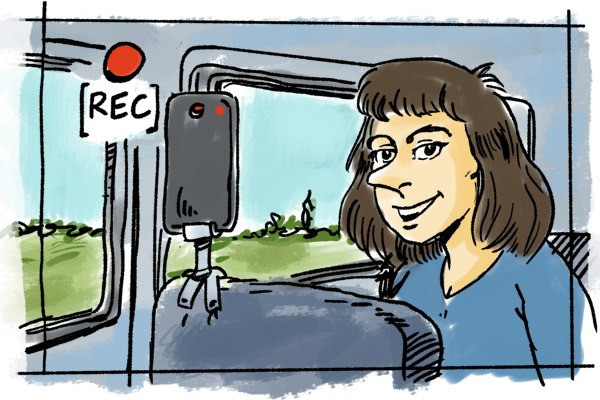
The incongruous setting also piques interest. Many video recordings are made during taxi rides or trips in a car with a driver. The suspense associated with the drive is in itself a part of the staging, and the broadcast adheres to an unspoken rule: it stops before or the moment the vehicle reaches its destination!
Add to that live polls, exclusive interviews, and live responses to questions from internet users.
We store a lot; we keep a lot on our hard drives, on our Pinterest or Diigo accounts. It would take a lifetime to read through what we’ve virtually “set aside”—with a simple right-click or by saving it to our bookmarks...
Bringing in live content means returning to genuine attention, taking notes, and engaging our memory. If you produce content, you can do without overly staged presentations.
Illustrations: Frédéric Duriez
Sources
How to Make a Live Stream Truly Engaging? (Practical Guide 2026) – ClakProd – Camille
https://www.clakprod.com/blog/marketing-communication-24/comment-rendre-un-live-streaming-vraiment-engageant-guide-pratique-2026-2952
Taylor Loren, Stephanie Gibert How to Use Instagram Stories for Business - accessed September 14, 2018
See more articles by this author