NoSQL stands for "Not only SQL". The idea of naming a principle with a negative contingency seems curious, as if to demonstrate that a limitation has been overcome. Follow the guide...
SQL (Structured Query Language): Standardized computer language used to operate relational databases.
Relational database: stock of information broken down and organized in matrices called relations or tables. The contents of the database can be processed by relational algebra operations such as intersection, join and Cartesian product.
Relational Database Management Systems (RDBMS) must comply with the ACID principles
A C I D
- Atomicity: a "transaction" cannot be split up.
- Consistency: a transaction always preserves the integrity of the database and respects all database rules. It is either completed, or has never taken place.
- Isolation: even if several transactions are completed simultaneously, their final effect must be the same as if they had been completed one after the other. If a transaction results in an error, this will have no effect on any other transaction.
- Durability: if a transaction has been completed, it must remain so, even if the system collapses immediately afterwards. The database must be stored in non-volatile memory.
However, with the explosion in the amount of data to be processed and, above all, its networking in the "cloud", ACID's overly-rigid conditions have become an obstacle. Eric Brewer demonstrated that it is impossible for a distributed system to guarantee more than two of the three conditions of Consistency, Availability and Partition Tolerance at any one time. The CAP Theorem served as the basis for the development of NoSQL.
When two databases are paired, several elements have to be doubled to meet the ACID conditions, but if 20 or 200 have to be paired, it quickly becomes a hardware impossibility.
NoSQL guarantees that at least two of the following three conditions will be met:
- all nodes in the system see exactly the same data at exactly the same time;
- all queries are answered;
- no failure less significant than a total network outage will prevent the system from responding correctly. If the network is divided into sub-networks, each can operate independently.
In this way, availability is generally prioritized, processing speed is prodigious, and answers are provided with the most up-to-date data possible.
For the world of education
Initially designed to achieve processing speed on large volumes of data, or to handle unstructured data, these eventualities are becoming increasingly common for educational institutions.
When it comes to processing real-time data from course management platforms, or getting dozens of databases from different departments and on different systems to talk to each other, for new uses, or to make use of unstructured data such as photos or videos, NoSQL provides a flexible and easily achievable solution for programmers who have understood its principles. There are several introductory courses and tutorials available.
MongoDB is an open source noSQL software.
Finally, theexample of the insurance company MetLife is edifying. In just three months, they have achieved with NoSQL what they had been trying unsuccessfully to do for years. Many universities and campuses are in the same situation. There's a solution.
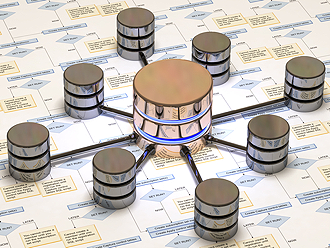
Illustration: pisotskii - ShutterStock
References
NoSQL: 5 minutes to understand - Amine Chaghal - Neoxia
http://blog.neoxia.com/nosql-5-minutes-pour-comprendre/
10 minutes to understand...NoSQL - Masclet
http://davidmasclet.gisgraphy.com/post/2010/06/09/10-minutes-pour-comprendre...NoSQL
ACID - Wikipedia
http://en.wikipedia.org/wiki/ACID
Relational database - Wikipedia
http://fr.wikipedia.org/wiki/Base_de_donn%C3%A9es_relationnelle
CAP - Wikipedia
http://fr.wikipedia.org/wiki/Th%C3%A9or%C3%A8me_CAP
NoSQL tutorials
http://nosql.developpez.com/cours/
Mongo DB - NoSQL database
http://www.mongodb.org/
MetLife Uses NoSQL For Customer Service Breakthrough - Doug Henschen - InformationWeek
http://www.informationweek.com/software/information-management/metlife-uses-nosql-for-customer-service-breakthrough/d/d-id/1109919?
See more technologies from this institution