![]()
Promoting local arts through education
The arts and culture are formidable anthropological traces to be studied in order to develop in students a desire to create. Consequently, arts and culture education (EAC) enables learners to understand art, to make art and to come into contact with local artists.
![]()
The new materials of Art
To the learning of traditional tools has been added that of new materials, digital tools and finally the tools of materialization. Teaching Art today necessarily includes that of the tools that bridge the gap between the virtual and the real. We will never breathe virtual air and it would be surprising if we were to be satisfied with virtual Art.
![]()
The challenge of vocabulary development
Many of us have the impression that our vocabulary is limited. However, passively, we know thousands of words that we do not integrate into our usage. There are many ways to improve our speaking skills and become more eloquent with our peers.
![]()
Preparing the educational future in incubators
Many institutions want more educational innovation in the classroom. However, imposing technologies on a teaching staff carries more risks than benefits. Educational incubators or labs are ideal in this sense to allow for discussion, analysis, and planning of what to do next.
![]()
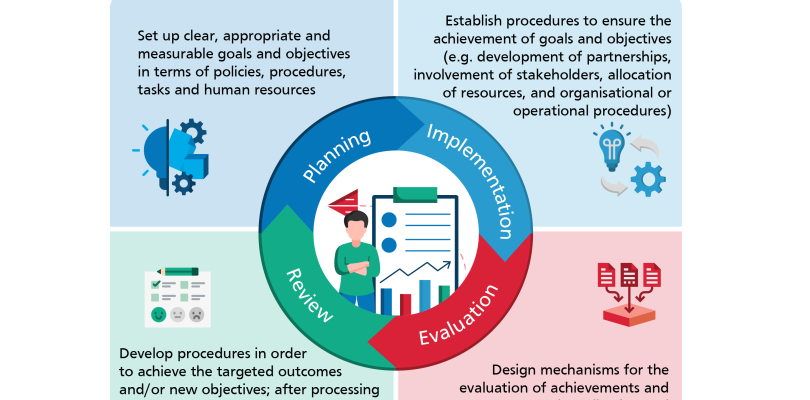
EQAVET: Quality assurance in vocational education and training
Activities implemented to ensure that education and training meet the quality requirements expected by stakeholders. A toolbox is available for those involved in vocational education and training who wish to apply it.