A decade later, what about the Jasmine Revolution?
A mixed record
January 2011, the earth shakes metaphorically in Tunisia. The people are fed up with the iron regime of Zine el-Abidine Ben Ali, holding the reins of the country for over 20 years. People, once terrified of power, are coming out and demonstrations are being organized with social networks. To the point where the dictator will leave hastily for Saudi Arabia. This movement called the "Jasmine Revolution" will be the trigger for the famous Arab Spring that will shake other nations in the Maghreb and the Fertile Crescent.
More than 10 years later, Tunisia seems to have succeeded in its democratic turn. The population is entitled to elections, a balance of power avoiding a return to autocracy, and a much freer media.
However, while no one fundamentally regrets Ben Ali's reign, the mood in Tunisia is not good. The economic crisis affects the working classes, all the more so in a pandemic context. Freedom of expression is present but some people pay heavily for their criticism of the situation. A half-tone assessment despite the inhabitants still full of hope.
A veritable showcase for public health, Koam was developed by Nutrikeo, a consulting firm specializing in nutritional strategies. Supported by BPI France, the Nouvelle Aquitaine region and Europe, Koam is the result of two years' work by a team of leading specialists in nutrition, childhood, pedagogy, sociology, digital and behavioral theory.
All our lives have an online component. As a result, a large proportion of Internet users are at risk of being tricked by hackers. A short game invites Internet users to remember certain elements of cybersecurity using a space theme.
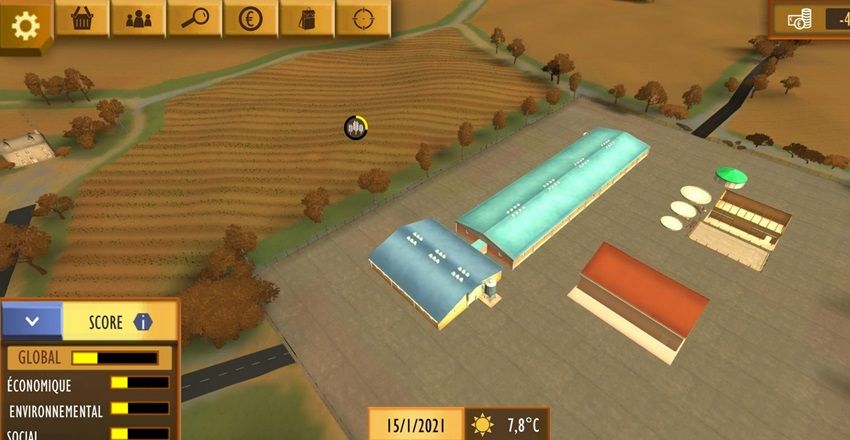
There's nothing simple about being a farmer. You have to plan your activities throughout the year, make sure you have the right machinery, maintain it and so on. All with a view to ecology. A serious French game seeks to teach agroecology.
An original approach to depression. The game's metaphor is well conceived, a little dark and informative about a problem that affects millions of people.