Elude: a serious game for understanding depression
An original approach to depression. The game's metaphor is well conceived, a little dark and informative about a problem that affects millions of people.
Publish at April 25 2022 Updated May 03 2022



Humanity has an exceptional opportunity when it comes to food. Indeed, even on the less wealthy continents, it is still easier to feed ourselves than it was 60 years ago. Yet this reality comes with a downside: the obesity rate has tripled worldwide. Be careful, however, because this figure comes from the Body Mass Index (BMI), which does not take into account certain health criteria.
In fact, it seems that more and more preconceived ideas are falling with the research. For example, diet no longer has the central role in the development of obesity. It is true that our caloric balance and ultra-processed foods have accelerated weight gain, but not everything is based on this. Even the issue of physical activity would not be as important. Which is not to say that we shouldn't do any, quite the contrary.
In fact, genetic factors and environmental components may have much more effect on this condition. Ongoing research will surely tell us more as the years go by.
Time: 8min54
Photo : Towfiqu barbhuiya on Unsplash
Learn more about this resource
You might also like:
Elude: a serious game for understanding depression
An original approach to depression. The game's metaphor is well conceived, a little dark and informative about a problem that affects millions of people.
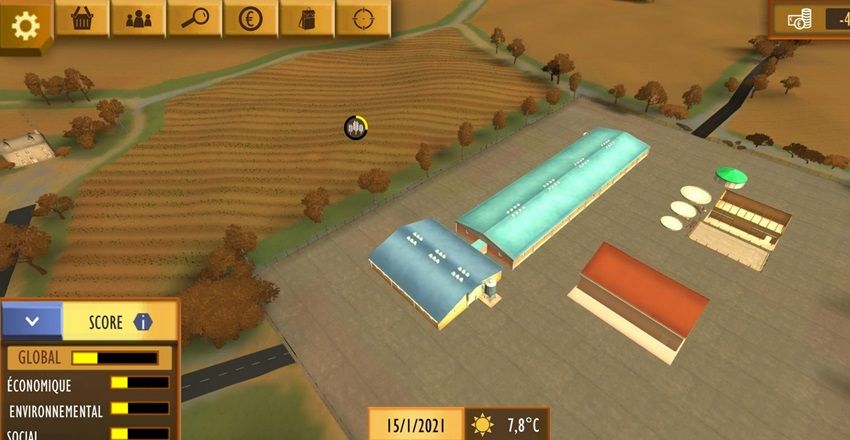
Reflecting on agroecology through play
There's nothing simple about being a farmer. You have to plan your activities throughout the year, make sure you have the right machinery, maintain it and so on. All with a view to ecology. A serious French game seeks to teach agroecology.
Tests of vigilance and attention
Measuring attention remains a concern in many settings. Some work tasks are not very error tolerant. Here are a series of sample tests to measure attention in children and adults.
Koam, playing with balanced nutrition
A veritable showcase for public health, Koam was developed by Nutrikeo, a consulting firm specializing in nutritional strategies. Supported by BPI France, the Nouvelle Aquitaine region and Europe, Koam is the result of two years' work by a team of leading specialists in nutrition, childhood, pedagogy, sociology, digital and behavioral theory.