"The Classics say that Qi is dispersed by wind and stopped by water. The Ancients collected it to prevent its dissipation, guided it to ensure its retention. Thus they named (this method) Feng Shui."
The Zangshu, or Book of Burial translated by Stephen L. Field
The art of living with energy
Facilitation ideally takes place in an inspiring place charged with values, aesthetics, possibilities for movement and links with the living. However, this ideal is not always attainable, but if the choice of space is constrained, it remains possible to arrange a meeting time that supports the desire to exchange in complete fluidity.
Feng Shui literally means "wind and water". It's an art of living with the energies present; some even liken it to a form of geomancy, so much so is the link with subtle energies sought with spaces. Its best-known form is "the harmonization of the environmental energy (Qi, 氣, 气) of a place so as to promote the well-being, health and prosperity of its occupants". Feng Shui forms a system with Chinese medicine, Tuina massage and all the internal energetic arts aimed at circulation, breathing in what's there, clearing out what's cluttering up and vitalizing the being. It's at the heart of Zen and its simplicity. Feng Shui often rhymes with uncluttered spaces, stripped of the superfluous.
An energetic system
Feng Shui is an ancient Chinese system of spatial planning that aims to create a harmonious, balanced environment. It draws on the entire Chinese tradition of color and number symbolism, geographical orientation, slopes, curves, openings and views, and straight or zigzag circulation. A sense of balance that soothes and centers the mind on the here and now.
Feng Shui is sensitive to the place where a meeting takes place; its art allows adjustments to space through the gift of perspectives, eye-catching points, rhythms in space offering each person the possibility of experiencing their own landscape. This art emphasizes the circulation of energy, known as "Qi". According to this practice, by harmonizing the energy in a space through a balanced arrangement of furniture and circulation, a choice of colors and materials, and the creation of a sound or olfactory ambience, the facilitator promotes mental clarity, concentration and productivity. A positive energy flow facilitates work and daily activities. Rather than letting the layout of a room dominate circulation and the way people turn to each other, Feng Shui principles help to compose the atmosphere of exchange, clear the space, limit the centers of attraction of the gaze to the essential, offer points of support with a particular intention.
Feng Shui aims to eliminate chaos and create an orderly, soothing environment. A well-organized, uncluttered workspace reduces stress. By eliminating visual distractions and creating a calm atmosphere, without the agitation of an accumulation of objects, Feng Shui promotes better task completion. The link to nature is essential, either physically or symbolically: a circle is adorned in its central space with a bouquet of flowers, a stone or an element symbolizing nature and, for example, a window or skylight allowing sunlight to penetrate the space to enable everyone to stay connected to the living flow. Everyone at all times feels that they belong to something greater than themselves, a container that at the same time protects and reassures.
The 5 elements and Feng Shui
Feng Shui encourages balance between natural elements such as water, earth, wood, fire and metal, which refers to the Chinese theory of the 5 elements or Wuxing. This theory was formulated as early as the 4th century (Cheng, 2015). Unlike the elements that make up the water-earth-air-fire universe of the Western tradition initiated by Empedocles, the elements of the Wuxing are in motion. They are characterized by the transformation of permanent balances and imbalances, the interplay of Yin and Yang, whose dance is mutual expansion and reduction. Feng Shui reflects this dance in the composition of spaces, which can be read in a multiplicity of ways.
These 5 elements form the basis of two cycles.
The first is the cycle of generation or begetting: metal → water → wood → fire → earth → metal
- Metal melts at a high temperature and becomes liquid (water);
- Water waters and makes trees grow (wood);
- Lit wood produces fire;
- Fire burns plants which become ash (earth);
- Earth contains minerals (metal).
The second is the cycle of domination or destruction: metal → wood → earth → water → fire → metal
- Metal slices through wood;
- Wood feeds through its roots on earth;
- Earth absorbs water;
- Water extinguishes fire;
- Fire melts metal.
By organizing the space to represent these elements dynamically, the facilitator creates an atmosphere conducive to facilitating a circle. For example, adding plants to represent wood can encourage growth, creativity and vitality. Metal brings strength and ductility, earth and stone solidity and balance, fire movement and ascension, and water remains that penetrating formless force.
Reference to the elements symbolically enriches the space and connotes the meeting of action potential. Each person is both disposed in space and ready to act, subtly influenced by his or her feelings. Space precedes movement; it dictates its grammar.
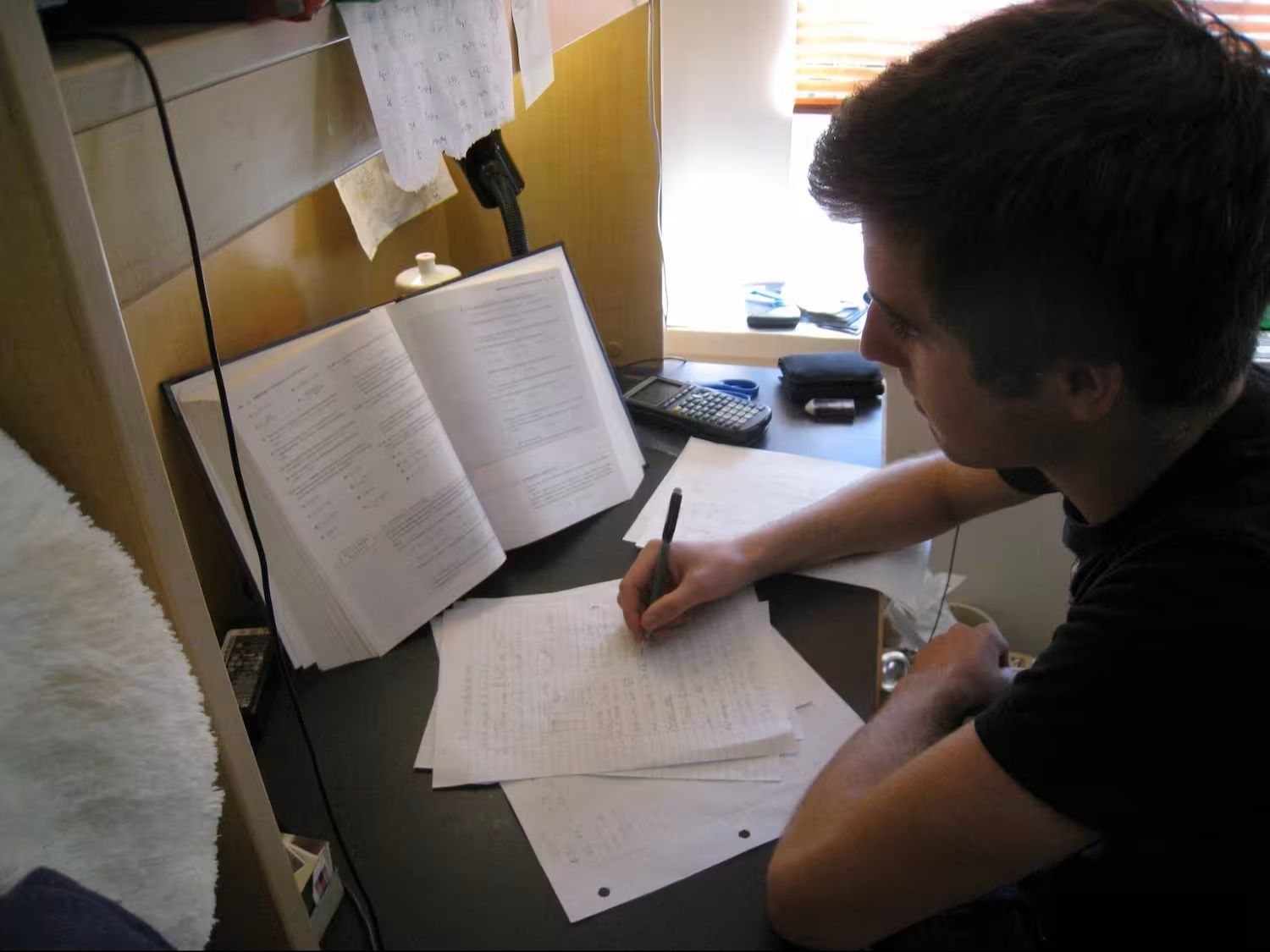
We could therefore imagine a classroom under the influence of Feng Shui. It would not be too busy, would leave room for light and natural elements and would take into account the positioning of the teacher as well as the learners
so that everyone is calm, ready to learn and focused on the
tasks at hand. It should be noted that the results of Feng Shui
vary from person to person, and its effectiveness is perceived
according to individual beliefs and habits. Some
find that Feng Shui helps to make their daily lives easier, while others
while others may not perceive any significant changes.
One of the benefits of Feng Shui is to turn a meeting space into a haven for learning and adventure. From space projects take off.
Sources
Wikipedia Feng shui https://fr.wikipedia.org/wiki/Feng_shui
Antoine, L. (2014). Feng Shui, Learning to live. Éditions de Mortagne.
Cheng, A. (2015). History of Chinese thought. Média Diffusion.
Halévy, M. Tao et management. La sagesse taoiste au service du manager. Paris Eyrolles.
See more articles by this author