Mont Blanc is the highest mountain in Europe (apart from Elbrus). Its top reaches 4810 meters. Mountaineers from all over the world come here because the Alpine mountains in Europe are very popular with climbers. This article will discuss things to learn to hike the Tour du Mont Blanc.
Quick history of Tour du Mont Blanc with facts
Here is a history of Mont Blanc with interesting facts:
- France and Italy consider the summit of Mont Blanc as their own. In 1861, the Treaty of Turin authorized it, which stated that the border between France and Italy passes exactly at the top of the mountain. But there are naturally no borders as such.
- It is interesting that the first people who conquered Mont Blanc were Michel Gabriel Paccard and Jacques Balmat. However, the monument in Chamonix stands for Jacques Balmat and Horace Benedict de Saussure. They conquered the mountain too, but a year later. But everyone forgot about Michel Gabriel Packard. Isn't it a shame?
- The ascent of Horace Benedict de Saussure and Jacques Balmat was not so hard. They had 18 helpers who carried all their belongings for them: scientific instruments, a folding bed, a tent, a mattress, 3 vests, 3 jackets, 6 shirts, ceremonial white clothes, boots, gaiters, traveling clothes, 3 pairs of shoes ( with regular, short and long noses)...and even house shoes. So there you have it, true connoisseurs of comfort!
- Soon the place of Chamonix became very popular. But thanks to what? Or rather, thanks to whom. The locals came up with an amazing idea: a woman must conquer Mont Blanc! Tempted by gifts and fame Marie Paradis, a simple peasant, agreed. But the poor girl had no idea what awaited her. As a result, male guides carried the poor girl in half faint from a height of 3000 meters. And the last few meters, she was literally dragged through the snow. But after the descent from the mountain, they proudly reported - she made it!
- In 1886, during his honeymoon, future U.S. President Theodore Roosevelt climbed Mont Blanc. This is one of the reasons why Americans respect him so much.
- Two Indian airplanes crashed into Mont Blanc in 1950 and 1966.
- In 2007, a Jacuzzi party was held at the top of Mont Blanc. A portable hot tub was delivered to the top of the mountain by 20 people. And that's not counting the special heating equipment.
- In 2009, famous French soccer player Zinedine Zidane climbed Mont Blanc and scored a symbolic goal there. The footage was used for charity in a program to fight leukodystrophy.
- In order to make climbers and skiers feel comfortable in the mountains, 2 portable toilets were delivered by helicopter and placed at an altitude of 14000 feet.
Now let's discuss 5 things any traveler must know before hiking Mont Blanc.
Mont Blanc is headed by the range of the same name
 There are almost no solitary mountains in the world, and here Mont Blanc rises noticeably above the massif of striking beauty, which received its name in honor of the highest point of Western Europe.
Some peaks of the range, inferior to Mont Blanc in fame and popularity among lovers of mountain tourism and climbing, are not much inferior to it in height. For example, Mont Blanc de Courmayeur is lower by 60 meters. Rocher de la Tournette is lower by only 100 meters.
The most famous mountains of the range are the steep Grandes Jorasses (one of the most difficult to climb in the Alps) and Aiguille du Midi (famous for its cable car and stunning views of the sun setting behind its peak).
Mont Blanc hiking takes 7 to 10 days
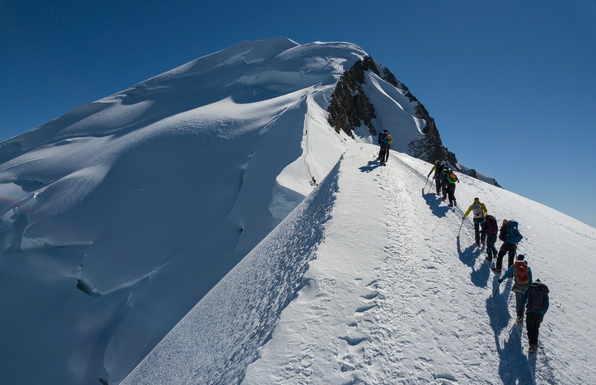 The Tour du Mont Blanc duration can vary depending on your fitness level, pace, stops for photos and rest, and the route options you choose. Usually, a full circumnavigation of the Mont Blanc takes 7 to 10 days.
Here is the general structure of the route:
- Chamonix, France
- Les Contamines, France
- Les Chapieux, France
- Rifugio Elisabetta Soldini, Italy
- Courmayeur, Italy
- Rifugio Val Veni (Rifugio Walter Bonatti), Italy
- La Flégère, France
- Chamonix, France
The total distance can be about 170-200 kilometers, depending on the specific route and detour options. It is also necessary to consider the ups and downs affecting the average speed.
Summer months are the best time to visit Mont Blanc
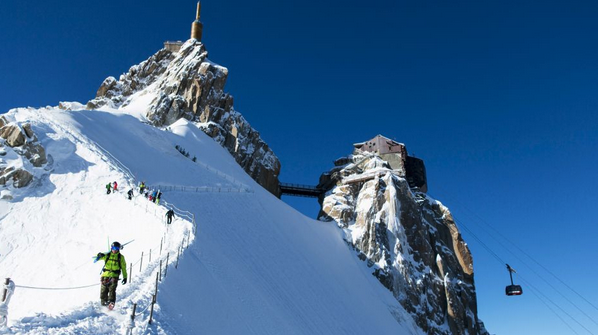 According to climatic conditions and general recommendations, the best time to hike the Tour du Mont Blanc is from July to September. Here are some reasons why this period is considered the most suitable:
- Weather. The mountain's weather is usually favorable during the summer - warm, low rainfall, and less chance of snowstorms or poor visibility. This makes hiking safer and more enjoyable.
- The flowering of nature. In summer, nature on Mont Blanc comes to life. The mountain meadows bloom with colorful flowers, and the panoramas of the Alps are spectacular.
- Longer days. Summer days are longer, making it possible to make the most of daylight hours for travel.
However, following the weather forecasts before setting out is always important, as is having the appropriate mountain equipment and following safety instructions.
Mont Blanc is a top-rated resort
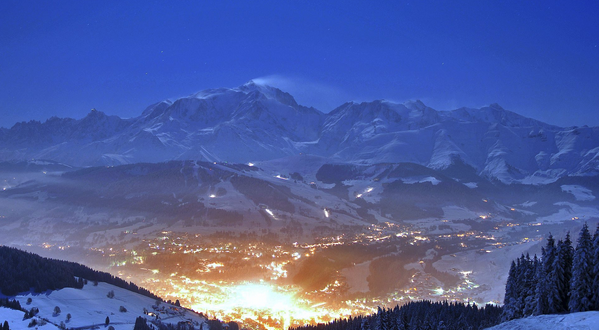 Given the height of the main peak and the length of the entire range, this place simply could not fail to have a couple or three fashionable ski resorts. The most famous and popular of them are located right at the foot of Mont Blanc.
French Chamonix, located in the picturesque valley of the Arve River, is famous for its infrastructure, quite affordable prices, and brilliant history. The first Winter Olympic Games in history were held here. Norway took first place then.
Italian Courmayeur cannot boast such a rich history. Still, it makes up for it with thermal springs, a high-altitude botanical garden, and, of course, excellent slopes for skiers and snowboarders.
Mont Blanc is a sightseeing mountain
 Both the popular ski resorts of Chamonix and Courmayeur are linked by a famous landmark creation of engineering genius - the striking Mont Blanc Tunnel. It runs right under the mountain.
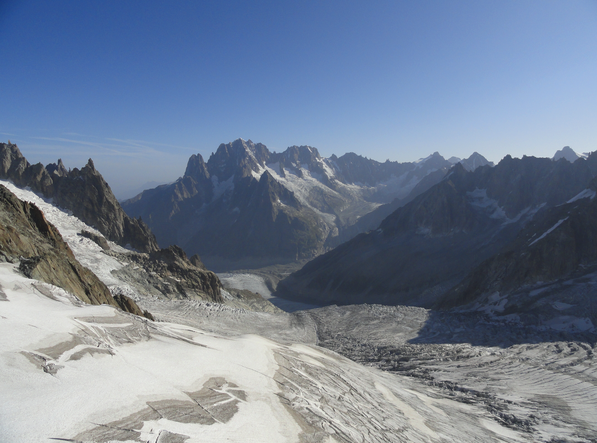
But Mont Blanc's natural creation is far more famous. We mean the majestic Mer de Glace glacier. The plateau of 30 square kilometers in size and 400 meters thick is astonishing if you look at it from the height of a cable car cabin. It is fascinating if you admire the way its ice feeds the waters of the Arve River.
Conclusion
In embracing the lessons of history, acknowledging the risks and rewards, and respecting the mountain's grandeur, you'll find yourself well-prepared to embark on the adventure of hiking the Tour du Mont Blanc. As you traverse its trails, may the beauty and significance of this iconic range leave an indelible mark on your soul, reminding you of the power of the human spirit and the majesty of the natural world.
Learn more about this
resource