Learning in the age of artificial intelligence
An article presenting the challenges, opportunities and questions posed by generative artificial intelligence for vocational training.
Publish at February 28 2024 Updated February 28 2024


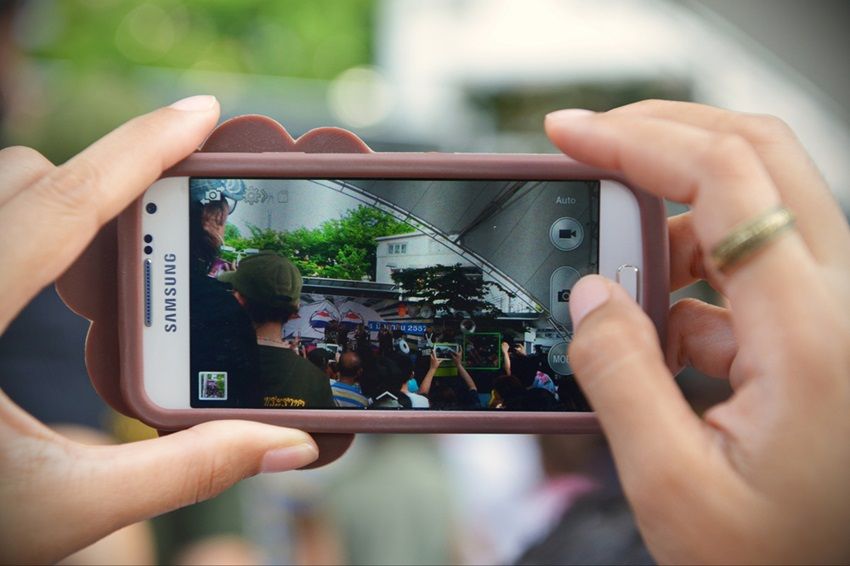
As society evolves, so does journalism. At one time, it seemed utopian that a media outlet could post journalists anywhere in the world. Aviation led to reporters being able to follow international events more easily. The Internet has made it possible to create reports more quickly and to communicate news almost as it happens.
As a result, now that we all (or almost all) have little high-definition cameras in our pockets, with pretty powerful microphones and applications that allow us to edit without having to sit in front of a computer, journalism is taking a new turn. Mobile journalism. The English-speaking world calls it "MoJo" (Mobile Journalism), and more and more journalism schools are teaching it.
At a time when most people consult the news more via social networks, the field of reporting from a mobile device needs to be used by journalists. Citizens are already using them to document events; in theory, putting professionals on the scene would reduce the chances of misinformation, while sticking closer to the facts. The media would also be well advised to take advantage of this approach; no more need for expensive broadcast trucks that can hardly leave the road network. Mobile devices are easy to carry and can be taken out the moment the journalist spots an interesting phenomenon.
Around the world, the deployment of the mobile Internet has facilitated this evolution in journalism. Everything pointed towards the MoJo with the advent of networks, YouTube, networks, smartphones and so on. The difference between the person who films himself and the news specialist is that the latter knows how to transmit the various elements to answer the 5 questions behind each report: what, who, where, when and why.
On the other hand, the news business is not yet welcoming this new way of doing things. They're still skeptical about how to embrace this type of journalism and make it quality and beyond the many broadcasts that non-specialists do online.
They wonder how to remove the impression of amateurism, even though the tools are constantly improving in terms of visual and sound quality. Not to mention all the tools designed to help telephone capture (microphones, software, etc.).
They also want to be careful about ethical issues. Many countries have image rights where individuals cannot have their image broadcast unless they give their approval. There is also the risk of rushed reporting, sacrificing depth and quality of information for speed. These are important issues, of course, and they need to be considered carefully to avoid contributing to the spread of false information.
Nevertheless, the issue of mobile journalism takes on even greater significance in certain parts of the world. Journalists in Ukraine, for example, who need to follow developments in the conflict with Russia and provide images on the spot, can do so without having to lug around heavy equipment. As a result, war zones are increasingly benefiting from this type of journalism, which enables images to be captured immediately and edited on the spot.
Some parts of the world see the MoJo as a way of better covering what's happening outside the metropolis. Journalism schools in India are not ashamed to say that this approach is taught to their students. In their view, it's part of the arsenal for delivering stories that will interest the general public.
In Africa, more and more specialists are trying to train young adults in mobile journalism. While few of them seem attracted by traditional media, this method enables them to tell and show the realities of their neighborhoods, towns and countries without hindrance. They can learn how to frame their subject, how to choose between documenting what's happening in video or photo, and how to use their phone properly as a multimedia device. They understand that the limits of this kind of journalism are natural light and the impossibility of zooming in only with the camera, at the risk of creating images with poor resolution. They understand how to use micro-cameras and other tricks to conduct interviews, for example.
Journalism of this kind also demands a rigor similar to that of traditional journalism. You have to make sure you have the right information, use your contacts, go and see the different protagonists in a situation and not just one side, etc. You also have to make sure you have the right information, use your contacts, go and see the different protagonists in a situation and not just one side, etc.
As we all know, the media world is not enjoying the best of times. Advertising revenues are dwindling, large owners are closing the doors of small local media, independents are struggling and the general public is increasingly distrustful of journalists. Against this backdrop, MoJo journalists need to find a way to make a living from this new approach. But how?
Most are invited to sell their stories to major media outlets that can handle them. In the UK, Sell Your Story has become the country's largest independent news agency. It acts as an intermediary between mobile journalists and the press. You can even sign up for a mailing list of hot topics to receive suggestions for filming or reporting on them.
Those who don't want to depend on the interest of major magazines, newspapers or TV channels can also create online platforms to monetize reports, photographs and so on. The idea is to build up an audience willing to pay a little for in-depth themes, for example. Collaboration with other mobile journalists could also help to get out of one's corner of the Internet and provide a place where different personalities work together to inform a local, national or international audience.
Finally, those who believe they have didactic skills could launch into the creation of mobile journalism courses or offer "coaching" services for other writers or photographers wanting to become more professional. A strategy that's easier to implement after a few years' experience, but one that could inspire others to follow suit in their desire to offer quality information. This could be through the use of course platforms, in the form of webinars or even by selling advice books, for example.
Image: 1000Words / DepositPhotos
References
Afadhali, Jean-Pierre. "Mobile journalism revolutionizes storytelling in Kenya." Jamlab. Last updated July 11, 2023. https://jamlab.africa/mobile-journalism-revolutionises-storytelling-in-kenya/.
Agarwal, Aditi, and Ishita Agarwal. "History and evolution of mpbile journalism." ResearchGate. Last updated October 2023. https://www.researchgate.net/publication/374447597_History_and_Evolution_of_Mobile_Journalism.
Amin, Nour. "Understanding the importance of smartphone journalism: rethinking the necessity of DSLR cameras in journalism education." LinkedIn. Last updated May 17, 2023. https://www.linkedin.com/pulse/understanding-importance-smartphone-journalism-rethinking-nour-amin.
"Bennett University: The tech age of storytelling through mobile journalism (MoJo)." The Times of India. Last updated June 26, 2023. https://timesofindia.indiatimes.com/education/news/bennett-university-the-tech-age-of-storytelling-through-mobile-journalism-mojo/articleshow/101272303.cms.
Granger, Jacob. "Ukrainian journalists use smartphones to tell stories of displaced communities." Journalism.co.uk. Last updated August 7, 2023. https://www.journalism.co.uk/news/mobile-journalism-training-in-ukraine-journalists-are-part-of-these-displaced-communities-/s2/a1058762/.
"How can you monetize mobile journalism?" LinkedIn. Last updated January 13, 2024. https://www.linkedin.com/advice/3/how-can-you-monetize-mobile-journalism-skills-journalism-628ac.
"The impact of wireless devices on journalism reporting in the digital age." Utilities One. Last updated July 31, 2023. https://utilitiesone.com/the-impact-of-wireless-devices-on-journalism-reporting-in-the-digital-age.
"Mobile journalism in Burkina: the practice is increasingly appealing to TV journalists." LeFaso.net. Last updated: June 4, 2023. https://lefaso.net/spip.php?article121962.
"Mobile journalism, the future of African journalists." Socio-cultural Magazine. Last updated: October 3, 2023. https://ecoledarts.com/le-mobile-journalisme-lavenir-des-journalistes-africains/.
"Burkina Faso communities use mobile journalism as an advocacy tool." Right2Grow. Last updated February 20, 2023. https://right2grow.org/fr/nos-activites/histoires/des-communautes-du-burkina-faso-utilisent-le-journalisme-mobile-comme-outil-de-plaidoyer/.
"Mastering mobile journalism: tips for success in the digital age." Yellowbrick. Last updated December 6, 2023. https://www.yellowbrick.co/blog/journalism/mastering-mobile-journalism-tips-for-success-in-the-digital-age.
Oniang'o, Maurice. "Mobile journalism is the fastest way to change how Africa's story is told." Reuters Institute for the Study of Journalism. Last updated February 28, 2023. https://reutersinstitute.politics.ox.ac.uk/news/mobile-journalism-fastest-way-change-how-africas-story-told.
Pedro Rodrigues, Luis, Vania Baldi, and Adelino de Castro Oliveira Simões Gala. "Mobile journalism: the emergence of a new field of journalism." ResearchGate. Last updated August 2021. https://www.researchgate.net/publication/354281132_MOBILE_JOURNALISM_the_emergence_of_a_new_field_of_journalism.
"Six ways to make money from journalism." Sell My Story. Accessed February 22, 2024. https://www.sellusyourstory.com/make-money-from-journalism/.
Tynes, Natasha. "Are you an independent journalist? Here are income streams to consider." International Journalists' Network. Last updated July 14, 2022. https://ijnet.org/en/story/are-you-independent-journalist-here-are-income-streams-consider.
Young, Marc. "Getting your MoJo on: Mobile journalism and the future of news." Shure. Accessed February 22, 2024. https://www.shure.com/en-IN/performance-production/louder/mobile-journalism-and-the-future-of-news.
You might also like:
Learning in the age of artificial intelligence
An article presenting the challenges, opportunities and questions posed by generative artificial intelligence for vocational training.
The first intention is essential and produces a cascade of consequences. The stakes are high when everything around you pushes you to leave a path full of unknowns at the first upset to rest in situations already marked out.
So-called rational decisions are often taken in contexts that resemble the disorder found in the contents of garbage cans.
There is some doubt about the generalization of metaverses. Would Meta lose its bet on the metaverse?
Collections: good reasons to clutter up
A collection can be a means of acquiring knowledge and enhancing value, as well as a pretext for exchange. Beyond its personal affective value, a fine collection of interest to many people will have great value, including affective value, if it is shared and appreciated. The key to a successful collection is, of course, the interest it is capable of arousing.