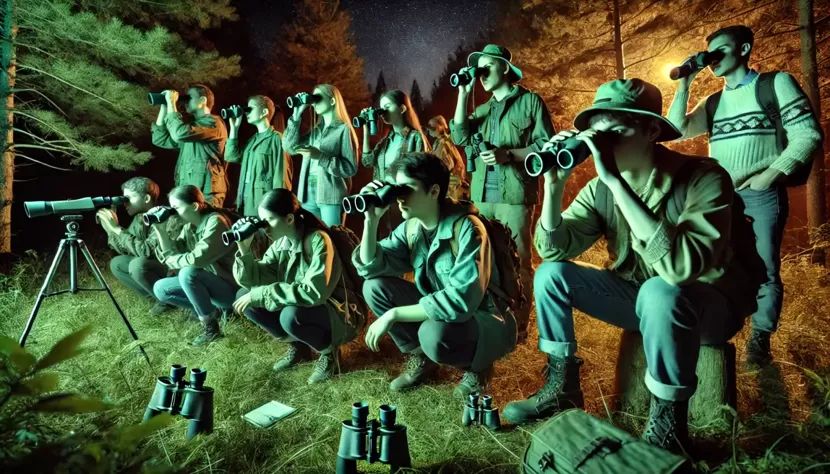
As an educator passionate about blending traditional methods with cutting-edge technology, I've always been intrigued by how we can bring the world into the classroom—or better yet, how we can take the classroom into the world. Night vision technology, commonly associated with military or law enforcement, is beginning to find a new home in academic settings. But why? How can this technology be relevant in an educational context? And what are the real benefits and challenges of incorporating it into our laboratories and field research?
Why Night Vision?
When we think about night vision, most of us imagine soldiers moving stealthily in the dark or wildlife documentaries capturing nocturnal animals in their natural habitats. Yet, this technology has the potential to offer so much more, particularly in educational settings. Think of biology students conducting fieldwork to observe nocturnal wildlife, or environmental science majors monitoring ecosystem changes over 24-hour periods. Night vision devices enable us to see in low-light conditions, extending the hours and situations in which learning and discovery can occur.
Advantages of Using Night Vision in Education
Expanding Learning Opportunities Beyond Daylight Hours
One of the most exciting advantages is the ability to expand learning opportunities beyond daylight hours. For instance, students studying nocturnal species or night-time ecological phenomena are no longer constrained by sunlight. I remember taking my class out on a night hike to study local bat populations. The experience was transformative—students were able to see these animals in action, hunt, navigate, and communicate in their natural setting. It was a far cry from the usual daytime field trips and provided an unforgettable hands-on learning experience.
Enhancing Safety During Night-Time Activities
Safety is always a concern when conducting any field research, especially at night. With night vision devices, we can significantly reduce the risks associated with limited visibility. Students and educators can move more confidently and safely through dark environments, whether they're navigating uneven terrain, identifying wildlife, or avoiding obstacles. This makes night-time excursions not only feasible but also more engaging, as the fear of the unknown is mitigated by the reassurance that everyone can see their surroundings clearly.
Fostering a Deeper Connection to Nature and Science
There is something inherently captivating about the night. The air feels different, sounds are amplified, and the familiar becomes strangely unfamiliar. Incorporating night vision into field studies allows students to witness behaviors and phenomena that are otherwise hidden in darkness. This hands-on approach can foster a deeper connection to the subjects they are studying. For example, students can observe the feeding habits of nocturnal animals or analyze plant behaviors like night-time transpiration in real-time, bringing classroom theories to life.
Encouraging Innovative Research Projects
By providing access to the night-time world, we open the door to countless new research possibilities. Consider projects such as studying urban light pollution's impact on local wildlife or understanding nocturnal pollination processes. These are unique topics that require night-time observations and would be impossible without night vision technology. Encouraging students to think beyond the traditional 9-5 scope of research can foster creativity and a spirit of inquiry.
Challenges of Implementing Night Vision in Educational Settings
Of course, as with any technology, night vision also presents its own set of challenges.
Cost and Accessibility
Let’s address the elephant in the room: cost. Night vision devices aren't cheap. Quality equipment that provides the clarity needed for scientific research can be expensive, making it a significant investment for many educational institutions. For smaller schools or programs with limited budgets, this could be a substantial barrier. It's essential to consider grant funding, partnerships, or shared resources among departments to make night vision more accessible.
Training and Expertise
Using night vision equipment effectively requires a certain level of training and expertise. In my experience, it's not as simple as flipping a switch and looking through the lens. There are nuances to adjusting settings for different environments, understanding how to interpret what you’re seeing, and maintaining the equipment properly. Teachers and students alike may need training sessions to ensure the technology is used effectively and safely.
Environmental and Ethical Considerations
While night vision offers many benefits, it's also crucial to consider its environmental and ethical impacts. For example, using night vision for wildlife observation can sometimes disturb the very animals we aim to study. Bright infrared lights, which are invisible to the human eye but detectable by many animals, can disrupt their natural behaviors. Ethical guidelines and best practices should be established to minimize any negative impacts.
Limited Applications in Certain Fields
Night vision might not be relevant to all areas of study. While it can enhance learning experiences in biology, environmental science, or even astronomy, it may have limited use in fields like literature or mathematics. Institutions need to carefully evaluate whether the investment aligns with their educational goals.
Tips for Incorporating Night Vision in Your Curriculum
If you're thinking about bringing night vision into your educational setting, here are a few tips to help you get started:
- Begin with a Pilot Program: Start small, maybe with a specific course or project. Assess the benefits, challenges, and overall impact before scaling up.
- Collaborate with Experts: Partner with local wildlife experts, conservationists, or even law enforcement to gain insights into the practical use of night vision.
- Seek Funding Opportunities: Look for grants or sponsorships from organizations interested in promoting STEM education or environmental conservation.
Engaging with the Community
Have you tried using night vision in your educational programs? What challenges did you face, and how did you overcome them? Share your experiences in the comments below, or feel free to ask any questions. Let’s start a conversation and learn from each other’s experiences.
By embracing new tools like night vision, we can expand the boundaries of where and when learning happens. Sure, there are hurdles, but the potential for transformative experiences makes it worth considering. As we continue to innovate in education, why not let the night become a new frontier for discovery?
Learn more about this
Technology