
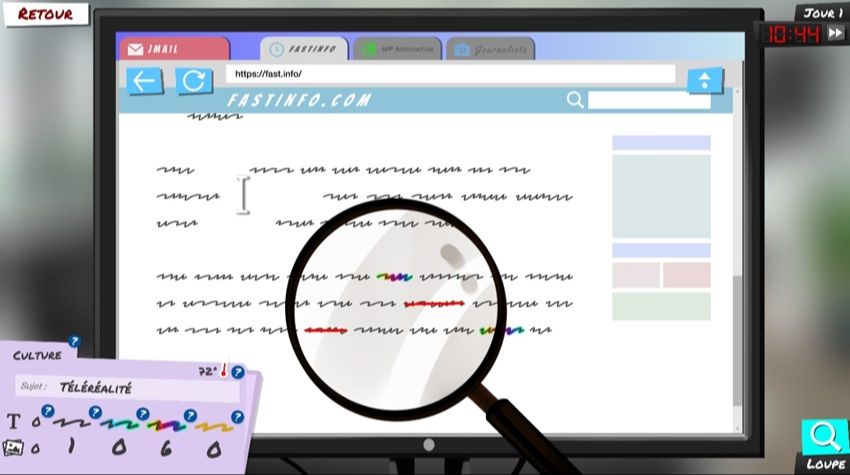
Newscraft: the game that puts you in the shoes of a reporter
A serious game that explains and brings to life the notion of news selection and the editorial line of different types of media.
Publish at September 25 2024 Updated September 24 2024


We like to think of ourselves as rational beings who make decisions based on data. The reality is that we are far more often subject to our brain's cognitive biases, as this clip from "The Sherpas" demonstrates.
This is because the human thinking system operates in two stages. When faced with a decision, the intuitive brain system immediately comes up with an idea. This idea is then analyzed by a second system to check that it really applies to the situation. But intuition often speaks much louder.
So we find ourselves subject to cognitive errors, including 4 biases explained in the video:
So how do you get out of it? It's very complicated, because even if you tell your brain it's looking at an optical illusion, it usually falls for it. It's best to look for contradiction in all decision-making, playing devil's advocate to analyze your thinking.
Asking for opinions from those around you can lead to different insights from people who don't have the same biases at play. Humility in one's opinions also helps to undo one's biases, little by little, by forcing you to confront other points of view.
Duration: 10 minutes
Learn more about this resource
You might also like:
Newscraft: the game that puts you in the shoes of a reporter
A serious game that explains and brings to life the notion of news selection and the editorial line of different types of media.
A serious game on social engagement
Many serious games address the topic of sustainable development. Yet before such solutions were proposed, innovative people had to go against the social grain and fight to improve their environment. A humorous adventure game, hosted by the National Film Board, teaches children the attitudes they need to adopt to make a difference.
The Englishes MOOC course was developed by an artist and is designed for anyone interested in the (English) language. It explores the history of English, its pronunciation, and its relationship to the art world.
Develop your musical ear through play with Meludia
To a layman, music is just a tune performed by a musician. Yet, if he were to play Meludia, he would learn all the rudiments and terms associated with musical practice.
A series of games that require an ear.
Learn the mechanisms of misinformation with Bad News
Understand the strategies of online disinformation through an interactive experience that puts you in the shoes of a fake news propagator.


