The singularity of AI brings us back to our human singularity and pushes us to the limits of our discernment and measure.
Publish at January 15 2025 Updated January 15 2025



When the heart is warm, the body is not cold
Lao tzu
Extreme diver Mario Cyr led the way in cold exploration, but it was Wim Hof who popularized the benefits of cold. The Wim Hof method, developed by Dutchman Wim Hof, also known as the "Iceman", has attracted growing interest in recent years for its alleged physical and mental health benefits.
The method is based on three fundamental pillars: controlled breathing, exposure to the cold and meditation or concentration. According to Wim Hof, these combined practices can not only improve physical fitness, but also enhance mental resilience and emotional well-being.
This article explores the principles of the Wim Hof method, its physiological effects, and the scientific research that supports its effectiveness.
The Wim Hof Method is based on three key principles. These elements are designed to work together to maximize the beneficial effects on body and mind.
Breathing is the first pillar of the Wim Hof Method. This technique consists of a series of deep breaths, followed by voluntary breath-holding. Typically, practitioners inhale deeply and exhale partially, repeating the exercise 30 to 40 times.
This process of controlled hyperventilation results in an overload of oxygen in the blood and a reduction in carbon dioxide. According to Wim Hof, this stimulates the autonomic nervous system, reduces stress and improves physical performance (Hof, 2018).
Research shows that controlled breathing can activate the parasympathetic system and help reduce levels of cortisol, the stress hormone, in the body (Kox et al 2014 Cam and Pencalet 2023). This leads to a feeling of calm and relaxation, while enhancing the body's ability to cope with stress.
The second pillar of the method is exposure to cold, often through ice baths or cold showers. Followers of the Wim Hof method gradually expose themselves to extreme temperatures to train their bodies to better resist the cold.
The aim is to stimulate the circulatory system, increase the production of certain hormones, and improve tolerance to physical stress (Hof, 2018). Exposure to cold leads to complex physiological responses, such as vasoconstriction (reduction in blood vessel diameter) followed by vasodilation (dilation of blood vessels) once the person has warmed up.
These mechanisms improve blood circulation and promote the elimination of toxins(Kenney ). In addition, exposure to cold increases the production of substances such as noradrenaline and cytokines, which play an important role in regulating inflammation and the immune system(Insaf).
The Wim Hof method also incorporates concentration and meditation practices. Practitioners learn to concentrate fully on their breathing and maintain a mental connection with their body, particularly during exposure to the cold.
This meditation helps to reduce pain perception and improve mental resilience in the face of extreme conditions (Hof, 2018).
Scientific research on the Wim Hof method is still relatively recent, but several studies have demonstrated positive effects on the physical and mental health of practitioners. Exposure to cold and controlled breathing appear to have significant effects on several systems in the human body.
One of the most promising effects of the Wim Hof method is its impact on the immune system. A study by Kox et al (2014) examined the effect of the Wim Hof method on immune response and inflammation. L
he results showed that practitioners of the Wim Hof method were able to modulate the production of inflammatory cytokines and reduce the inflammatory response to a simulated infection. Exposure to cold and breathing exercises stimulate the production of noradrenaline, which in turn can reduce inflammation and strengthen the immune response.
Exposure to cold stimulates blood circulation by causing vasoconstriction, followed by vasodilation. This promotes blood circulation throughout the body, particularly in vital organs and muscles, and improves tissue oxygenation (Zaccaria et al., 2020).
Better blood circulation is crucial for heart health, body temperature regulation and the elimination of metabolic waste products.
The Wim Hof method has also proved effective in managing stress and anxiety. According to a study by Kox et al (2014), practitioners of the method showed lower cortisol levels and a greater ability to manage stress. What's more, the activation of endorphin production during cold exposure contributes to an overall sense of well-being and optimism.
The meditative aspect of the method enables practitioners to focus on the present moment, helping to reduce anxiety and improve emotional stability.
One of the most significant benefits of the Wim Hof method lies in the development of mental resilience. By practicing cold exposure and controlled breathing, individuals learn to manage intense sensations and stay focused under pressure.
The ability to withstand extreme conditions boosts self-confidence and improves emotional management in stressful situations. Dalmas (2023) explains that exposure to cold, in particular, has beneficial effects on mental resilience. By becoming accustomed to uncomfortable and stressful situations, practitioners of the method develop skills that enable them to cope better with the challenges of everyday life.
The Wim Hof method offers an innovative approach to improving not only physical and mental health, but also learning skills. While most research focuses on the benefits for stress management, strengthening the immune system and improving mental resilience, the effects of this method on learning are beginning to attract the attention of researchers.
Improving blood circulation, reducing stress and activating cognitive mechanisms can have a direct effect on learning ability. Indeed, improved blood circulation enables better oxygenation of the brain, which is essential for cognitive functions such as memory and concentration. In addition, training to manage stress and uncomfortable situations through exposure to cold could help learners maintain their attention and efficiency in cognitively demanding environments. Furthermore, controlled breathing, by promoting better emotional and stress management, could improve an individual's ability to focus on complex tasks and solve problems.
Future research should further explore the effect of the Wim Hof method on learning performance, particularly in academic and professional contexts.
Current results suggest that integrating this method into educational programs could offer an interesting avenue for improving not only learners' overall health, but also their long-term cognitive and emotional abilities. This is what Romain Vandendorpe is already doing with managers in France.
Sources
Dalmas, C., & Lefief-Delcourt, A. (2023) Le froid, l'art de vivre en bonne santé: Un véritable chemin de bien-être, de joie et de santé, accessible à tous. Editions Eyrolles. -https://amzn.to/3WjiRsR
Hof, W. (2018). The Wim Hof method: Activate your full potential. Inner Traditions. - https://amzn.to/3C4utcq
Kenney, W. L. Chapter 42-Heat and Cold. https://www. ilocis.org/fr/documents/ILO042.htm
Kox, M., van Eijk, L. T., Zwaag, J., & Laar, M. (2014). Voluntary activation of the sympathetic nervous system and attenuation of the innate immune response in humans. Proceedings of the National Academy of Sciences, 111(20), 8089-8094. - https://www.pnas.org/doi/10.1073/pnas.1322174111
Cam, Y., & Pencalet, P. (2023, September). Managing stress with breathing. Solar. -https://amzn.to/4hgjfk5
Insaf, F. M. K., & Rahima, K. (2017). Investigating the impact of environmental stress on the immune system. https://dspace. univ-guelma.dz/xmlui/bitstream/handle/123456789/1694/M570.801%20BIOLOGIE%202017.pdf?sequence=1&isAllowed=y
Mario Cyr extreme diver cameraman - https://lheuredelest.org/mario-cyr-cameraman-plongeur-de-lextreme/
Romain Vandendorpe - https://www.youtube.com/watch?v=pPtdmppDo64
You might also like:
The singularity of AI brings us back to our human singularity and pushes us to the limits of our discernment and measure.
The Singapore method to France's rescue
At first glance, mathematics may seem a little abstract to a child. They are presented with vague terms and concepts. The Singapore method helps pupils to concretize the precepts at the outset, gradually making them more abstract. But how well does it fit into the French system?
Augmented quality: human and AI, complementary or substitutes?
Far from replacing us, AI is taking a new step forward with autonomous agents like ClawdBot. By transforming the professional into an "orchestra conductor" capable of educating his own machine, this technology proves that work will evolve and reside less in execution than in piloting.
Going further, together, efficiently
Is the adage "Alone we go faster together we go further" true, false or somewhere in between?
Drink from the sources of satisfaction
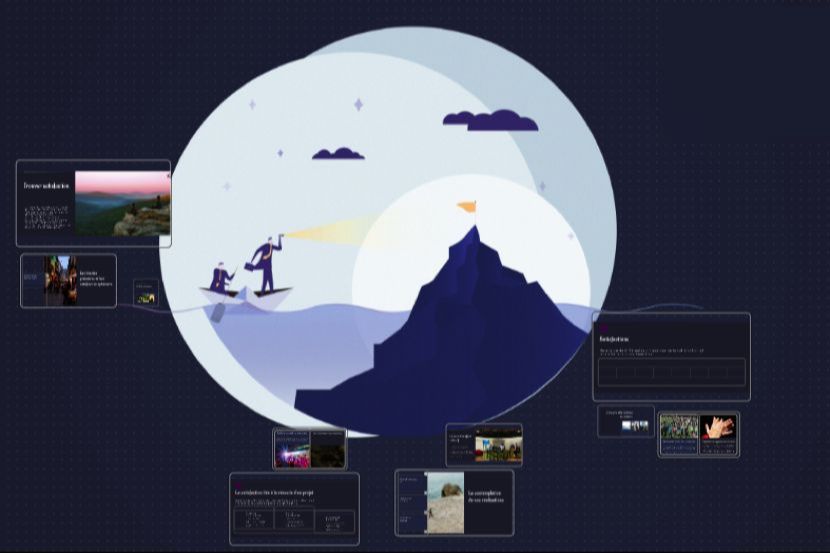
I received an enthusiastic press release from Prezi about their new ability to produce A.I.-based presentations. To test it out, I asked them for a presentation based on a canvas I suggested on the satisfaction...