The warning signs of a tipping point
What is the tipping point that leads us to go outside the plan or activate exceptional procedures?
Publish at January 15 2025 Updated January 15 2025


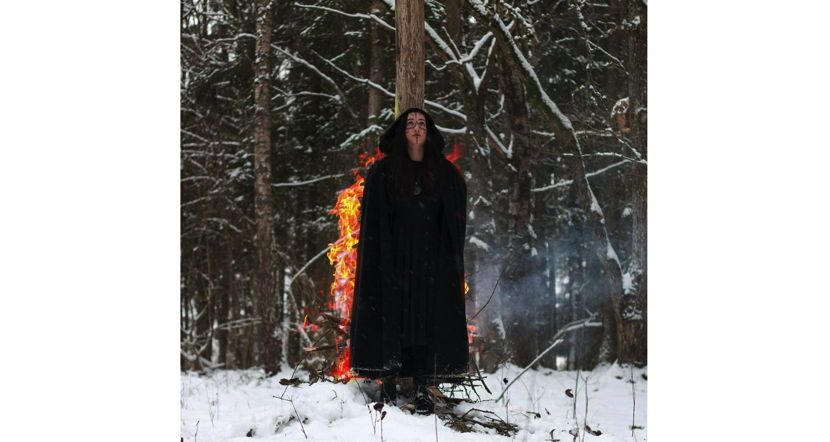
In the last centuries BC, the Celtic peoples were ruled by a priestly class: the Druids.
The Druids are first mentioned in the writings of Julius Caesar, who around 50 BC wrote that Druidism originated in Britain. But some say it originated elsewhere and much earlier, in Egypt or India (sources OBOD, druidy.fr). There are even references to rituals involving human sacrifice.
The name "druid" probably means "the very learned". They were the intellectual elite of the Celts. Druids knew how to read and write in Greek and Latin, but paradoxically left behind no texts. Even today, they remain a source of mystical and intellectual inspiration.
Discoveries about the Druids are fairly recent.
Cathy, a 31-year-old Irish woman, is being trained as a druid by OBOD, the "Order of Bards, Ovates and Druids". This is an English-based community that communicates with future druids from all over the world.
"sacred poets, storytellers, keepers of the mysteries, and much of the knowledge we have about the ancient Druids comes from the old Bardic tales."
The three levels (bard, ovate and druid) could be represented as storyteller, shaman and sage.
The word "druid" could refer to both men and women, although the word "druidess" is a later development. The rather masculine image of the druid has entered the collective unconscious.
Celtic culture left no written records, but monumental sculpted constructions.
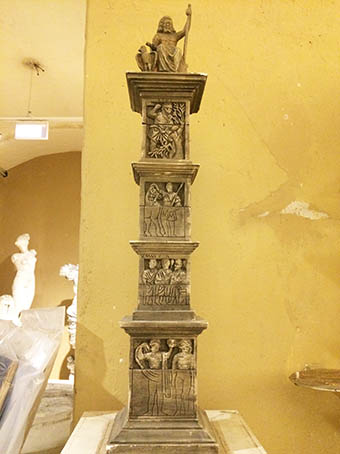
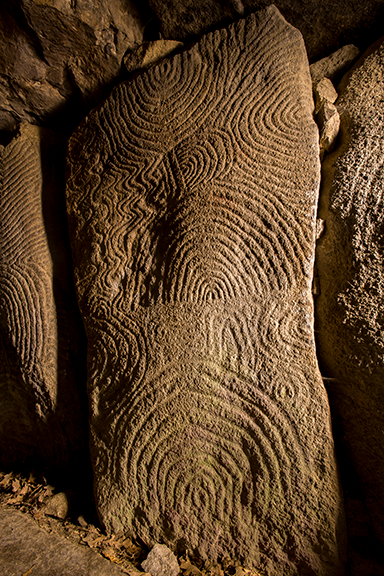 The Gavrinis CAIRN is located at the southern end of the island of Gavrinis, in the central part of the Gulf of Morbihan. At the time the cairn was built (between 4250 and 4000 BC2), the island was still attached to the mainland.
Today, Druidism is still practiced and passed on, notably by the OBOD association mentioned above. This gives you the chance to have tea with a druid and celebrate the return of spring with the "Imbolc" festival.
Imbolc is the end of winter, for the Celts around February 1, the time of renewal, the great cleansing. The festival is associated with the goddess Brigit, depicted as a triple goddess: maiden, mother and old woman. Brigit is a powerful and resilient goddess. She is the goddess of fire and sacred flame, change, poetry, inspiration, transformation, wisdom, metalwork and fire in the forge, healing, creativity, water, prophecy, education and learning. It protects births and homes.
Brigit's cross is used to implore her protection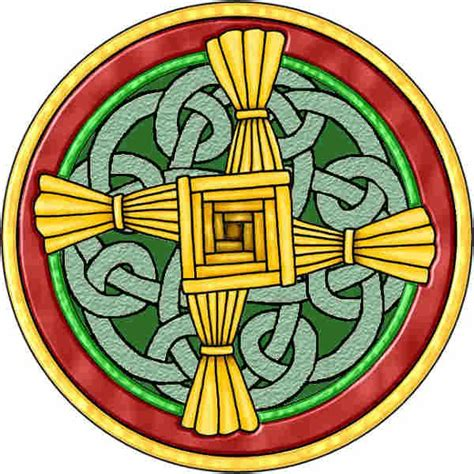 .
.
This festival is found in many cultures (ancient Roman, Amerindian, East Asian, Indian, Japanese... to celebrate the arrival of spring).
Imbolc means lustration, i.e. purification, which takes place at the end of winter.
Sources:
OBOD: https: //druidry.org/
Wikipedia " Imbolc" https://fr.wikipedia.org/wiki/Imbolc
Altar of Mists (January 7, 2025) "Imbolc 2025: history, meaning and celebration of the Sabbath."
https://auteldesbrumes.com/blog/blog-article/imbolc-histoire-signification-et-celebration-du-sabbat?srsltid=AfmBOoohkHWSyVB2enpmd1r5Wi5nTF4sNhG8YVCvJVk0Vy9TA21UdkhJ
Pascal LAMOUR (2019) Les carnets secrets du druide. The wisdom of men, the power of spirits. Rennes: Editions ouest-France https://amzn.to/4agEUGr
ARTE "les druides. prêtres des peuples celtes" https://www.youtube.com/watch?v=yP6Y16sTvVw
Arte regard, Ireland's new druids https://www.arte.tv/fr/videos/110247-004-A/arte-regards/
Wikipedia, StoneHenge https://fr.wikipedia.org/wiki/Stonehenge
Wikipedia, Gavrinis Cairn https://fr.wikipedia.org/wiki/Cairn_de_Gavrinis
Wikipedia, Shell clusters https://fr.wikipedia.org/wiki/Amas_coquillier
You might also like:
The warning signs of a tipping point
What is the tipping point that leads us to go outside the plan or activate exceptional procedures?
The mirage of the sharing economy
The sharing economy has been making headlines in recent years. Services like Uber and Airbnb are all the rage, much to the chagrin of traditional industries that are calling for them to be banned. While these small, lucrative businesses meet needs, there are nonetheless ethical issues that they drag with them. The illusion of a new economy gradually flies apart when we start digging deeper.
Making an alliance with nature
A review of the effects of climate change and the solutions to be engaged in each area: 8 essential MOOCs to share. Let's go!
Thanks to the web, will individualism prevail over social determinism?
Reproduction, as described by Bourdieu and Passeron, is the authoritative theory in the sociology of education. But doesn't methodological individualism deserve more attention as the web opens new perspectives?
Play and foreign language learning
Play in foreign language learning motivates the learner, creates a climate of security in the face of an unfamiliar and threatening language and, above all, enables considerable progress to be made.