Human institutions have always adapted to demand, whatever the sector. Today, this flexibility is even more apparent with the formation of the "global village", which requires humans to constantly push back their limits, propelling them along the path of innovation. Innovation does not mean creating something that has never existed before, but rather bringing a new, previously unimagined form to a specific object or field.
Indeed, since time immemorial, human beings have always needed to live under a shelter built according to what best meets their needs and the challenges of their time. Today, these challenges are based on the need to create a planet that is green, fair, equitable and sustainable for future generations. In view of these colossal challenges, it is vital for the construction sector to take new considerations into account, in order to provide an appropriate framework. While many different trades are already involved on construction sites, making this field quite complex in the eyes of the layman, in the ecological and even digital age, the sector is becoming even more complex. So how are construction workers adapting to these new challenges?
Building and the carbon footprint
Protecting the environment is a concern for many sectors, including construction. In fact, this sector is faced with a double dilemma: meeting the demand for housing for a growing population, and preserving nature. Admittedly, these missions seem contradictory, given that the construction industry uses over 30% of natural resources and generates a quarter of solid waste. What's more, built spaces are among the world's biggest emitters of CO2. The World Green Building Council estimates their energy consumption at 36% and their CO2 emissions at 39% worldwide. Clearly, buildings have an effect on the state of the planet. So how can the construction industry combine its missions with respect for the environment?
Decarbonizing construction sites is something that the players in this field are committed to! Several options are available, such as wood construction, which has set new records for zero-carbon emissions, provided that the materials used do not come from a site thousands of kilometers away. In other words, local consumption reduces greenhouse gas emissions resulting from the transportation of materials.
Apart from this solution, modular construction seems to make a valid contribution to the decarbonization of building sites. This is made possible by the very nature of the constructions themselves. To be more precise, modular construction refers to the manufacture of building components in a factory, which are then assembled on site. This strategy improves the carbon footprint of operations.
What's even more eco-friendly about this construction method is that, should there be a need to relocate buildings, this method avoids destruction. All you have to do is dismantle the building as if it were a simple Lego set. What's more, the materials are reusable, as long as they are factory-fitted for the new site. And this constitutes a form of recycling that de facto reduces the carbon footprint. In this quest, AI seems to be an essential tool in this sector.
Digital technology at the service of the building industry
The building and civil engineering sector is adapting to the technological advances of its time, in particular artificial intelligence (AI). The building industry has no intention of standing aside from these advances. That's why it's integrating AI into the human resources recruitment process, as it facilitates and selects with much greater precision the best-performing and most suitable profiles for the job on offer, with the potential to generate profits.
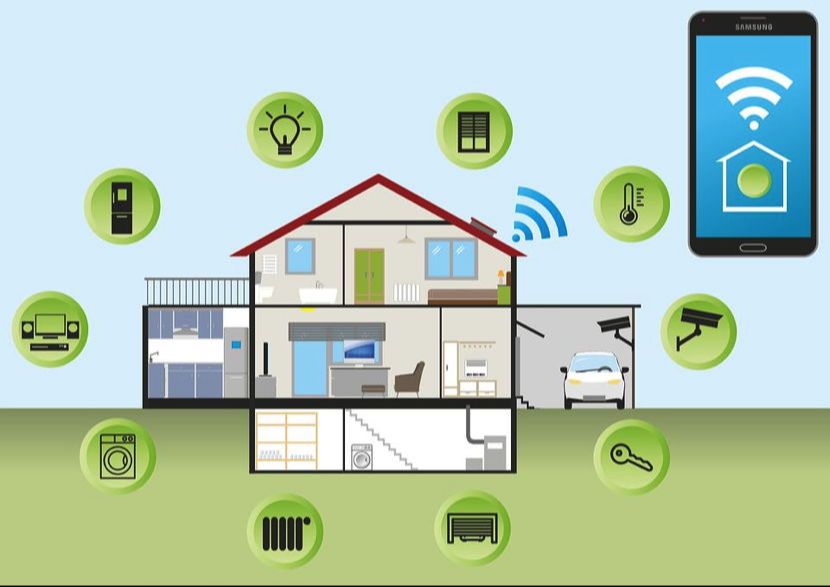
The use of AI in the building industry not only improves decision-making, it also helps to reduce the ecological footprint, because AI's autonomy means it can, if programmed to do so, regulate energy consumption in the home and identify the most energy-hungry appliances and rooms, using sensors to link various services and devices. Increasingly, the concept of the intelligent home is winning over many people, and is a good thing for the environment.
Apart from these two advances, the use of AI can reduce accidents in the workplace. Indeed, according to 2016 statistics on accidents at work in the construction industry, out of around 18.7 million individuals, there were 622. 000 lost-time accidents and around 500 fatalities. Most of the causes of these accidents are due to inattention. The role of AI in this perspective is to predict the risk of accidents on the worksite using a video surveillance system, the Smartvid.IO method - intelligent software - with a view to minimizing them and guaranteeing greater safety for workers on the site.
All in all, the construction sector is in the process of mastering its complex environmental and digital challenges, by opting for materials that are less harmful to the planet, and by integrating digital technology to good effect, with a view to guaranteeing a livable living environment for the population.
Illustration: Pixaline on pixabay.
References
Chauvot Myriam, 2019, La construction modulaire va établir un record mondial de hauteur en Europe", Les Echos, online https://www.lesechos.fr/industrie-services/immobilier-btp/la-construction-modulaire-va-etablir-un-record-mondial-de-hauteur-en-europe-1146751
Lombard Éric, 2019, "Le bâtiment au cœur de la transition écologique", Les Echos, online https://www.lesechos.fr/industrie-services/immobilier-btp/le-batiment-au-coeur-de-la-transition-ecologique-1152738
Pittance Olivia, 2024, "Quelle place pour l'AI dans lesecteur du bâtiment", online https://www.ebp.com/blog/decrypter-actualite/inteligence-artificielle-ia-opportunites-batiment
Prime Target, The future of the global smart home industry, online https://primetarget.tech/fr/le-futur-de-lindustrie-mondiale-de-la-maison-intelligente/
Serero David, 2024, "L'intelligence artificielle au service du BTP", online https://www.youtube.com/watch?v=0NvHVdh2DM0
Terrafutura, "Alimentation : pourquoi manger local est un geste de protection de l'environnement", online https://www.terrafutura.info/alimentation-pourquoi-manger-local-est-un-geste-de-protection-de-l-environnement/
See more articles by this author