

The Englishes MOOC course was developed by an artist and is designed for anyone interested in the (English) language. It explores the history of English, its pronunciation, and its relationship to the art world.
Publish at February 26 2025 Updated February 26 2025


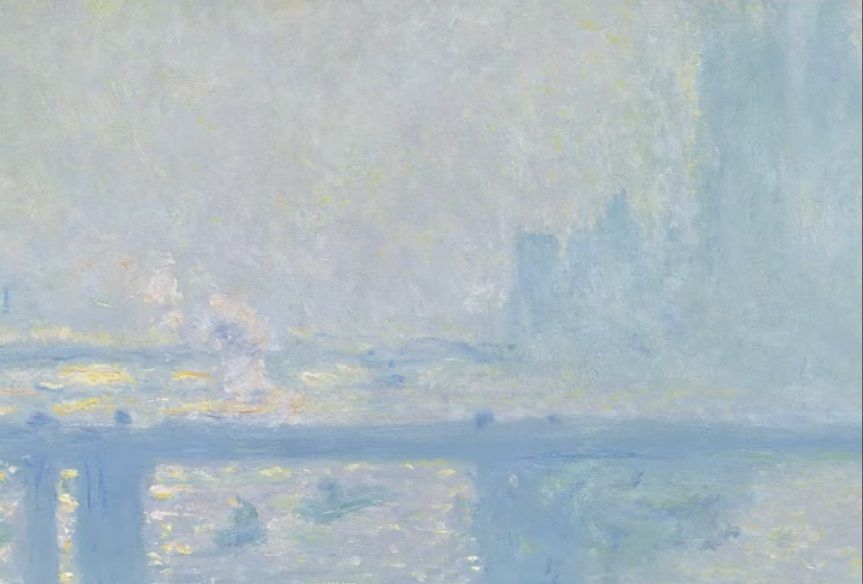
Meteorology and art history have no apparent connection. However, the work of dynamic weather researchers has helped to explain, at least in part, something that was very much in evidence in the Impressionist painters Turner and Monet. Early in their careers, they tended to paint details over long distances. At the same time, however, as the Industrial Revolution was taking hold and releasing pollution, their works were destined to become more vaporous.
During this period, factories expelled a great deal of sulfur dioxide through the burning of coal, creating a haze over London or Paris on certain days. As a result, researchers believe this influenced painters' styles, as their representation of the world changed at the same time. Some might speculate that the two artists' visual acuity diminished as they aged. However, paintings produced in the same periods outside urban environments still had very clear details. What's more, if Monet did indeed suffer from cataracts, they were diagnosed and treated seven years after his trip to London.
Consequently, the Impressionists would have been affected by the growing pollution of the Industrial Revolution. Nevertheless, we shouldn't think that they complained about it. A letter from Monet to his wife explains his discouragement at the fact that there had been little or no mist over the English capital in the preceding days, discouraging him from painting. This reality was even a source of inspiration for artists, who in this way reproduced the air of the times.
Running time: 4 minutes
Learn more about this resource
You might also like:
The Englishes MOOC course was developed by an artist and is designed for anyone interested in the (English) language. It explores the history of English, its pronunciation, and its relationship to the art world.
A serious game on social engagement
Many serious games address the topic of sustainable development. Yet before such solutions were proposed, innovative people had to go against the social grain and fight to improve their environment. A humorous adventure game, hosted by the National Film Board, teaches children the attitudes they need to adopt to make a difference.
Elude: a serious game for understanding depression
An original approach to depression. The game's metaphor is well conceived, a little dark and informative about a problem that affects millions of people.
The sharing economy has led to small changes in various economic sectors such as transportation, housing, etc. This approach has changed the relationship of citizens for different services, now cheaper and offered by their fellow citizens. However, who actually benefits from this new economy? The people or the companies in question? A U.S. newsgame shows how the life of Uber drivers isn't as lucrative as one might think.
Learn the mechanisms of misinformation with Bad News
Understand the strategies of online disinformation through an interactive experience that puts you in the shoes of a fake news propagator.


