Let's build together our educational fictions
The law of attraction also applies to the pedagogies we aspire to. If we start competing in school, we should not be surprised that it continues in business and in our lives.
Publish at March 06 2025 Updated March 06 2025



Certainties are called into question every day, and chaos seems to impose itself on our daily lives. We no longer need to ask ourselves how we can withstand shocks, but rather how we can grow from them. This is precisely the question answered by the concept of anti-fragility developed by thinker and statistician Nassim Nicholas Taleb.
Contrary to conventional wisdom, which advocates simple robustness in the face of hardship, Taleb introduces a revolutionary notion: certain systems, instead of merely surviving disturbances, benefit from them and improve thanks to them.
Anti-fragility is thus distinguished from two other states that are often confused:
In this context, anti-fragility is a notion to be cultivated in order to adapt to contemporary challenges, but above all to prepare future generations to face an uncertain future. Yet our educational systems and lifestyles are often built on principles of excessive protection, reducing people's ability to navigate uncertainty.
Applying anti-fragility in education and everyday life therefore involves learning to take advantage of chaos, to exploit mistakes as opportunities for progress, and to develop unfailing intellectual and emotional flexibility.
The concept of antifragility, introduced by Nassim Nicholas Taleb, refers to the ability of certain systems not only to withstand shocks and stress, but to take advantage of them to strengthen and improve themselves. Unlike fragility, where disturbances cause damage, or robustness, where systems remain unchanged in the face of hazards, antifragility implies growth and improvement through disorder and uncertainty.
Source : fs.blog
Economy: Entrepreneurs often thrive in volatile economic environments. Crises weed out the weakest companies, allowing the most innovative and adaptive to develop further.
Biology: Living organisms demonstrate antifragility throughout evolution. Exposed to environmental stresses, species undergo mutations which, if beneficial, are selected for, reinforcing the survival of the species.
Complex systems: Natural ecosystems, such as forests, benefit from disturbances like fires. These events, although destructive in the short term, promote biodiversity and ecosystem resilience in the long term.
Antifragility differs from simple resilience. Whereas resilience enables a system to return to its initial state after a disturbance, antifragility goes further, using stress and shocks as levers to evolve and improve. In this way, an antifragile system not only survives hazards, but also emerges stronger from them.
By adopting antifragile strategies, individuals and organizations can transform uncertainty and disorder into opportunities for growth, developing dynamic robustness in the face of unforeseen challenges.
Current school systems, often rigid and designed to minimize errors, do not sufficiently integrate uncertainty as a natural and formative element. By protecting students from failure and unforeseen challenges, these systems deprive them of an essential opportunity: that of learning to adapt and take advantage of obstacles. Applying the concept of anti-fragility to education means rethinking learning methods, encouraging experimentation, autonomy and critical thinking.
Applying anti-fragility to education means transforming the way we prepare our learners to face the complexity of the world. Rather than locking them into a rigid, protective framework, it's essential to teach them to take advantage of the unexpected, to experiment, to fail and to adapt. Only in this way can they not only survive in an uncertain world, but thrive and prosper in the face of the challenges that lie ahead.
Traditional education relies heavily on a predictive, linear approach:
This model doesn't work well in a world where jobs are constantly evolving, knowledge is becoming obsolete faster than ever, and the unexpected is the norm.
For students overprotected against risk and error, the fear of failure is nurtured by a system that punishes rather than values experimentation. Yet failure, far from being a hindrance, is a fundamental driver of learning: it forces us to rethink our strategies, understand our weaknesses and improve.
In an anti-fragile approach, it's no longer a question of passive learning, but of active experimentation. Project-based learning, simulations and entrepreneurship are powerful tools for immersing students in situations where they must test, fail, adjust and try again.
In these environments, error is no longer a fault but a learning opportunity, fostering a resilient and adaptable mindset.
Training anti-fragile individuals means giving them the tools to navigate in an uncertain world, rather than locking them into rigid patterns. This means developing autonomy and critical thinking skills.
Education should thus cease to be a simple process of transmitting knowledge, and become a field of experimentation, where every challenge is an opportunity to learn and adapt.
Antifragility is proving to be an essential approach to navigating a constantly changing world. Unlike simple resilience, which aims to withstand shocks, antifragility enables us to thrive on hazards and disorder. By integrating this concept into our daily lives, we transform the unexpected into opportunities for personal and collective growth.
Education plays a central role in this process. By encouraging children to face challenges, experiment and learn from their mistakes, we prepare them to become adults capable of thriving in the face of uncertainty. As Ana Lorena Fabrega points out, exposing children to difficult situations and measured risks helps them develop resilience and self-confidence.
Source : afabrega.com
Thus, adopting an antifragile posture in our lives and, above all, in our educational approaches,enables usto transform chaos into a catalyst for development. By accepting uncertainty not as a threat, but as an opportunity for evolution, we pave the way for a more adaptable and flourishing future.
You might also like:
Let's build together our educational fictions
The law of attraction also applies to the pedagogies we aspire to. If we start competing in school, we should not be surprised that it continues in business and in our lives.
The right to school: rights go hand in hand with duties
We are immersed in the law on a daily basis, but many rules are acquired by reflex or imitation, without any knowledge of their social, legal or conventional basis. At school, we can take advantage of courses or discussions during which rights and duties are put into perspective.
Coopetition, competition in cooperation
Normally, we oppose competition and cooperation as two methods of operation. However, by creating a context of collaborative work and competition between teams, the results are surprisingly positive. More and more people in the business sector are interested in coopetition and even schools are trying to adopt it.
Parents and the school. Integrating dialogue with parents
One of the factors in the success of opening up the school to parents seems to be linked to the attitude of the head teacher.
Ecological uses of banana leaves
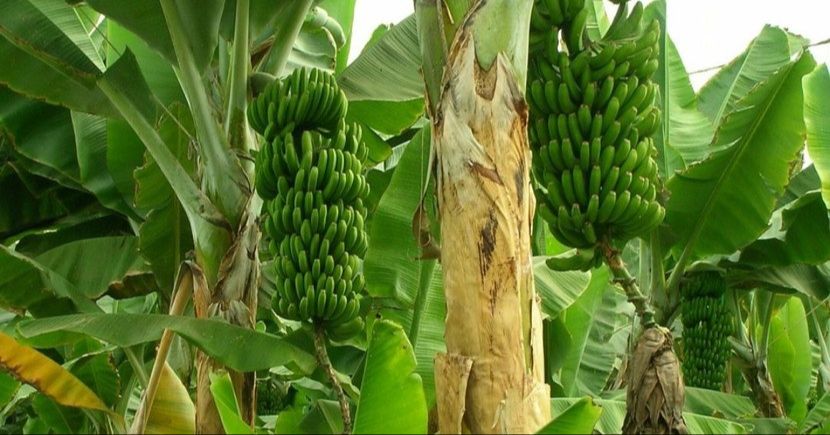
Banana leaves, which have long been used for gastronomic and clothing purposes, need to come back into the spotlight in view of the ecological issues at stake. In fact, given their importance, we need to raise awareness of their importance and reforest banana trees.