The Great Atlas of Colonial Empires
A global and connected history project, this atlas is rich in more than 370 original maps and computer graphics, making it an indispensable reference work for students and history lovers alike.
Publish at March 18 2025 Updated March 18 2025


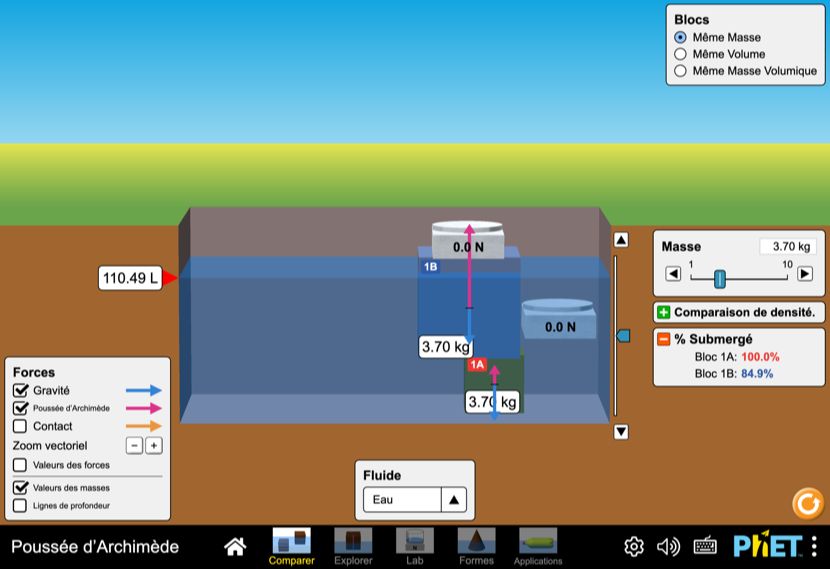
The PhET Interactive Simulationsproject at the University of Colorado offers over 100 interactive scientific simulations accessible in HTML5, meaning they can be used directly on any browser and device. They can even be used offline. Best of all, they're available in over 120 languages and dialects ("Translation" tab).
Very few, if any, instructions are offered; instead, the simulations are designed to let users discover for themselves how they work. Accompanying videos are offered for teachers in the "Teacher Resources" section, as some are sufficiently complex to require either a theoretical background, or the accompaniment of someone who knows how to use it.
Some simulations are aimed at children, others at university students, and the offer is wide-ranging and regularly renewed. A variety of materials are available for schools and communities.
An extraordinary resource for all teachers, educators and students: PhET interactive simulations
You might also like:
The Great Atlas of Colonial Empires
A global and connected history project, this atlas is rich in more than 370 original maps and computer graphics, making it an indispensable reference work for students and history lovers alike.
A.I. hallucinations: when it invents realities
AI can generate erroneous information or "hallucinations", with repercussions in critical sectors such as healthcare, justice and education. To mitigate these risks, we need to improve training data, design accurate prompts and encourage AI self-assessment. Education and responsible use are essential to limit these AI drifts.
Co-creativity and disabilities: different ways of working in teams
Co-creation is not a fad, but it is not a panacea either. It must be complemented with other project and team management formulas if we want to achieve a sustainable and fair result in our organizations.
Effort is part and parcel of learning, whatever that may be. Until this reality is better rewarded by the school system, it would be in the interests of all concerned to create an environment where effort is as important, if not more so, than grades.
Teachers and schools have long learned to adapt their activities when it's too hot on their premises, but now it seems that traditional responses are insufficient. Are they?