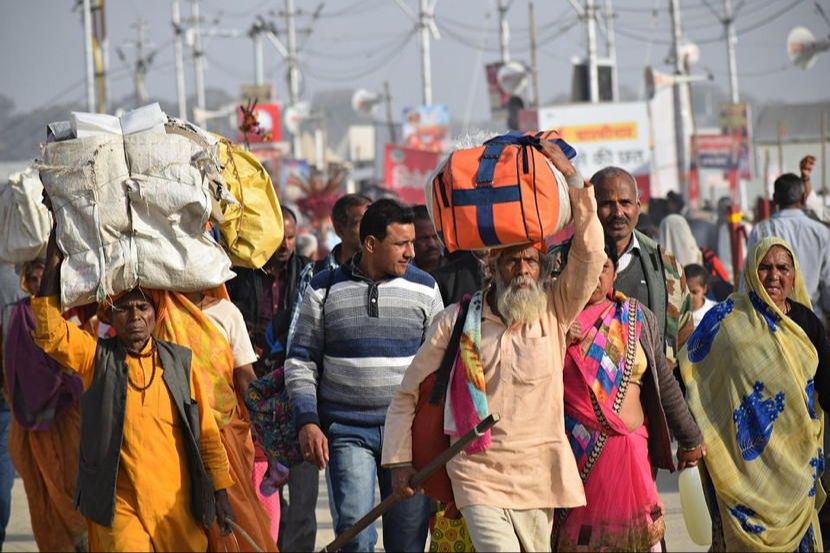
The migration of men from rural to urban areas is commonplace. At some point in the mid-19th century, it became the norm. Strongly experimented with by the poorest segment of the population, craftsmen faced with stiff competition from industrialists left the countryside for the cities, in search of better living conditions. Other trades joined in, such as teachers, notaries, landowners and farmers.
Since the coronavirus pandemic, reinforced by other current challenges of all kinds, people now want to live better, more fulfilled lives. They want to give meaning to their work and their lives, away from the suffocating daily grind of urban spaces. The countryside seems to be the best answer to their expectations, hence exurbanization, commonly known as the urban exodus.
If the search for new opportunities is the reason for the emptying of the countryside, how are we to understand these returns to regions that were less promising until recently? Is it a return to our roots? A desire to reconnect with oneself and with nature? Or simply a fashion trend?
Ecological reasons
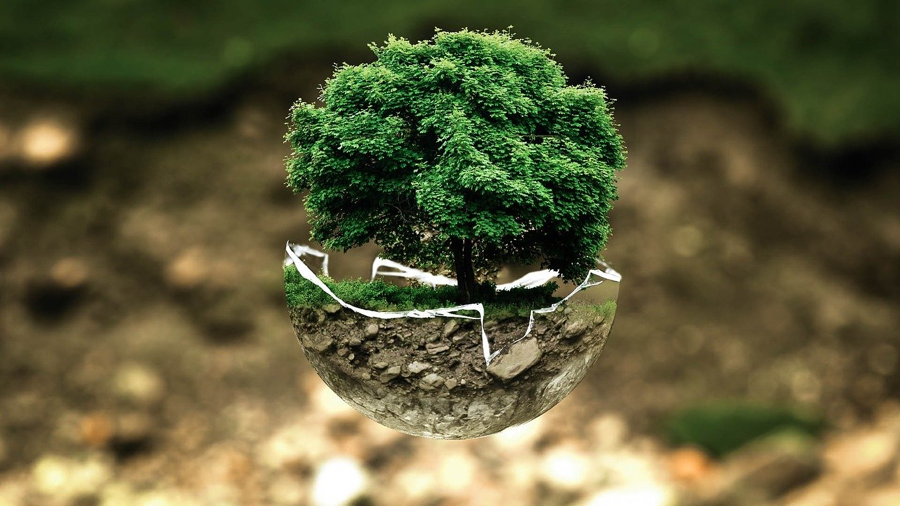
Calls for the protection of nature and biodiversity are regularly heard. For some, protecting the planet means adopting eco-responsible behavior through simple gestures such as sorting waste. For some, however, this melody coincides with a drastic and total change of lifestyle, even if it means turning our backs on the hustle and bustle of the world to take refuge in the peace and quiet of nature.
Far from being a spur-of-the-moment decision, the repopulation of the countryside is likely to help limit the ecological impact in cities, asserts Henri Landes , author of the book Repeupler les campagnes. Comment organiser l'exode urbain pour répondre à l'urgence écologique (1). In fact, he argues that the exacerbation of the rural exodus, due to a concentration of development initiatives in cities, has led to overpopulation in urban areas, making these areas vulnerable to natural disasters. In his view, rebalancing the population between town and country would be a strategy for ecological transition and adaptation to climate change, on the one hand, and for improving human health, on the other.
While leaving the city to take refuge in the countryside may seem unthinkable for people used to the hustle and bustle of the metropolis, returning to the countryside can be seen as a journey of initiation, a profound reconnection with nature, that nurturing breast to which we owe the essentials. This changes the way we perceive nature, no longer as a mere object of contemplation, but as our living environment, of which we are an integral part.
Rooted in the land and looking for opportunities
The land is a marker of our identity, and as such, we cannot fully exist without it. After all, if you want to know where you're going, you have to know where you've come from. It's in line with this philosophy of life that a significant proportion of young people decide to return to the land of their ancestors, in search of the new opportunities that the countryside has to offer. For a long time, the trend was for people to move en masse to the big cities, but today it seems that the opposite is true.
For some people, it's not necessary to have roots in order to settle on a piece of land, but for others, putting down roots is one of the main reasons for returning to the countryside. Such is the case of the Hachmi brothers (2), who converted to arboriculture in order to take over a family business; one of the brothers swapping his career in international management for boots, tractors and so on. It's clear that in this back-to-basics movement, there's a desire to make a place for oneself in a less competitive countryside, since most of the population is concentrated in the big cities, looking for their El Dorado.
As a result, it's more than strategic to think outside the box and embrace the possibilities the countryside has to offer. Henri Landes sees it no differently when he acknowledges that rural entrepreneurship is a great opportunity, given that there are plenty of places to do business. What's more, the connectivity between communities provides a double opportunity to develop a project and find niches. In this sense, you can be just as successful in the countryside, far from the hustle and bustle of the city, as you can in the countryside, contrary to popular belief.
A need for change
A change of scenery is a good thing, especially when you feel like you're on permanent vacation, far from the hectic pace of metropolises where time is the rarest commodity. Few people can cope with this unbearable pace, which is why people are turning to the countryside to regain a little serenity, peace of mind and better physical health.
Add to that the possibility of saving money, and you've got the perfect combo. All these aspects are what prompted Julien, a fashion photographer in Paris, and Pascale Sagnier, a former graphic designer, and her husband to move to the countryside, away from the madness of the city (2). They spoke to France 3's "enquêtes de région" about the benefits the countryside has brought to their lives: from improved health to serenity, they seem to have found a piece of paradise.
The need for change also rhymes with the search for a larger living space, which metropolises unfortunately don't offer, given the high population density of cities. While it's possible to meet lots of people in these big cities, solitude is paradoxically gaining ground. In search of a less individualistic, more supportive life in society, Kristina and her cousin (4) decided to move temporarily to the countryside, prompted by the coronavirus health crisis. They explained that they were suffocating in Berlin and needed more freedom.
Yes to returning to the countryside, but how?
All these experiences make people want to move back to the regions right away. But public policies need to be in place to encourage people to move back and, above all, to support them in doing so. Henri Landes recommends
- the imposition of an ecological service,
- encouraging companies to invest in rural areas.
All in all, moving to the countryside is a fine initiative, but you still need to adapt to the pace and lifestyle of this place, which requires a great deal of adaptation in terms of transport, for example.
Illustration: Abouriarajesh on Pixabay
References
(1) Henri Landes - Repeupler les campagnes : comment favoriser l'exode urbain pour répondre à l'urgence écologique - https://editions-observatoire.com/livre/Repeupler-les-campagnes/368
(1) BackTo earth, "Repeupler les campagnes : comment organiser l'exode urbain pour répondre à l'urgence écologique, online https://www.youtube.com/watch?v=SGIn23MJnXs
(2) France 3 Nouvelle Aquitaine, "Nos campagnes sont-elles en train de se repupler?", online https://www.youtube.com/watch?v=_9y9fj_GlW0
(3) Université ouverte, "De l'exode rural à l'exode urbain : mythe ou réalité d'un inversement spatial ?", online https://www.youtube.com/watch?v=MIYvYOTCaeg
(4) Arte - Regards, exode urbain : l'appel de la campagne, online
https://www.youtube.com/watch?v=-Ekdwa2AirU&pp=ygUJI2x1cmJhaW5l
See more articles by this author