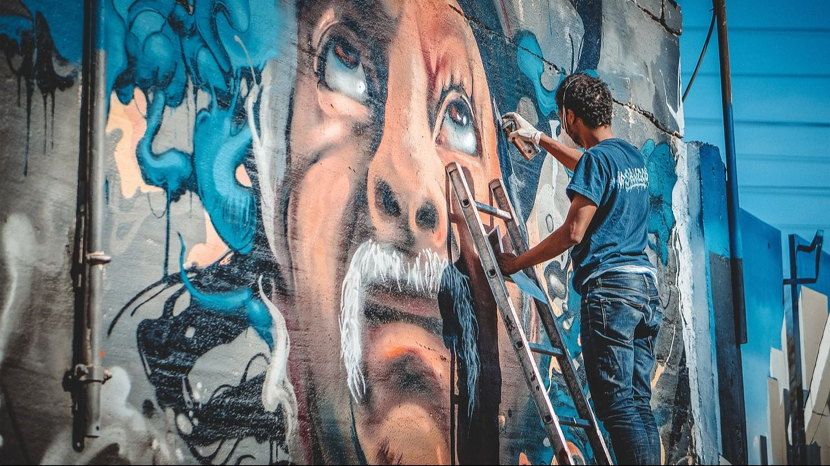
AI and art: the end of the deification of artists?
Nevertheless, the distance between an original creation, the fruit of the artist's genius, and the production capacity of AI tools is becoming ever shorter.
Publish at May 14 2025 Updated May 14 2025


Throughout the ages, humans have told stories to pass on the fundamentals of living together. These tales, rooted in oral traditions the world over, offer a valuable mirror on the art of teamwork. Where contemporary models of collaboration often focus on efficiency, planning or leadership, ancient tales and wisdoms remind us of a deeper truth: being a team means first and foremost agreeing, in plurality, around a common purpose, with all that this implies in terms of trust, listening and relating.
These stories are not manuals. They are invitations. Teamwork, according to human wisdom, means :
The world's traditions remind us that teamwork is not just about organizing roles or distributing tasks. It's about creating the conditions for an embodied "doing together", where each person is both the bearer and weaver of the collective bond. The conditions for success are therefore less technical tools than relational principles: trust built through actions, active listening to differences, the ability to give before receiving, and constant adjustment to unforeseen circumstances.
It's this wisdom that we need to rediscover in organizations, beyond managerial fads. Where plans fail, stories can inspire. Where processes stall, symbolic gestures can restore momentum. Where individualism silos, shared meaning can unite.
Illustration: Jazella - Pixabay
Sources :
Berreby, D. (2017). La sagesse des contes. Paris : Albin Michel.
Une soupe au caillou - https://www.youtube.com/watch?v=bjd9MOo-Nu4
The Blind Men and the Elephant - Wikipedia - https://fr.wikipedia.org/wiki/Les_Aveugles_et_l%27%C3%89l%C3%A9phant
The legend of the hummingbird - https://www.halternatives.eu/la-legende-du-colibri
Calabash brothers - https://en.wikipedia.org/wiki/Calabash_Brothers
You might also like:
AI and art: the end of the deification of artists?
Nevertheless, the distance between an original creation, the fruit of the artist's genius, and the production capacity of AI tools is becoming ever shorter.
The state of collective intelligence facilitation worldwide and in France
Facilitation is gradually establishing itself alongside other practices such as facilitation, coaching and animation. It opens up new potential for group development in favor of societal commitments.
What is taught in Political Science
Do politicians take political science courses? To answer this question, let's take a look at their qualifications and also at what is taught in political science...
What the voice translates from the written word
The aim is to give students the opportunity to experience language, to enable them to reappropriate their ability to position themselves as speakers and thus take control of their expression.
Wikipedia: the quality of contributions affects the quality of articles
The principles of editorial self-management and peer review on which Wikipedia builds its growth and credibility are not enough to ensure the quality of its articles. Why are some of them excellent and others just average, or even mediocre? Here are some answers.