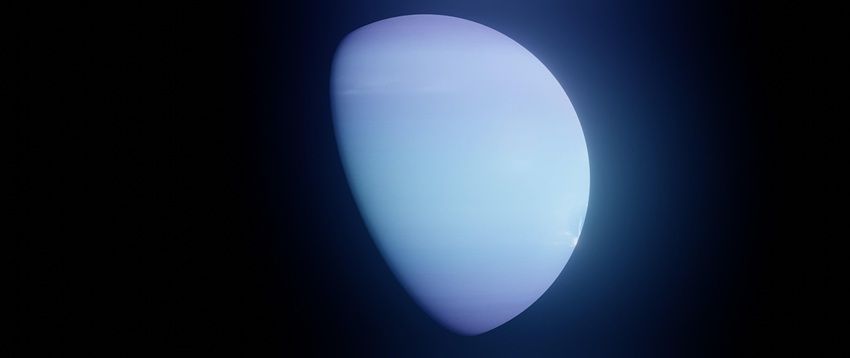
Our solar system and galaxy were the first objects of study for what was going on in the universe. Among the various celestial bodies, we count Neptune, a gaseous planet less well known than others, yet of great interest to researchers. Four times the size of the Earth, Neptune is a benchmark for analyzing the cosmos.
A new initiative was born in 2025: the ATREIDES project. Bearing a name much loved by fans of the Dune saga, it seeks to understand how planets are distributed in space, particularly gaseous extrasolar planets like Neptune. Improved telescopes have made this easier. They were able to note that some exoplanets had revolutions of only a few days around their star, and that these were generally "Neptunian deserts".
On the other hand, other environments had allowed several Neptune-like celestial bodies to develop far from their sun, in order to gain mass. Between these "savannahs" and "deserts", there are Neptunian ridges that demonstrate the creation of different solar systems and galaxies. A vertiginous project which, according to the experts, will enable us to decipher how this sea of infinite space environments came into being.
Running time: 11:21
Image: CoolVid-Shows from Pixabay
Learn more about this
resource
See more resources from this institution