
Learning in the dark of winter
Winter deprives us of light and the desire to learn, so why not stay under the comforter?
Publish at November 26 2025 Updated November 27 2025


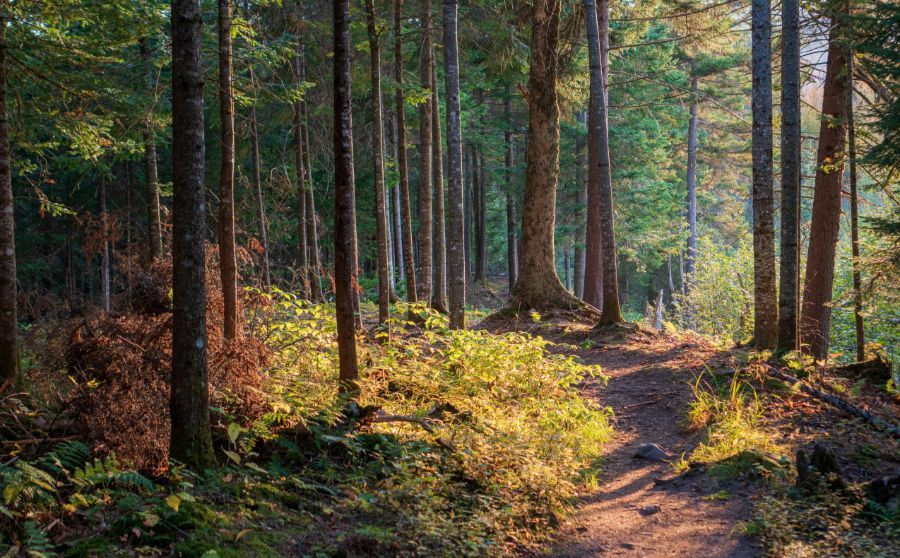
In the vast boreal forests of northern Canada, a Cree/Eeyou tracker doesn't just read footprints in the snow. He reads a living text, a moving script of the world. Where the Western observer sees marked ground, he perceives the trace of an intention, the story of a being in motion, a dialogue between earth, wind and flesh. His science is not analytical, it's relational: it's woven in a sensitive link with the environment, in a body that knows even before it understands.
Every imprint, every bent grass, every bird's silence becomes a fragment of history. The depth of a furrow reveals the fatigue of a caribou, the tension of a branch reveals the direction of a hare, the change in air density betrays the recent presence of an animal. The tracker listens to the ground, to vibrations, to the light, which differs according to the time of day. He also sees what we don't: the movements of the invisible, the moisture of a breath, the pause of an animal in a clearing. The forest thus becomes an animated page, which only a mind attuned to the living can decipher.
Learning this art begins early, often in childhood. The young Cree / Eeyou accompanies an elder without any words breaking the continuity of the world. Teaching is by presence, by immersion. The child first learns to be silent, to slow down, to breathe with the wind. The elders say, "Look long and the world will answer you. Little by little, the forest becomes his school and his mirror. He discovers that to follow a trail is to enter into a way of thinking that is not his own, but that of the world.
When it comes to passing on knowledge, the Cree / Eeyou pedagogy is based on the same humility. Knowledge is transmitted through mythical stories that link each animal to an ancestor, through shared walks where students learn to feel before naming, and through ceremonies where thanks are given to the land. We teach not so much knowledge as a way of being: availability, respect, gratitude. The master tracker guides the apprentice not by injunction, but by the right gesture, the slow rhythm, the way of inhabiting silence. The spoken word comes later, as a shaping of what has already been experienced.
In the forest, the tracker passes through different states of consciousness. First, open attention, a tension-free vigilance in which everything is perceived simultaneously: sounds, smells, textures, light. Then comes empathic resonance: he allows himself to be permeated by the other's presence. He senses the animal's fear, hunger and hesitation. Finally, he enters a state of guidance, akin to a gentle trance, in which the environment speaks directly to him. Signs appear of their own accord; the body moves with precision, without conscious effort. This knowledge of feeling is at the heart of Cree / Eeyou phenomenology: to know is to participate in life as it unfolds.
Symbiosis with the living is total. In Cree/Eeyou cosmology, everything is relationship. The concept of "wahkohtowin" designates this universal kinship between human beings, animals, plants, stones and spirits. The tracker doesn't observe nature from the outside, he's part of it. To follow an animal is to follow a brother. To take one's life is to receive a gift, and every gift calls for a counter-gift. Before hunting, the tracker offers tobacco to the spirit of the land. He thanks the forest, promises not to waste anything, and to share. This symbolic pact maintains the balance of the world and man's humility.
This way of living in the forest is based on an ontology of connection. The world is not made up of objects, but of relationships. The human being is not at the center, but a knot among others in a web of living things. Philippe Descola has described this vision as an animistic ontology: each being shares a common interiority, but its bodily forms produce different points of view on reality. To know, then, is not to separate but to connect, to make room for the multiplicity of perspectives.
Anthropologists Tim Ingold and Colin Scott have shown that, among the Cree/Eeyou, knowledge is built through walking and attention. The environment is not a backdrop, but an active partner in knowledge. Far from the idea of mastery, it's a mutual commitment: the forest teaches the tracker as much as he learns from it. The act of following becomes an act of co-naissance, an experience of mediation between body and world.
In the field of contemporary training and facilitation, this wisdom can inspire a different learning posture. It invites us to listen to the group's senses, to slow down our pace, to read body and emotional signs with a fine-tuned eye, and to be humble about what we know.
The facilitator, like the tracker, does not seek to control, but to perceive flows, to reveal the possibilities of a living environment. In a world saturated with data and abstractions, the lesson of the Cree / Eeyou tracker reminds us that the deepest intelligence is that which knows how to feel before explaining.
The art of the Cree / Eeyou tracker is not just an ancestral technique, it's a living philosophy. By following the trail, he becomes part of a continuity that goes beyond the human. Every step becomes a silent prayer, every footprint a conversation between worlds. He teaches us that to know is to honor, and that to walk in the forest is to learn to walk in life.
References
Abram, D. (1996). The Spell of the Sensuous: Perception and Language in a More-Than-Human World. New York : Pantheon.
Berkes, F. (2012). Sacred Ecology (3rd ed.). New York: Routledge.
Descola, P. (2005). Beyond Nature and Culture. Paris: Gallimard.
Ingold, T. (2000). The Perception of the Environment: Essays on Livelihood, Dwelling and Skill. London: Routledge.
Scott, C. (1989). Knowledge construction among Cree hunters: metaphors and literal understanding. Journal de la Société des Américanistes, 75, 193-208.
Viveiros de Castro, E. (2009). Métaphysiques cannibales. Paris : PUF.
You might also like:
Learning in the dark of winter
Winter deprives us of light and the desire to learn, so why not stay under the comforter?
Does the future have a future?
When the future is uncertain, we need to look at how we can transform our methods to learn from the future that has already happened.
How judgment works and how it can be useful in relationships with others
Judgment is a form of decision, and all our decisions are in fact influenced by many parameters...
The nervous limits of teachers
The search for efficiency, amplified by ever more efficient technological and administrative systems, is leading us to a reordering of relationships. Teachers can be the victims, but they can also benefit if they guide the changes...
From the relationship with knowledge to the desire to learn together
Mediation was first thought of as transmission, relationship to knowledge, learning and, finally, the desire to learn together.


