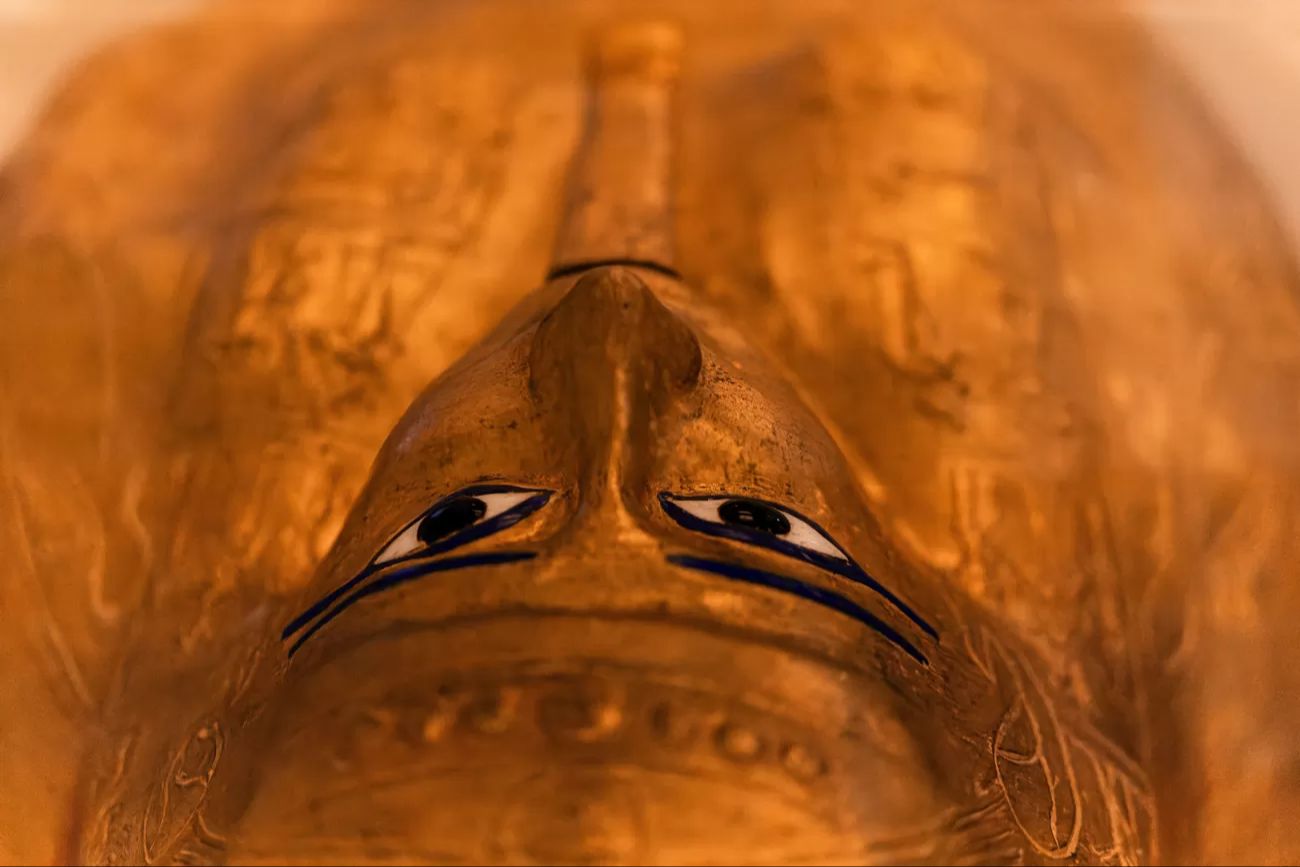
Ancient Egypt has long been the subject of many fantasies. We still knew very little about this period and one of the first major human civilizations. As a result, many aspects of it were often shrouded in mysticism, even into the 21st century. However, the research work of archaeologists and historians has helped to demystify many things.
Nevertheless, many questions remain about this population that lived on our planet nearly 5,000 years ago. Here again, periodic discoveries are shedding light on the subject.
Answers in an urn
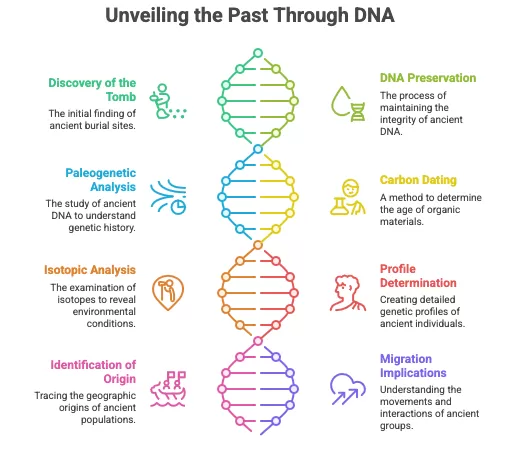
Adeline Morez Jacobs from Liverpool John Moores University, accompanied by the Francis Crick Institute, made a surprising discovery in Nuwayrat, 275 kilometers south of Cairo. They discovered a rock tomb containing an urn or ceramic pot filled with human bones. The cool microclimate of the burial chamber and the container preserved the ancient DNA intact, much better than other burial methods of the time.
Paleogenetics has long been interested in studying the genomes of ancient humans and living species. In 1985, DNA from a mummy was partially recovered, but this is nothing compared to what was found in this tomb. Here, we are talking about a complete genome, which is virtually unheard of. What's more, it has been carbon dated to between 2855 and 2570 BCE. Isotope analysis of the teeth, which are rich in cementum, has made it possible to recover DNA in better condition than from the bones.
DNA that proves migratory movements
Genetic analysis revealed that the man died at around 60 years of age and measured approximately 152 centimeters. Marks on his bones seem to indicate a life of hard, repetitive labor, potentially pottery work. Most importantly, it was proven that 80% of his genome matched individuals
- from North Africa and
- 20% was linked to Mesopotamia, the Fertile Crescent region.
This would therefore mean that, at that time, individuals from Western Asia migrated to Egypt. Thus, the hypothesis of a link between the two regions at that time seems increasingly likely and went far beyond the simple trade of objects.
A promising start
Of course, as the researchers behind this discovery point out, this only corresponds to the life of one man during this period. It would be premature to confirm this theory based solely on this discovery. However, it is a promising start for paleogeneticists.
It already shows that DNA dating back nearly 5,000 years can be analyzed and that further analyses of this kind could provide a better understanding of the origins of Egyptian civilization.
Illustration: 2432196705
References
Whole-genome ancestry of an Old Kingdom Egyptian - https://www.nature.com/articles/s41586-025-09195-5
DNA extracted from an ancient skeleton in a pot is a genetic mixture of two distinct worlds - https://www.earth.com/news/dna-extracted-from-ancient-egyptian-skeleton-is-genetic-mixture-of-two-distinct-worlds/
A video debunking the myths of ancient Egypt - https://cursus.edu/fr/23760/une-video-defaisant-les-mythes-de-lancienne-egypte
Isotopic Analysis - https://www.sciencedirect.com/topics/earth-and-planetary-sciences/isotopic-analysis
We decoded the oldest genetic data from an Egyptian, a man buried around 4,500 years ago - what it told us - https://theconversation.com/we-decoded-the-oldest-genetic-data-from-an-egyptian-a-man-buried-around-4-500-years-ago-what-it-told-us-262061
Luxor and Egyptian spices [Thesis] - https://cursus.edu/fr/23221/luxor-et-orpiment-egyptien-these
Ancient Egypt's oldest genome reveals surprising ancestry mix - https://www.earth.com/news/ancient-egypts-oldest-genome-reveals-surprising-ancestry-mix/