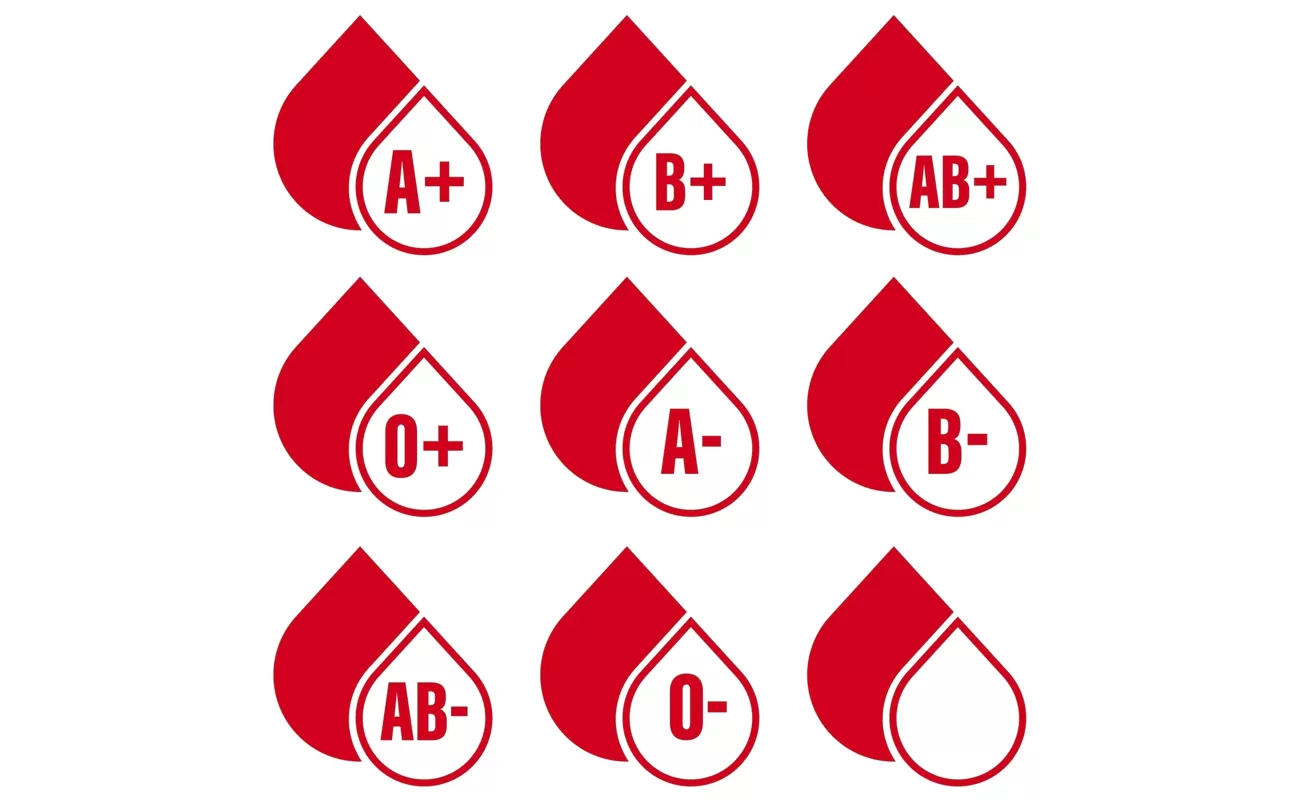
Blood is the most precious liquid we have. It's vital; the animal equivalent of tree and plant sap. It transports everything throughout the body. From oxygen to waste products, everything passes through the bloodstream. Our blood type is also a good indicator for the medical authorities, who will then know which blood to transmit or which type of organ will be accepted by the case.
Blood types indicate the presence or absence of antigens and antibodies. A types have A antigens and antibodies against B antigens. The reverse is true for type B, while type AB has no antibody and both antigens, and type O has no antigen and antibodies against both types A and B. This is why type AB blood types are ideal recipients, while type O blood types are highly sought-after donors.
A higher-risk blood group
But scientists are also noting that blood types can also be indicators of other health conditions. A team from the University of Maryland analyzed 48 genetic studies involving thousands of participants. They looked at those of 600,000 people who had not had a stroke, and 17,000 who had.
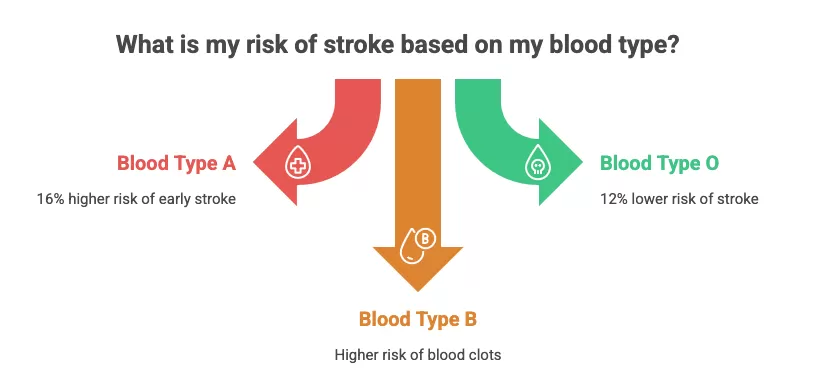
Their analysis showed a clear relationship between the gene responsible for blood group A and the presence of early-onset stroke, i.e. before the age of 60. Those of this blood group would have a 16% greater chance of experiencing this situation, unlike other blood types. Group O, on the other hand, would be 12% less at risk. This would be in line with previous studies showing that the genome of blood types, the ABO locus, would be associated with a calcification of coronary arteries that reduces blood flow and increases the chances of myocardial infarction. Blood groups A and B have also been linked to a higher risk of blood clots (thrombosis).
In search of an explanation
Should we worry if we have blood type A? Not really, according to Steven Kittner, since we're talking about a minor increase in the chances of stroke. What's more, their research has shown that, as we age, the chances of stroke for this blood type return to normal after the age of 60. Technically, it's those in group B who have the greatest chance of having a stroke in their lifetime, 11% according to their observations. Again, too small a percentage to require increased medical surveillance.
The question now is to understand why blood type can have an impact on these ailments. For the University of Maryland researcher, this is the next step: understanding why. Hypotheses range from coagulation factors diversified by the presence or absence of certain proteins, to platelets, etc.
Reference:
Your Blood Type Affects Your Risk of an Early Stroke, Study Reveals - https://www.sciencealert.com/your-blood-type-affects-your-risk-of-an-early-stroke-study-reveals
Your blood type could predict your risk of having a stroke before age 60, new study suggests - https://www.eurekalert.org/news-releases/963353
Your Blood Type Could Predict A Stroke Before 60. Here's Who's Most At Risk - https://www.ndtv.com/science/your-blood-type-could-predict-a-stroke-before-60-heres-whos-most-at-risk-9377389
How do you learn after a stroke? - https://cursus.edu/fr/11443/comment-apprendre-apres-un-avc
ABO system - https://fr.wikipedia.org/wiki/Syst%C3%A8me_ABO
Aging and ischemic stroke - https://pmc.ncbi.nlm.nih.gov/articles/PMC6535078/
Large-scale association analysis identifies 13 new susceptibility loci for coronary artery disease - https://www.nature.com/articles/ng.784
Learn more about this
news