
Pseudo consultants abound and their recommendations can be summarized in a few complementary principles
Publish at January 21 2026 Updated January 21 2026


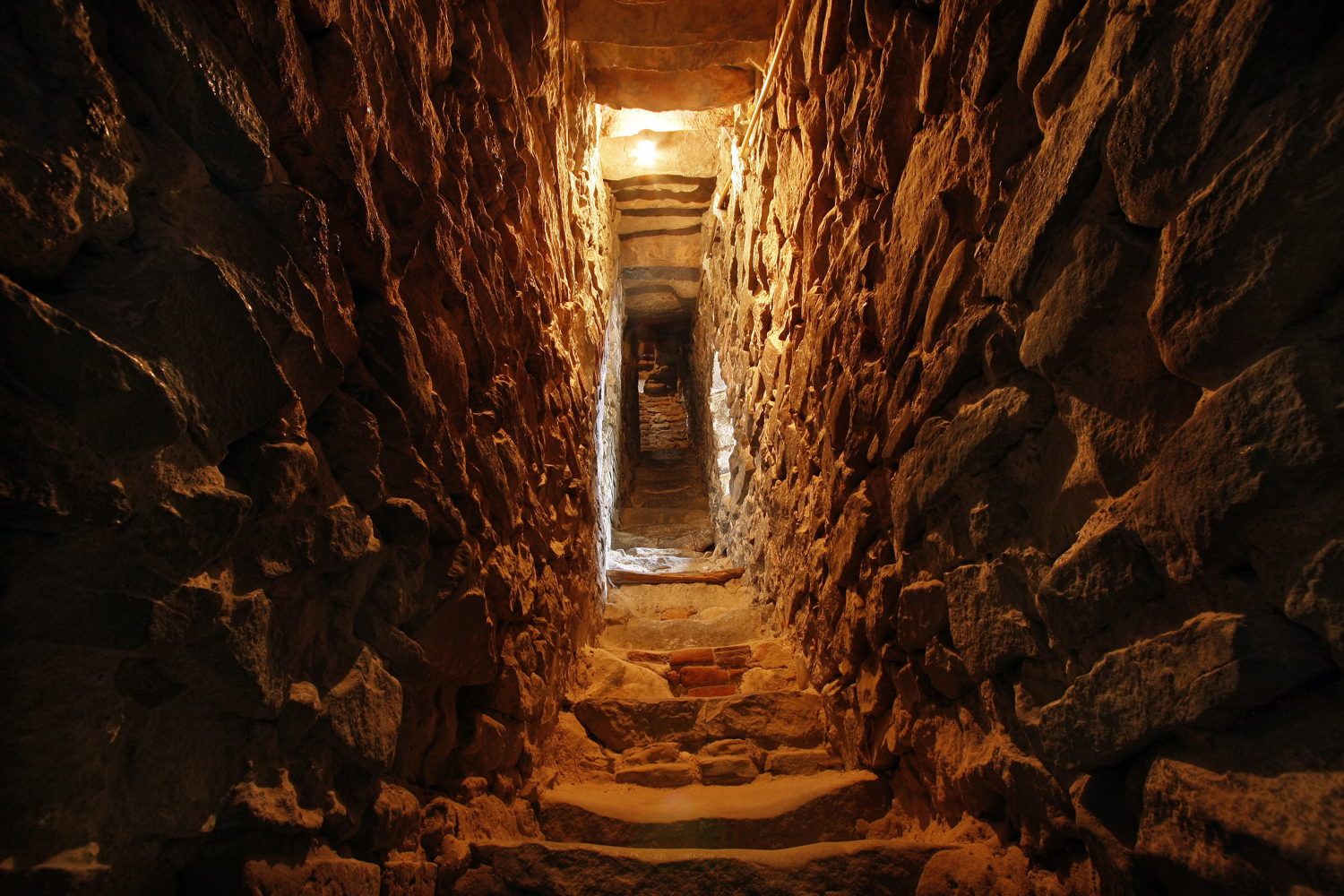
Archaeology has nothing to do with adventure films. Ancient temples with active traps and supernatural elements are more in the realm of fiction. Nevertheless, a number of archaeological finds are made by chance, and fiction would like to take advantage of this. A recent restoration of a church in Dijon led to a wonderful discovery.
It all started with a mistake in a previous restoration. In the 1970s, the Saint-Philibert church in Dijon was fitted with a heated concrete slab. Except that the building had been a salt depository in the 18th and 19th centuries. As a result, the salt was trapped in the soil and began to cause cracks in the building's foundation. To preserve this architectural gem dating back to the 12th century, workers had to work on it and dig everywhere.
All this, of course, under the supervision of archaeologists from INRAP (Institut national de recherches archéologiques préventives). They discovered a previously unknown staircase in the church's transept.
As they descended it, they were surprised to find a burial vault containing shrouded coffins of children and adults. They also found slab tombs dating from the 11th to 13th centuries and, even more surprisingly, six sarcophagi dating from Late Antiquity and Merovingian times (6th and 7th centuries). This means that the church site was already an important place long before it was built in the 12th century.
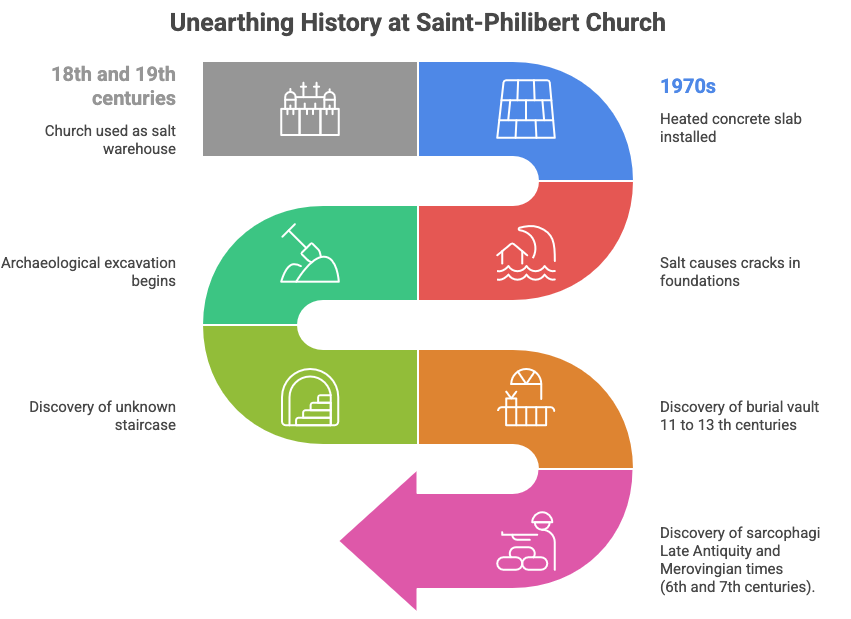
As far back as 1923, excavations carried out on the site seemed to indicate a potential building of pre-church importance. Until then, however, there was nothing concrete, apart from a few clues in the earth. This discovery shows just how important the site was, all the more so for housing sarcophagi dating from Late Antiquity, including one with a sculpted lid testifying to the stature of the deceased.
Archaeologists see this find as an opportunity to learn more about burial rites in Burgundy, and potentially about the history of the Dijon region. A reminder of just how much historical monuments can still conceal that which has eluded us until now...
Illustration: ShutterStock - 111179984
References
Archaeologists Followed a Forgotten Staircase-and Uncovered a 400-Year-Old Burial Vault - https://www.popularmechanics.com/science/archaeology/a69967343/forgotten-staircase-400-year-old-burial-vault-discovery/
Dijon: in a disused church, they discover a forgotten staircase leading to a mysterious burial vault - https://www.slate.fr/culture/dijon-eglise-desaffectee-escalier-caveau-archeologie-fouilles-tombeau-rites-bourgogne-histoire
Archaeologist, between languages and history - https://cursus.edu/fr/21998/archeologue-entre-langues-et-histoire
Opus spicatum - https://fr.wikipedia.org/wiki/Opus_spicatum
Under the pillars of Saint-Philibert church in Dijon (Côte-d'Or) - https://www.inrap.fr/sous-les-piliers-de-l-eglise-saint-philibert-de-dijon-cote-d-or-19729
Understanding archaeology on the Internet - https://cursus.edu/fr/11376/comprendre-le-travail-darcheologue-avec-internet
Learn more about this news
You might also like:
Pseudo consultants abound and their recommendations can be summarized in a few complementary principles
Integrating the guidance approach into teaching - in detail.
The guidance approach aims to make students autonomous, positioning them as players in the process of building their own career path, by equipping them with the skills they need to make the choices they will have to make. In addition to knowledge, know-how and interpersonal skills, the ability to become a key competence in a constantly changing and uncertain world. Orientability is becoming the keystone of 21st century learning.
Is banning cell phones from school the right thing to do?
The issue of technology in the classroom has always been a hotly debated one, particularly the question of cell phones. A UNESCO report calls into question the use of ICT and the presence of mobile devices in schools. Should they be banned?
Cultivating empathy in your environment
It's probably the most sought-after quality among employees and the one that is most absent from the workplace: empathy. Long seen as a weakness, empathetic management will have better results show studies. The question is, can we learn to be more empathetic?
The most powerful policy for improving education is poverty reduction.
A small reduction in family poverty leads to significant increases in positive school behaviour and better academic performance. With supporting data and statistics.


