
Missing your failure celebration seminar
Organizing a seminar to celebrate failures will be a marker of transition for organizations. It allows us to enter more serenely into the trial-and-error cycle sought by learning organizations.
Publish at January 23 2026 Updated January 24 2026


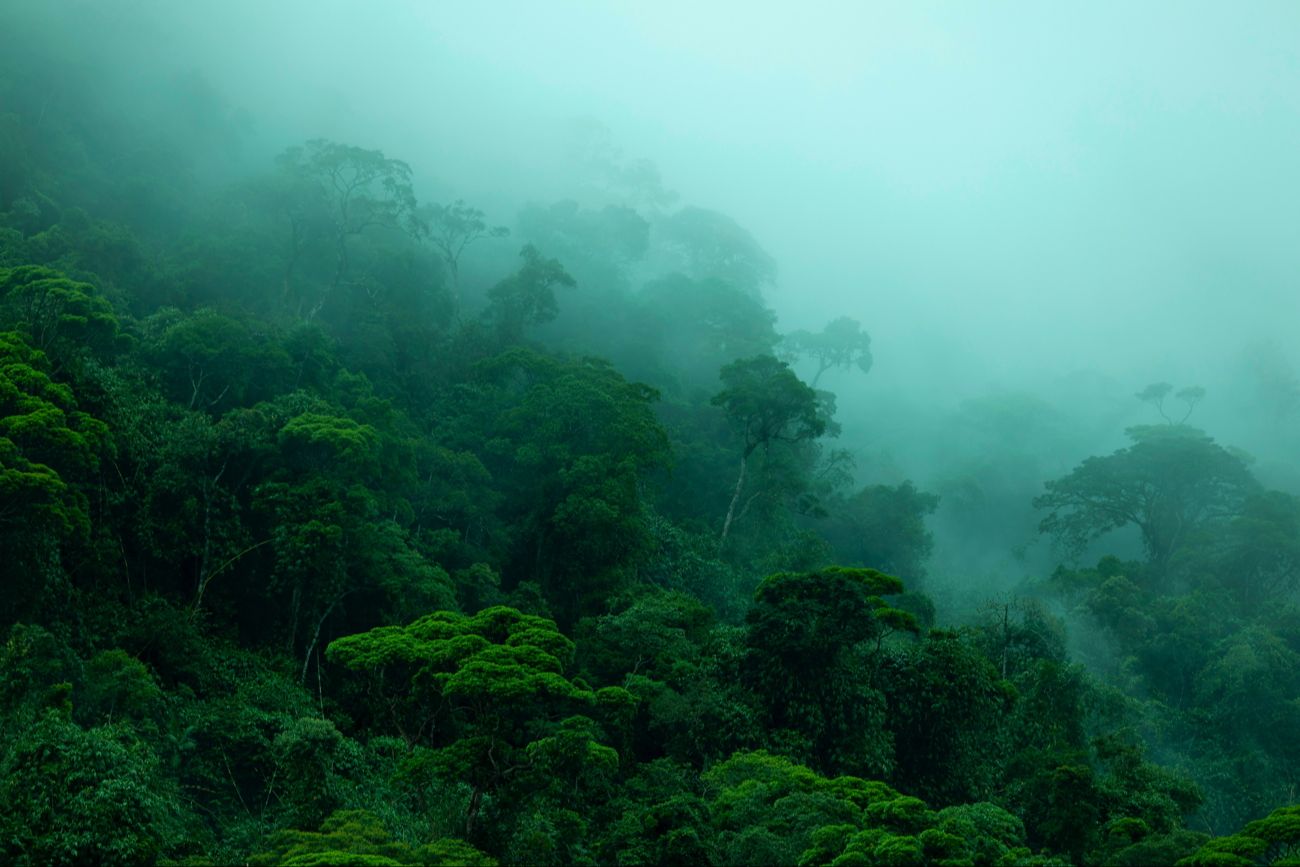
With the advent of climate change, many were concerned about the fate of the Amazon rainforest. This vital region, often dubbed "the lungs of the planet", was seeing its existence threatened by sudden changes in climate. Scientists turned their attention to this ecosystem to see how it would react to the massive increase in carbon dioxide in the atmosphere.
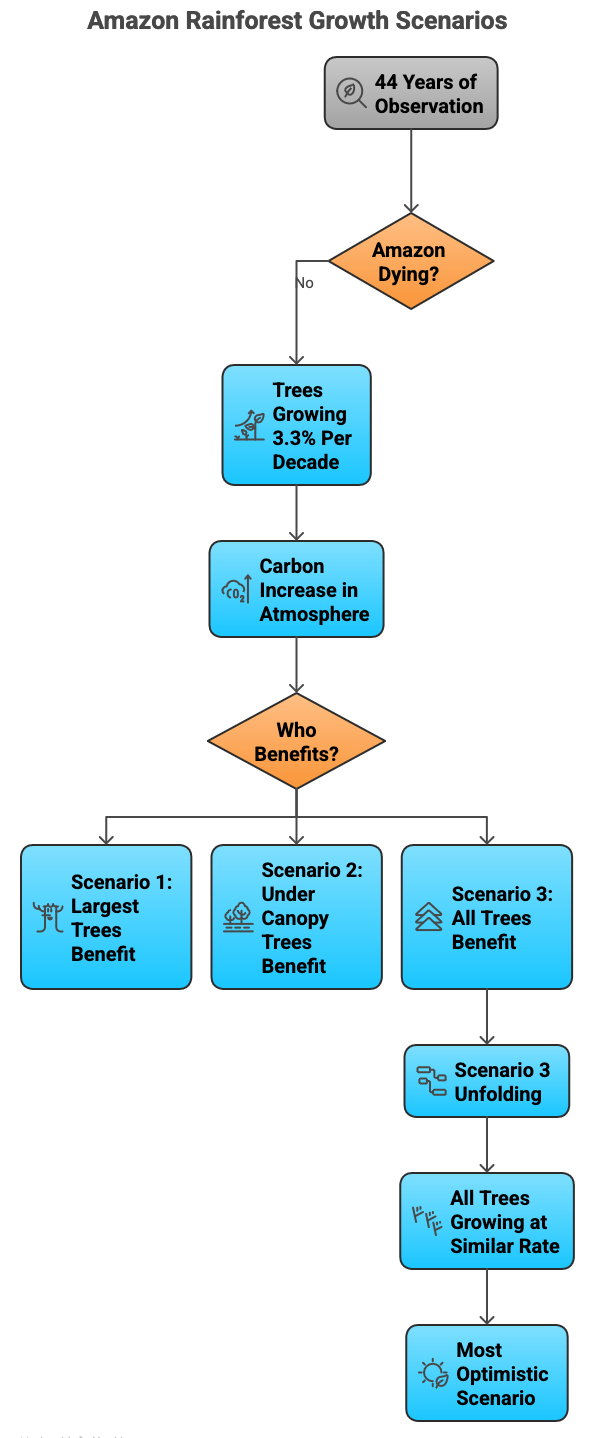
After 44 years of observation, the researchers noted that the Amazon was not dying a slow death. On the contrary, trees appear to have grown in size by 3.3% every decade, partly in line with the increase in carbon in the atmosphere. What's surprising is who's benefiting.
The scientists were betting on 3 possible scenarios.
It seems that this last scenario is indeed unfolding in the Amazon rainforest. Indeed, the researchers noted that all the trees were expanding at a similar rate. This would appear to be the most optimistic hypothesis for the Amazon.
This might lead some to say that, after all, climate change is a good thing for the "planetary lung". However, while it's true that vegetation is acting much better than expected, this doesn't mean that global changes are healthy.
The fact remains that rising temperatures multiply the chances of fires, droughts and the like, which can wreak havoc in this part of the world. What's more, while it seems that, ultimately, forests are good carbon collectors, this function is threatened by the deforestation that continues to take place in Brazil, among other places.
It is to be hoped that this discovery will serve as a reminder of the importance of leaving this major ecosystem alone from human activity, so that it can, at best, mitigate the effects of atmospheric pollution.
Illustration: Shutterstock - 2102043682
References:
After 44 years of observation, researchers have discovered that the Amazon is doing the opposite of what all the models predicted - https://sciencepost.fr/apres-44-ans-dobservation-les-chercheurs-ont-decouvert-que-lamazonie-fait-linverse-de-ce-que-tous-les-modeles-predisaient/
Giant trees of the Amazon get taller as forests fatten up on carbon dioxide - https://www.nbcnews.com/world/latin-america/amazon-rainforest-giant-trees-bigger-carbon-dioxide-climate-change-rcna234064
Rising up against Amazon deforestation thanks to the Surui people... and Google - https://cursus.edu/fr/8799/selever-contre-la-deforestation-amazonienne-grace-au-peuple-surui-et-a-google
Trees in the Amazon rainforest 'getting bigger' - https://www.bbc.co.uk/newsround/articles/c237re7970jo
Big trees in Amazon more climate-resistant than previously believed - https://www.theguardian.com/environment/2025/sep/25/study-shows-big-trees-in-amazon-more-climate-resistant-than-previously-believed
The influence of climate on languages - https://cursus.edu/fr/11917/linfluence-du-climat-sur-les-langues
Learn more about this news
You might also like:
Missing your failure celebration seminar
Organizing a seminar to celebrate failures will be a marker of transition for organizations. It allows us to enter more serenely into the trial-and-error cycle sought by learning organizations.
The changing role of guidance counsellors
The vision of the guidance counselor is rather outdated. They are no longer people waiting behind their desks to advise young people on their studies. Today, the role has become highly proactive, particularly in the United States, where they ensure the success of as many students as possible. But this role, which is greatly appreciated by students, is disappearing as public education budgets shrink.
Are we reaching the limits of the human body?
The media love to cover major sporting events, especially when records are broken. But recent major competitions have shown that this is happening less and less. Have we reached our physical limits? What does this mean for the future of sports? Will we turn to transhumanism, or simply appreciate the efforts made by athletes?
Competency support and non-deficit approach
An employee is hired based on his or her qualifications, which are determined by a job description. The employee is subject to a set of rules and standards enacted by his employers. Within this process of professional socialization lies the rigidity of the hiring. By changing the way we look at the work of employees, it is possible to envision an accompaniment where the reflection on the action is joint and does not measure the gap to be closed but rather what the action teaches us.


