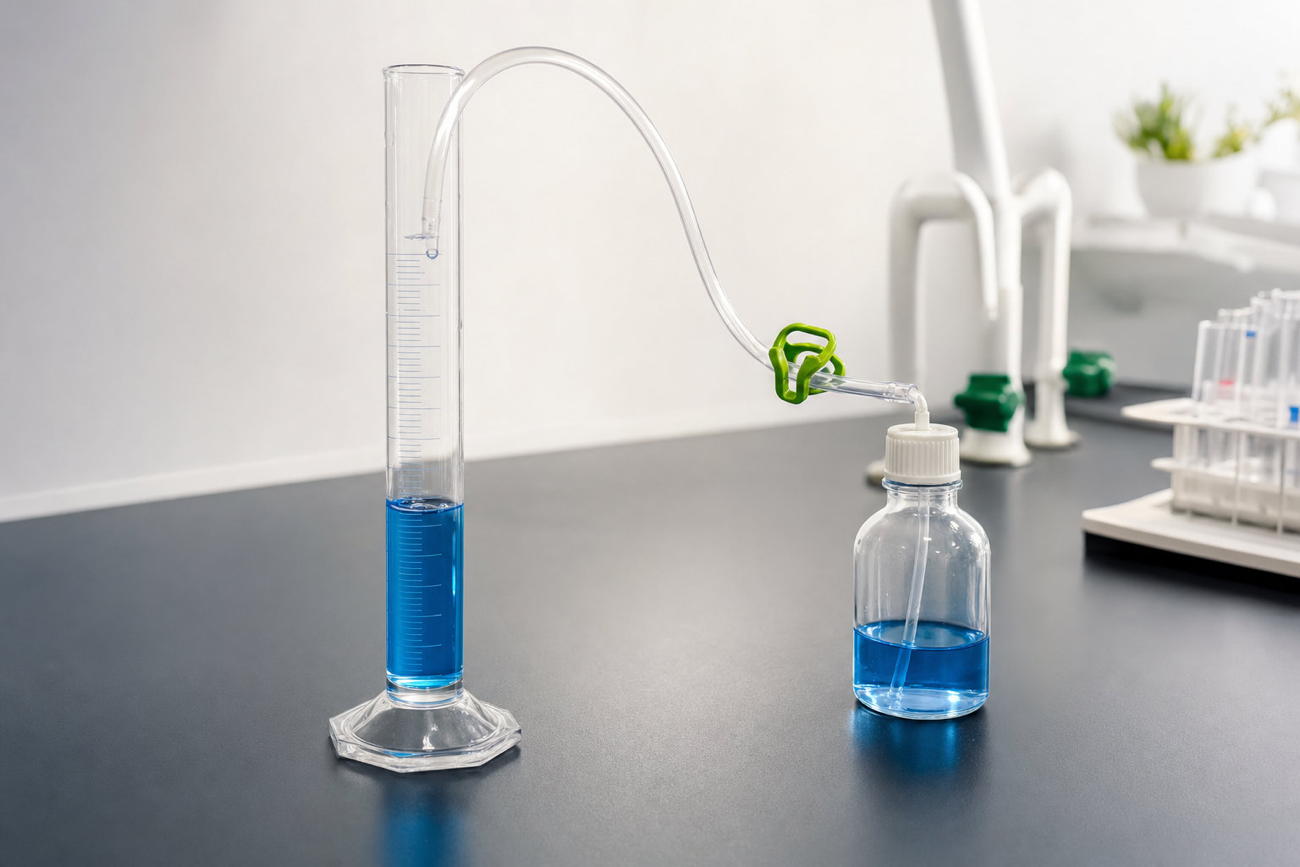
Fluid management is a core component of hands-on STEM laboratory
instruction, shaping how students engage with laboratory processes in
fields such as chemistry, biology, and biomedical engineering. Effective
systems establish a bridge between theoretical concepts and practical
methodology, helping students practice safe, accurate, and disciplined
fluid handling within an educational context.
Through practical lab work, students learn that maintaining control
over liquids is essential when experiments involve precise measurements
or sensitive samples. A spool trolley
can support safe movement of equipment within the workspace,
contributing to organized handling of reagents and apparatus. Within
educational settings, managing fluids not only promotes safety but also
develops key technical laboratory skills.
Using safe, consistent handling workflows helps learners observe how
abstract scientific ideas are translated into reliable and repeatable
results. Integrating these systems into training supports engagement and
prepares students for the technical requirements relevant to research
and manufacturing environments.
Elements of fluid management in laboratory learning
In a typical STEM teaching lab, students interact with various parts
of a fluid management system designed for simplicity and safety. These
elements range from sealed storage containers and secure transfer tubing
to labeled junction points and monitoring devices for volume or flow
rates.
Each part relates directly to a learning objective. Measuring liquids
precisely illustrates experimental accuracy, while proper containment
and labeling build understanding of contamination control. Monitoring
flows or setting up transfer connections introduces the principles of
process discipline and careful observation during laboratory work.
Safety, risk reduction, and practical skill building
A significant aspect of laboratory instruction involves learning to
handle common fluid-related risks. Spills, accidental exposure to
substances, and cross-contamination present challenges in laboratory
settings and may be mitigated by well-designed fluid management systems.
Structured workflows require documenting each step, checking
labeling, and following set procedures for transferring and storing
liquids. These steps foster hazard awareness and encourage students to
develop preventive habits. Over time, these skills can help reduce
mistakes and improve confidence in maintaining a controlled laboratory
environment.
Experimental consistency and reliable laboratory data
Consistency in experimental results often depends on control over
fluid-related variables. Fluid management systems help remove guesswork
from setup and handling, supporting fair comparisons between groups and
reducing variability in laboratory classes.
By reinforcing established procedures and traceable workflows, these
approaches help students understand the importance of recordkeeping and
experimental controls. When student groups replicate effective methods,
data quality can improve, and instructors can more easily identify when
errors are due to technique rather than unpredictable factors.
Reflecting operational realities and teaching organization
Labs that mirror the constraints of professional settings introduce
students to challenges involving time, workspace, and resource flows.
Being asked to plan staged transfers, allocate bench space for
equipment, or sequence handling tasks encourages operational thinking as
well as scientific exploration.
This environment requires the maintenance of orderly workspaces and
the application of ergonomic principles, aiding in the development of
habits that are valued in industry and research laboratories. Learning
these constraints early can support smoother adaptation to advanced labs
and production facilities.
Assessment strategies for educators in modern labs
Practical assessments focus on detailed rubric dimensions, such as
the preparation and labeling of materials, prevention of contamination,
adherence to procedures, and restoration of the workspace. These
performance criteria offer insight into students’ understanding of
safety and process management.
Instructors may also use scenario-based evaluations to assess
decision-making in real time. For example, students might be tasked with
responding to equipment malfunctions or unclear instructions—situations
common in laboratory environments and requiring the application of
foundational skills gained in prior sessions.
Fluid management systems can play a central role in hands-on STEM
instruction, supporting key values of reliability, safety, and
precision. By following best practices in liquid handling, modern labs
can help learners progress from theoretical study to operational
competence, helping close the gap between classroom learning and real
world research or industrial contexts associated with ALLpaQ.
Learn more about this
news