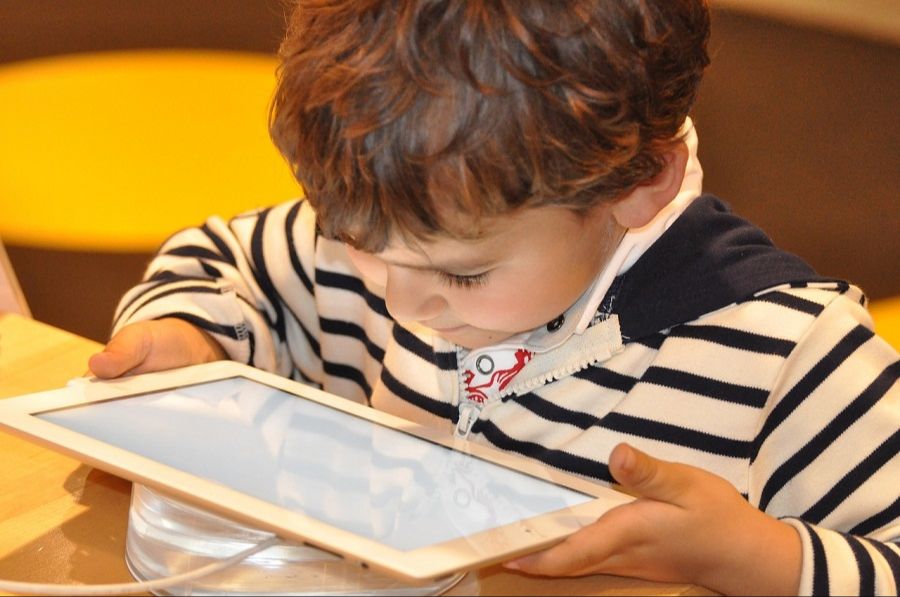
Digital tools have conquered the coveted sphere of children. Whether used in a private or personal setting, the tools have adapted to the needs and abilities of the youngest and have taken into account the diversity of psychomotor development according to each age group.
However, access remains more restricted for the elderly. Although progress is to be noted, the lack of equity in this area is regrettable, especially since access to training is now closely linked to digital technology. So why do the obstacles to the integration of digital tablets and technologies by seniors remain so significant?
The reasons are multiple.
Digital, a social and technological phenomenon generating a generational divide
The new is both fascinating but also a factor of risks such as the questioning of habits and a comfort slowly built around experience. Yet society has been profoundly disrupted by the arrival of these digital technological tools that change the relationship with others and the understanding of an environment in constant change. The experience that our "elders" had acquired during their past lives is now being challenged. Not that their role is denigrated, but they are no longer able to participate in the training of younger people in the use of tools. If in the past, drawing on an industrial drawing board was improved by the sharing of practice and know-how by the elders, today, it is the young people trained in the latest modeling applications who hold the skills with high added value. What to create a bill between digital initiates and those before this era who then have a hard time accepting this loss of identity related to social utility.
Promote equity in access to digital through adapted devices
Jonathan Trudel's tender testimonial about his grandmother's discovery and use of a tablet illustrates the more-or-less successful attempt of many seniors to appropriate this tool. For the tablet is indeed popular among seniors.
The article by'Alexandre Roberge from Thot Cursus had already highlighted the reasons why the tablet is popular among this population: "more intuitive than the computer, no mouse to handle, no wires to plug or unplug, cheaper and cheaper, gives access to everything you want via large icons."
However, while the benefits of using tablets are recognized, the fact remains that adaptation can be slow and requires coaching. Despite the high intuitive density related to the acquisition of skills on a tablet, the identification of a referent or a contact in case of difficulties, experimentation groups and feedback is a plus in the march towards easy access for all to digital.
Ergonomics and applications, what's new?
The grip of the material is not always obvious. The example cited by Jonathan Trudel starts with the observation that his grandmother sometimes had difficulty touching the screen and that using a single finger might not be obvious. As the findings of a study conducted by the BNP-Paribas Group Workshop indicate, "many of those surveyed point to too much sensitivity of the screen, which prohibits any unintentional touching." This difficulty stems from the fact that bones calcify and hand muscles become knotted with age. Ergonomics must be thought more in this direction by manufacturers. And this constraint could even become a source of opportunities because the aging of the population leading to new needs, these are niches to be occupied by many companies. Companies such as Hakisa now offer adapted support and applications.
Another issue is the joint consideration of various physical difficulties, such as hearing or visual loss. The aging of the human body is not selective, and many faculties degrade at the same time.
Claudio Vandi, researcher for the Lutin Lab, points out that "tablets must be in line with the real capabilities of older people, which is not yet fully the case at the moment. Let's not forget: old, we'll all be old one day, and we're not going to stop enjoying life, including digital life, for that.
References
Trudel, Jonathan. "My Grandmother and Her iPad." News. 27 October 2014. http://www.lactualite.com/societe/ma-grand-mere-et-son-ipad/.
Roberge, Alexandre. "The tablet is popular with seniors." Thot Cursus. 1 February 2014. http://cursus.edu/dossiers-articles/articles/21402/tablette-cote-chez-les-seniors/#.VFfkLBZbORN.
L'Atelier Paris - BNP Paribas. "Seniors, more comfortable with tablets than computers?" L'Atelier: Disruptive innovation. 16 September 2011. http://www.atelier.net/trends/articles/seniors-plus-laise-tablettes-quavec-ordinateurs.
Hakisa: http://www.hakisa.com
Illustration: Irina Fischer, Shutterstock.com
See more articles by this author