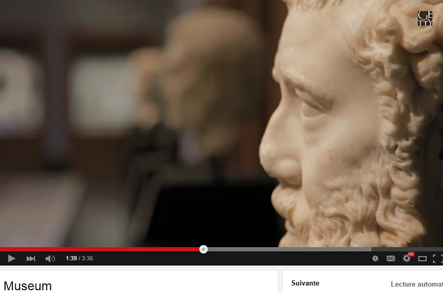
The J. Paul Getty Museum in Los Angeles released a new video series on its YouTube channel earlier this year for teachers, educators, and professors around its impressive online educational section.
The series The Power of Arts Integration, consisting of twenty short videos, each less than ten minutes long, focuses on integrating the arts into the K-12 curriculum and showcases the many educational resources developed by the museum (Resources for the Classroom), which can be accessed for free online at the California institution's website.
The resources are obviously in English, but teachers will be able to draw on them for many ideas for projects and exercises to integrate the arts into the teaching of other subjects, even if English is not their first language. The activities presented, to be conducted in the classroom, during the visit, or after the museum visit, make connections to learning about the arts, of course, but also to teaching writing, reading, science, social studies, etc.
 The goal of the program is to make art accessible to as many students as possible. To do this, the museum's education department has collaborated with teachers to create more than 200 lessons that integrate the Getty's collections into learning in a variety of tangible ways. These may include the use of a high-resolution reproduction of an object from the collection in the classroom, exercises for students to complete around that object, activities to complete in the exhibition room during a visit, information about the works, the periods, and more. You don't have to go to the Getty to use these lesson plans.
Videos
The video series presents some of these lessons, in a very concrete way. They are in themselves teaching lessons. One of them, Evaluating Art Through Different Lenses, illustrates how the teacher can deal with objectivity and subjectivity, using observation of a work, team and group discussions, and writing about a work of art. For example, we see how to use the pedagogical tools provided online that are used by students to structure information. Another video explains the teaching of techniques for interpreting a work of art or a collectible : each step of the lesson is filmed and explained in detail starting with objective observation and continuing through to interpretation of the work and reflection on the work.
Another video deals with the building of language skills, vocabulary and syntax, based on the observation of artworks. Each video refers to this set of lessons available online, each of which contains numerous resources, such as high definition images, teacher and student guides, fill-in-the-blank sheets, teaching tips to encourage participation, to frame the museum visit, etc.
Lessons
The intention was to provide content that is sustainable, accessible online, usable in classrooms, and inspiring to teachers. All materials are downloadable and free, adapted to the American Curriculum Standards (Common Core State Standards) but the lessons are made in such a way that they could be adapted in other museum settings with objects from different collections.
The search tool allows you to search for lessons by discipline, topic, grade level, type of document or activity (games, videos, activities during the museum visit, brief art activities, lesson plans, information). Each lesson provides an overview of the topic, learning objectives and a list of materials needed for the activity. Also included are images of the works related to the lesson, steps to follow, assessment activities, and suggestions for other activities related to the topic.
Educational folders bring together lessons on a theme. Who's Afraid of Contemporary Art? is an example and includes several lesson plans, an image bank, informational texts and a glossary, etc.
For Creation
The Open Studio program is designed for elementary and secondary students and their teachers. Designed by artist Mark Bradford, Open Studio (A Collection of Art-Making Ideas by Artists) aims to make contemporary art more accessible and provide art-making activities from the perspective of a contemporary artist. The materials are, again, downloadable and free. The illustrated folders include the activity description, learning objectives, the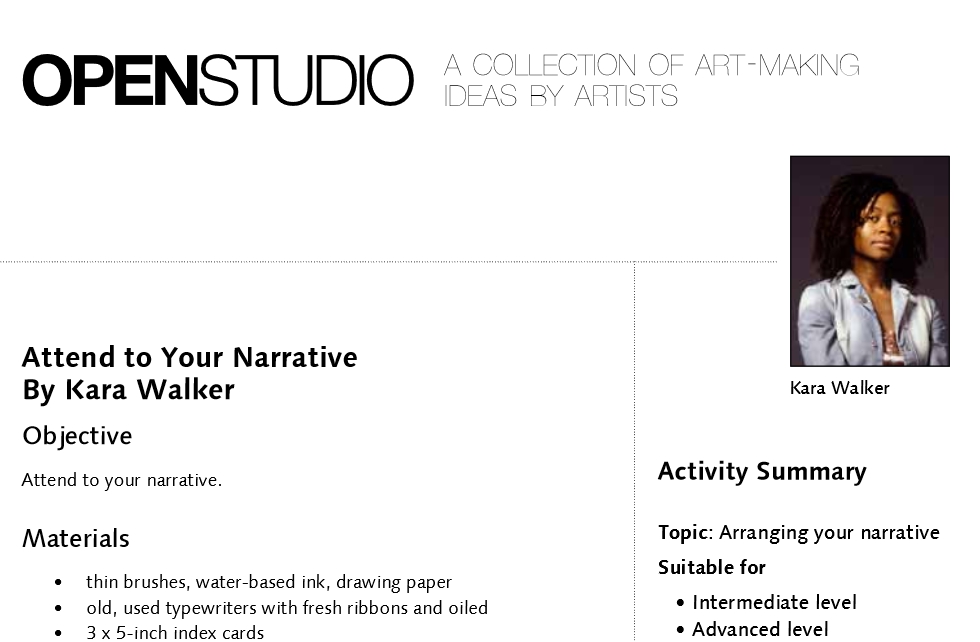 grade levels targeted, a short biography of the artist, as well as images of the artist and his or her work.
Each Open Studio artist makes a different proposal, all of which are of interest: touring a city through its colors, making a personal diorama, documenting his or her family and home through photography, making a floor plan of his or her school cafeteria and sketching the movement of students around the room, and so on.
The J. Paul Getty Museum publishes a quarterly e-newsletter, the Getty Teacher Update, for elementary and secondary teachers who would like the latest information on all of these museum educational resources.
Sources
The Power of Arts Integration video series: https://www.youtube.com/watch?v=9XcIg3eX2FY [accessed March 16, 2015]
Resources for the Classroom, J. Paul Getty Museum: http://www.getty.edu/education/teachers/classroom_resources/index.html [accessed March 16, 2015]
Getty Teacher Update (quarterly email newsletter for teachers) http://www.getty.edu/egetty/getty_teacher_update/getty_teacher_update.html [accessed March 16, 2015]
See more articles by this author