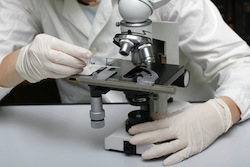
We all have a more or less singular memory of when, in high school, the biology teacher invited us to grab a scalpel and dissect a batrachian to discover its anatomy. Later, in the chemistry lab, we would combine compounds in a beaker to form a precipitate.
While many studies show a certain disinterest among students in scientific fields, many people believe that it is through direct experience - the hands on - approach - that the seeds of scientific study and careers are planted.
Or, and without denying its usefulness, this approach is not the best, observes Abdelkrim Hasni, a professor in the Faculty of Education and holder of the Research Chair on Youth Interest in Science and Technology (CRIJEST), along with his colleague Patrice Potvin, from UQAM. They are conducting various research on the factors and winning practices that contribute to strengthening students' interest in these fields and the role that schools can play in achieving this.
And they find, based on analysis of international research and their own survey of young Quebecers, that participation in long-term scientific endeavors has more lasting effects with students.
Read more
Photo credit: Sergio Ponomarev / Shutterstock.com
Learn more about this
news