Tests of vigilance and attention
Measuring attention remains a concern in many settings. Some work tasks are not very error tolerant. Here are a series of sample tests to measure attention in children and adults.
Publish at May 29 2012 Updated January 24 2024


With the introduction of the "Leap", an advanced and affordable contactless interface, or the recent developments of theApple Watch with its pinch gesture detection, we are seeing applications develop that take advantage of the undeniable benefits of this kind of interface.
Particularly in the public domain, where problems of weathering (sand, water, humidity, dust), vandalism and hygiene mean heavy and costly installations, such an interface stands on its own, freeing us from the many constraints of adapting to different human gauges.
Precisely because of their popularity, gesture conventions are beginning to develop and extend across cultures and languages. It's easy to imagine a set of international, logical and ergonomic gestures prevailing over local or specialized variants.
We'll eventually see some of these gestures replaced by others, as a result of injuries linked to repetitive or unergonomic gestures.
The variety of symbolic gestures is immense. In teaching, research or writing, many gestures have their own meanings, starting with writing itself. With these interfaces, aerial writing becomes possible, as does the manipulation of virtual objects in space, like a 3D writing interface.
While it is possible to define or personalize the effect or meaning of a gesture according to one's specific needs, the benefits of standardization in terms of communication far outweigh the effort involved in learning its meaning, especially if these gestures are the result of optimization arising from extensive use, by hundreds or thousands of people and over long periods of time in a variety of situations.
The field of interfaces is still evolving. I'm already dreaming of correcting texts on the fly....
References
Interaction based on user-defined gestures: Application to virtual reality - Jean-François JEGO - PhD thesis - https://pastel.hal.science/pastel-00944726/document
Rules for the development of accessible mobile interfaces - Funka Nu AB | Stockholm
https://www.funka.com/contentassets/9131835638b640cf96baf2ef62a2fba4/regles-pour-l-accessibilite-des-contenus-web.pdf
Web Content Accessibility Guidelines (WCAG) 2.0 - https://www.w3.org/Translations/WCAG20-fr/
Development of navigation techniques for virtual immersion - Jean-Rémy Chardonnet - Thesis
https://theses.hal.science/tel-03318786v1/document
You might also like:
Tests of vigilance and attention
Measuring attention remains a concern in many settings. Some work tasks are not very error tolerant. Here are a series of sample tests to measure attention in children and adults.
Develop your musical ear through play with Meludia
To a layman, music is just a tune performed by a musician. Yet, if he were to play Meludia, he would learn all the rudiments and terms associated with musical practice.
A series of games that require an ear.
"Phalenes! understanding natural selection through play
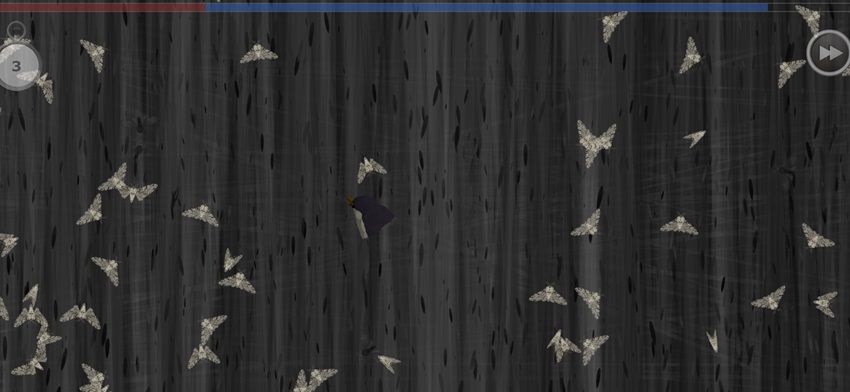
A serious game designed to demonstrate natural selection and its effects on a moth population.
The Englishes MOOC course was developed by an artist and is designed for anyone interested in the (English) language. It explores the history of English, its pronunciation, and its relationship to the art world.
A serious game on social engagement
Many serious games address the topic of sustainable development. Yet before such solutions were proposed, innovative people had to go against the social grain and fight to improve their environment. A humorous adventure game, hosted by the National Film Board, teaches children the attitudes they need to adopt to make a difference.