Economics Games is a site for economics teachers who want to use games and simulations to explain economic principles to students. No fewer than 12 games are available.
While the site's home page is in French, most of the games have an English-only interface. But the rules are translated into French. Finally, the industrial economics game "Tariff Discrimination, Vertical Differentiation and Peak Pricing" has recently been fully translated into French.
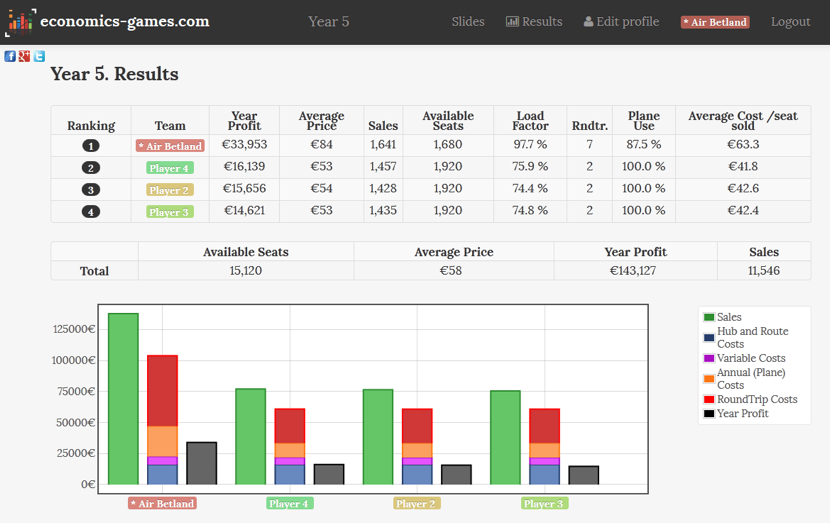
In this game, players are in charge of an airline, one of whose routes is facing aggressive competition. The game takes place over 6 years, which pass rather quickly. In the first year, players will only have to determine pricing. After that, however, there are periods of higher or lower demand, the possibility of choosing the number of flights on the route, the type of aircraft, etc. The aim is obviously to make the most money. The aim, of course, is to make the most profit, and eventually to get your name on the high score board.
It's easy for teachers to get started. All they have to do is go to the game they want, select the number of players (up to 100) and, in some cases, "universes" (game rooms). A pop-up window then appears, showing the names of the rooms and the password for accessing them. Then, all students have to do is enter the game from their computer, phone, tablet, etc.
These games will undoubtedly seem complex to those with no interest in economics. For others, they will enable them to verify the concrete impact of the application of certain concepts and the economic choices made.
Learn more about this
training