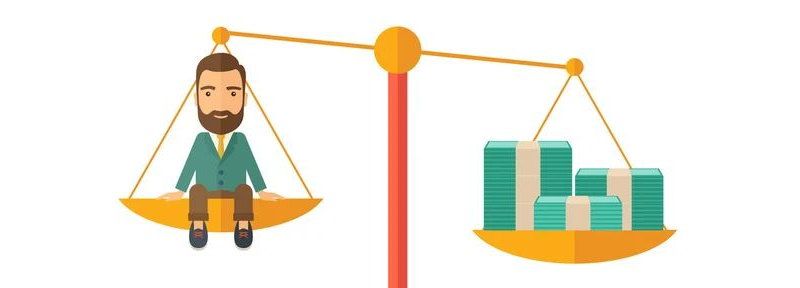
In economics, the balance between "making more money" and "not killing the goose that lays the golden egg" is not easy to find, nor is it easy to strike between individual satisfaction and personal ambition, or between ethics and convenience. Abundance, fairness and happiness face up to impulses of power, selfishness and fear of scarcity, all in the perspective of infinite growth.
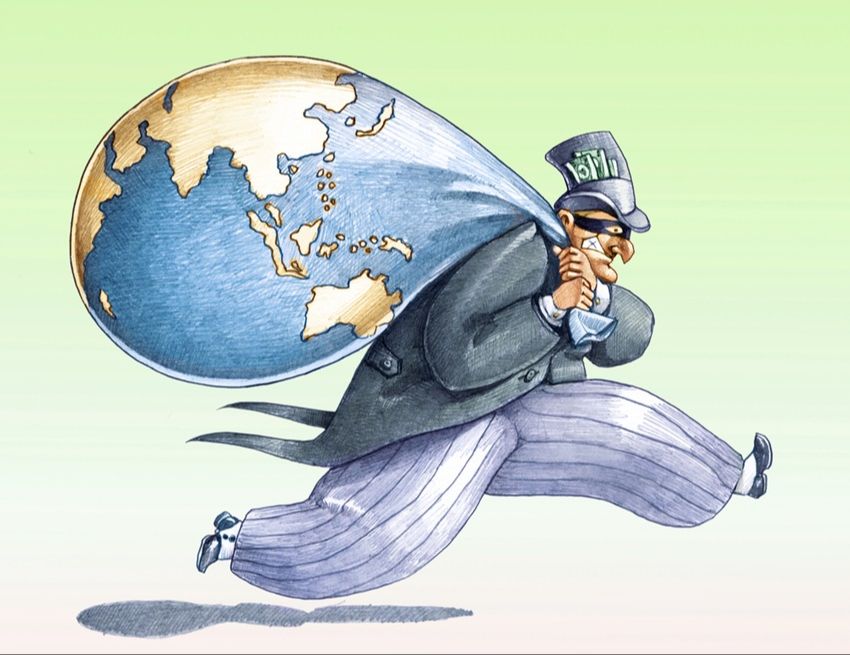
Yet it's pretty obvious that infinite growth on a finite planet is unsustainable, and that the unbridled exploitation of the masses or the environment for the benefit of a minority systematically leads to the collapse of the entire system. In human history, all peasant revolts have always ended badly, for everyone. Entire civilizations have disappeared because they failed to preserve an ecological balance.
Modern economic thinking, long torn between capitalism, socialism and communism, is gradually migrating towards a purely materialistic and numerical way of thinking, which finds ways of including virtually all activities in its logic, including the environment.
Even if the philosophies are very different between the public and private sectors, the economic importance of the different sectors in terms of capital and expenditure are very complementary: the taxes levied on economic activity are reinvested in infrastructure, education, health, research and many other areas that benefit the economy in return. We may well ask a road or an elementary school to be profitable, but it's simpler and more efficient to operate them without attributing a direct monetary value to them. This principle can also be extended to public transport or basic health care.
States are not obliged to make money, but to ensure the well-being and smooth running of society. Their role as regulators is vital in limiting the economic system's slippage. The principles on which they are based determine both the prosperity of nations and the fairness of sharing. Education is at the forefront.
Denys Lamontagne - [email protected]
Illustration: k3studija - DepositPhotos