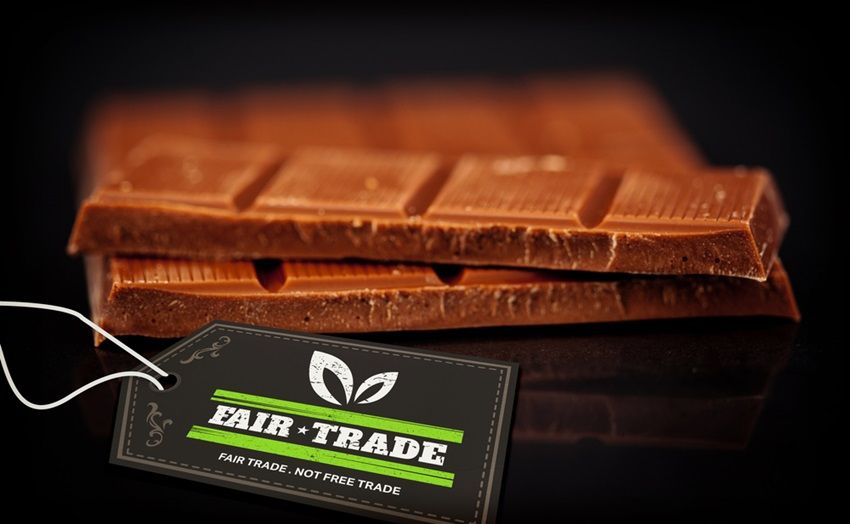
Is it possible to make fair trade products at an affordable price?
The true price of eco-friendly products
As the public becomes increasingly aware of ecological and social issues in the economy, major industries have realized the need to change certain methods and show the consumer the ropes. In Europe, for example, products with fair trade labels are selling better than ever. They are generally only slightly higher than the price of polluting goods, so they seem like a good deal. But is the price realistic?
When you set out, as in this report, to explore the chocolate or textile industries, it seems that the "fair trade" label is pretty easy to obtain without having to meet high standards. All it takes is the requisite 4,000 euros and a company can display the green logo on its product. Chocolate producers, on the other hand, offer decent living conditions to their farmers, make sure they don't use monocultures, respect ecosystems and so on. Of course, their bars cost much more (€7.50) than a label bar in a supermarket (€1.50). For them, this cost is a true reflection of the value of a treat made with the planet in mind.
Does this mean that eco-responsibility is only for the super-rich? How can a less well-off family get by in this context? According to a Greenpeace spokeswoman, there are ways of really lowering the price of clothes, such as those already worn, borrowing clothes from fair-trade stores and other types of business that go against the grain of the highly polluting clothing industry.
Because even the so-called eco-responsible industry uses the equivalent of a French person's water consumption over two years in the production of its clothes. So, in her opinion, we need to push the big textile companies to pay for the new products coming onto the market, force them to recycle, and help low-income families to dress (or feed themselves) while preserving our world.
Agriculture is changing its model to become more digitally oriented. Work preparation and decision-making now rely on data analysis and transfer. Farmers are the biggest users of drones in France, while robots are occupying new positions on the farm. Training courses in the agricultural sector are following this trend, offering programs to meet the needs of connected farms.
Is pedagogical innovation possible? Many so-called "new" pedagogies are no longer theories, but living, consolidated subjects. Today, the question is no longer why and how. The question is rather when.