Some illustrate it with an update that makes printers obsolete, others with single-use products, but what does obsolescence really mean? What is the lifespan of a lifeless object? From the simple effect of time to the theory of a global conspiracy, there seems to be a world in which everyone has their own idea of what obsolescence is.
Jeanne Guien's thesis "Obsolescences: Philosophie des techniques et histoire économique à l'épreuve de la réduction de la durée de vie des objets " explores our relationship with the concept of obsolescence, from its thought to the positions it invites us to take.
Why read this thesis
Don't be overwhelmed by the sheer number of pages in this remarkable and impressive work of research and analysis. Jeanne Guien proposes to take you on a journey through her philosophical and historical investigation of obsolescence. The structure of the manuscript makes the narrative and argumentation fluid and captivating. The author gracefully blends theory and practice, confronting her analysis with a case study: the disposable cup.
Extract/Summary
"This work is the fruit of more than five years of doctoral research into reducing the lifespan of objects and, in total, almost ten years of research on the same subject, formal as part of my master's degree, or more informal as part of personal commitments in the field of recovery and environmental issues.
It is a philosophical work insofar as it proposes a conceptual approach to this field: the aim is to reflect on how we think about reducing the lifespan of objects, by studying the notions and discourses we mobilize to talk about it and to promote or justify our actions in this area. Indeed, the expression "programmed obsolescence", which has been the subject of much controversy in France for the last ten years or so, is far from being the only notion currently mobilized: "sustainability", "life cycle" or even "disposability", or more simply "lifespan" or "obsolescence", are all frequently used to address this issue.
This conceptual diversity, and the complexity of the issues it generates, is even more important if we study this question on the scale of modern and not just contemporary history. The diagnosis of a reduction in the lifespan of objects, and the questioning of its causes and effects, seems to emerge with the industrialization of European economies and to be reinforced with the formation of American and European consumer markets; it accompanies the history of capitalism, its justifications and its criticisms.
We propose here to explore this history to understand what these notions mean, what they give us to think about, and in what sense they make us act".
What you can discover
Among the points the author concludes on, one of the most elegant is her highlighting of the close links between Time and obsolescence. Jeanne Guien presents obsolescence as a concept situated between ontology and axiology. To this end, the author elegantly highlights both the passive and active involvement of time in the obsolescence process, using the axiological formula: obsolete, present and future; and the ontological formula: past, present, future. In this way, she makes sense of the immaterial obsolescence of objects that are neglected or shunned, even though they are materially functional. It invites us to reflect on the lifespan of our desires, our feelings, our needs, even our personalities, and to reconsider our relationship with the world around us.
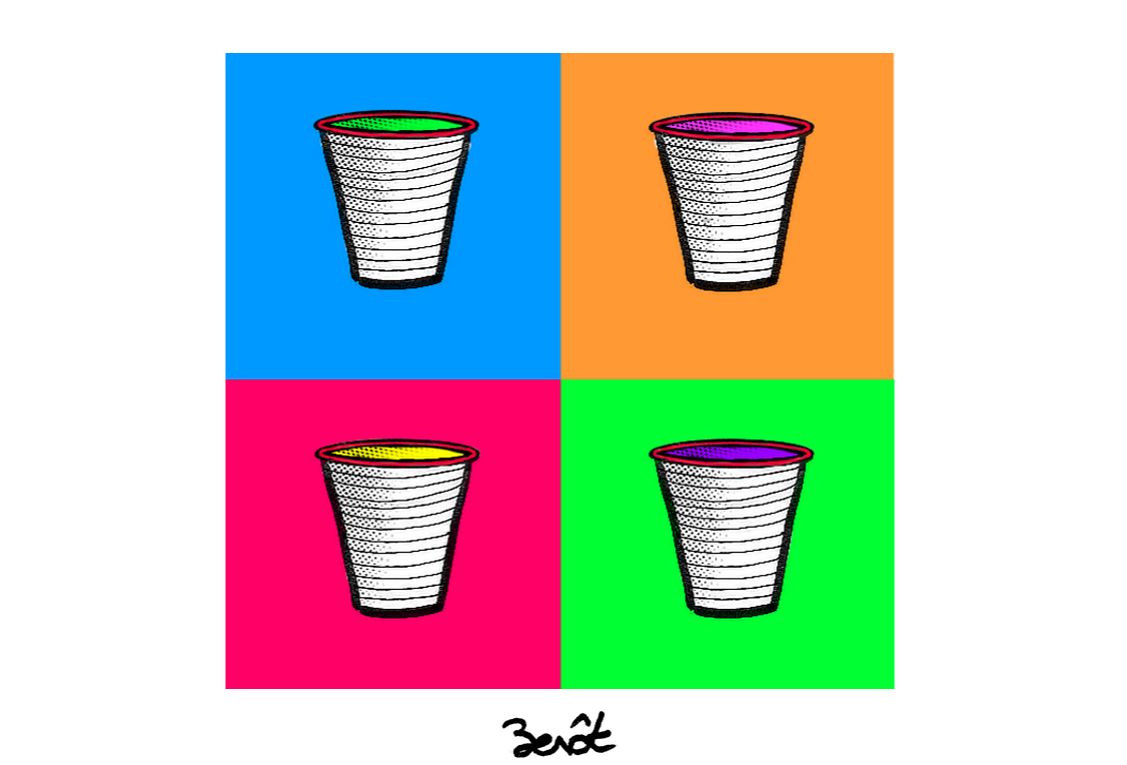
Jeanne Guien's study of disposable products, focusing on the cup, highlights the construction of disposability as a distinctive, value-enhancing property of a product. Her analysis seems to show that reducing the lifespan of objects is comparable to limiting their presence by obscuring their economic, material and environmental reality.
This thesis is a mine of information that can enlighten us on the topical philosophical, economic, political, ecological and even existential subject of obsolescence. It's a thought-provoking piece of work that will help us think about this word, place it and understand it better. Take your time and discover the world of knowledge offered by Jeanne Guien.
Happy reading!
Thesis presented and defended on April 4, 2019, Work carried out at CETCOPRA (Centre d'étude des techniques, des connaissances et des pratiques), in the Doctoral School of Philosophy (ED 280), Université Paris 1 Panthéon-Sorbonne (Paris).
Sources
Thesis
Jeanne Guien. Obsolescence: philosophy of technology and economic history in the face of shortening object lifespans. Philosophie. Université Panthéon-Sorbonne - Paris I, 2019. French. ⟨NNT: 2019PA01H207⟩. ⟨tel-02421710⟩
Thesis link
Page: https: //tel.archives-ouvertes.fr/tel-02421710
PDF: https: //tel.archives-ouvertes.fr/tel-02421710/document
See more articles by this author