Sensorimotor reorganizations of the reaching gesture in a micropensor situation
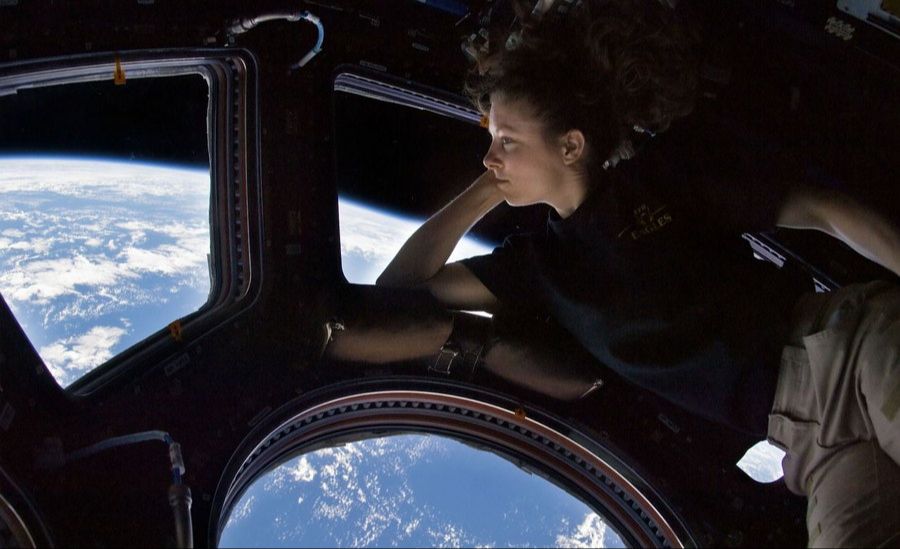
In the opening pages of his dissertation on the gesture of reaching in micropensor, Thomas Macaluso reports the anecdote that the first cosmonaut to perform a spacewalk, Alexei Leonov, was unable to press the shutter button on his camera at the time.
Humanity in Space
To put this gestural attempt into context, here are some important dates in the out-of-gravity experience:
1961: Yuri Gagarin, the first human experiencing space.
1965: Alexei Leonov performs the first spacewalk.
1969: Neil Armstrong and Buzz Aldrin walk on the Moon.
...
1998: In orbit of the ISS, the international space station
2016: Thomas Pesquet, spaceman, popularized space education in France, especially by publishing his shots on social networks.
Residing for several months in the ISS to perform scientific experiments, maintain and repair the internal and external elements of the station requires moving, grabbing objects, manipulating tools in an environment unimaginable in its concrete dimension.
These actions respond to sequenced and timed protocols: the maintenance of the long solar panels is particularly constrained (a high level of gestural precision is expected in a limited time), as are the multiple experiments to be carried out outside the context of gravity.
To prepare for these " extraterrestrial " modalities of movement, Nasa has implemented since the late 1960s a method of training astronauts in a so-called space-like environment: the underwater environment. By controlling the parameters of buoyancy, the buoyancy of Archimedes allows to compensate exactly the weight. However, there are still resistances related to the fluid, the researcher speaks in this case of simulated microgravity.
What the body informs us of
Our movements and gestures depend on the perception of our environment and the state of our body. Our central nervous system mobilizes three systems that allow for multisensory integration of information.
The vestibular system (inner ear).
The somesthetic system(body sensitivity).
Extraception: receptors on the skin. For example, the soles of the feet for standing posture in the context of gravity.
Proprioception:deep musculoarticular sensitivity. Which allows, for example, to know exactly how our limbs are positioned in relation to our body, even with eyes closed.
Interoception: sensitivity of internal organs and blood flow. For example, the suspension to the diaphragm of the liver and spleen by ligamentous connections.
The visual system.
All the information received is articulated together in a redundant modality that integrates into a deeply gravity-marked internal pattern. This allows for the integration of redundancies and counteracts the effects of sensory and motor noises (fluctuations that are not part of the signal).
Without gravity, this information can be contradictory and come to disrupt the modalities of action and control of action (proactive and retroactive). This requires an adjustment of the movement, which has consequences on the speed of its execution and its precision.
The experience of a dancer-researcher
Herself the author of an earlier thesis on the subject, choreographer Kitsou Dubois has worked on training astronauts using dance techniques. She notes:
" I learned that astronauts at some point in the flight, all of them, had a moment where they weren't sure where their head was and where their feet were. A real moment of destabilization [...]: in the first three days of the flight,[there is the occurrence of] loss of orientation. "
To better understand, she reports her own out-of-gravity experience:
" When you're in zero gravity, you're a little overwhelmed with emotions; instantly, you feel like you're nothing but eyes. You don't have a body anymore. It's essentially the visual that acts. "
" On Earth when my hands are behind my back, I know they are my hands because they weigh. When all of a sudden you don't have the weight relationship anymore, if my hands are no longer in my field of vision, I'm not sure where they are. "
Microgravity
Space stations, including the ISS, orbit about 400 km from Earth and are positioned within its gravitational field. The microgravity situation is actually the consequence of permanent free fall at a speed of nearly 28,000 km/h.
To access a more direct experience of microgravity than analogous environments, space agencies organize parabolic flights that " exploit the phenomenon of free fall and [create] comparable microgravity situations ".
They consist of series of 30 very short parabolas (sequences of about 20 seconds). From a one-minute plateau in gravity 1, we move to gravity 2 (twice its weight) and microgravity, then back to gravity 2, to access the gravity 1 plateau.
Weightlessness, weightlessness, microgravity?
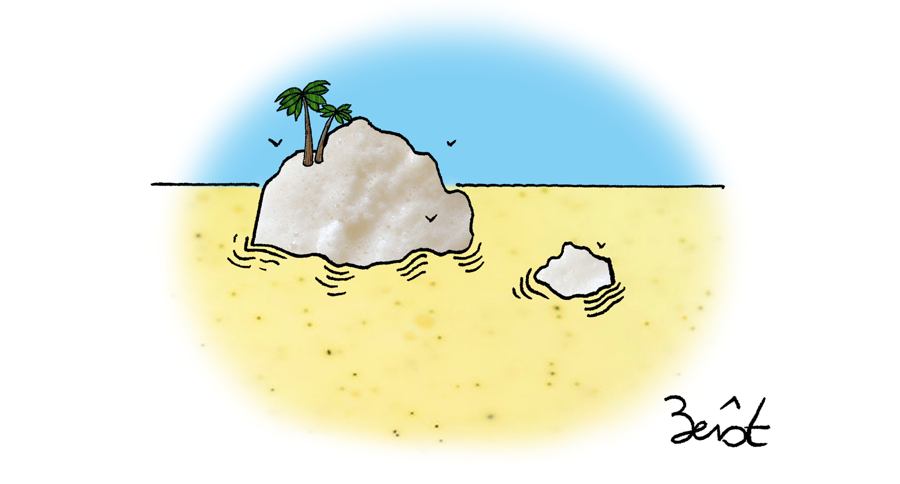
The context of objects in orbit is that of a microgravity or microgravity, i.e., minute gravity. For zero gravity, the term impesanteur is officially advocated because it is to avoid the possible confusion in speech between weightlessness and gravity.
The thesis experiments and results
Three experiments were conducted to " identify and [...]understand the human movement control strategies implemented in real and simulated microgravity to ensure desired interaction with the environment."
In the underwater environment:performing whole-body reaching gestures directed at external targets.
In microgravity (parabolic flights):performing the same whole-body reaching gestures, researching their kinetics and comparison with the normogravitational environment of the first experiment.
In microgravity (parabolic flights):testing of motor flexibility abilities and behavioral reorganizations.
Research has shown that scientific validity from the point of view of human motor control remains to be determined for underwater environments when used as an analogous medium. There remain differences in adaptation specific to this environment.
On the other hand, "our studies in real microgravity suggest that the [human] is able to anticipate the effects of the absence of gravity on its body segments allowing it to successfully manage the spatiotemporal constraints of its voluntary movements while maintaining adequate sensorimotor flexibility in this unusual environment. "
It is also a matter of preparing for reduced gravity conditions at 0.16 g (Moon) and 0.38 g (Mars), for which parabolic flights have been implemented since the 2010s.
Thomas Macaluso, Functional Sensorimotor Reorganizations of the Reaching Gesture in Real and Simulated Microgravity. Sciences du Mouvement Humain, Aix-Marseille, 2017.
"France Term ", publications in the Official Journal of the French Republic of the vocabulary of scientific and technical innovation: http://www.culture.fr/franceterme
The World Health Organization (WHO) informs us that we are old from the age of 60! For the thesis, it is 65 years old, the Belgian legal age of retirement. Old age covers many different situations, and methods such as occupational therapy and actimetrics are preventive services that allow us to consider staying at home.
From the floating island to the beggars, from the amuse-bouche to the bain-marie, from the cul de poule to the farts-de-nonne, French gastronomy is full of terms, sometimes with very colourful analogies, that can intrigue or make French speakers and Francophiles all over the world salivate. Where do these sometimes hilarious and sometimes terrifying gastronomic terms come from? Let's find out together with Philip Igho Qgadagba's Master's thesis.
Have you ever closed your eyes in order to find your way around or to visualize the best layout for your furniture? What a strange idea to close your eyes to see better! This article will introduce you to Maryam Fourtassi's thesis on the neuroscience of our visual mental representations.
Digital technology has brought about many changes in the book industry: in reading habits, in reading media, in the relationship between author and reader.