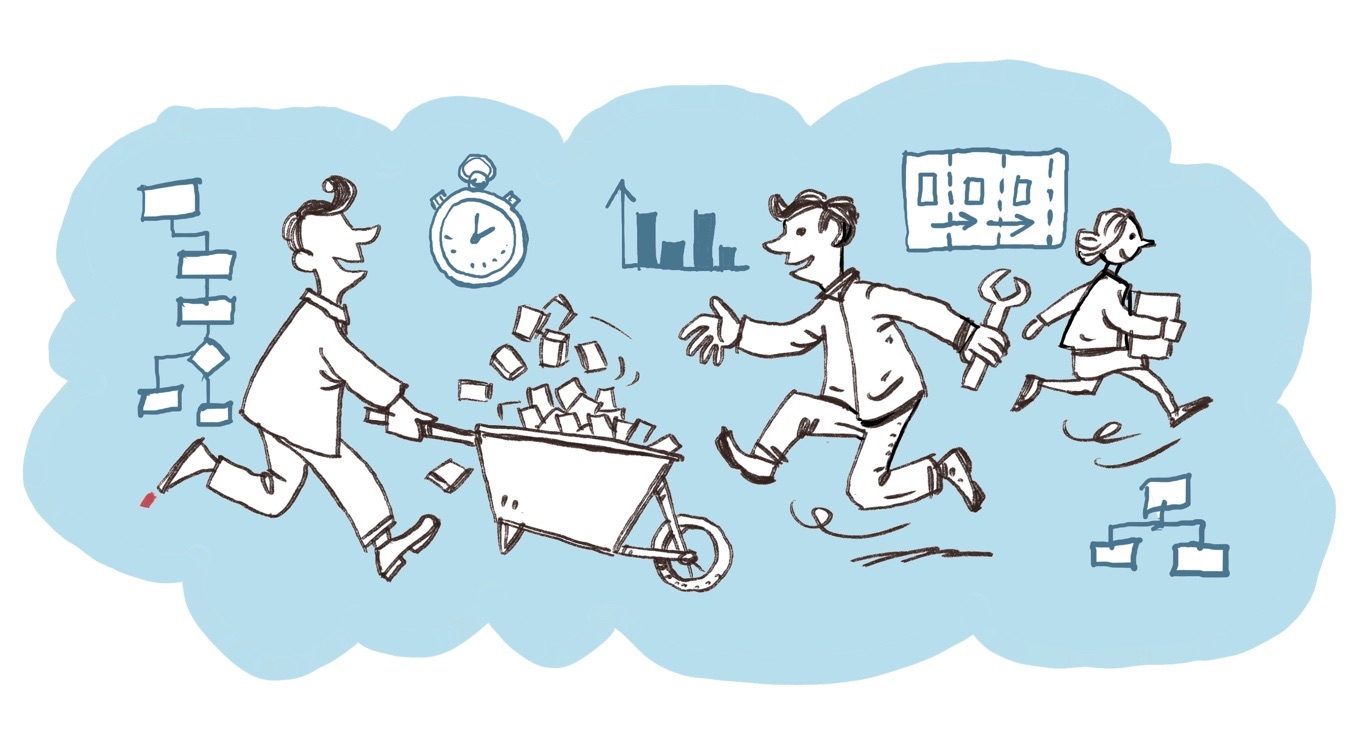
Structure, standardize, streamline, follow procedures and anticipate... For years, organizations have been waving these keywords around as solutions to dysfunction, and as a way to increase productivity and reduce deadlines. But what if, on the contrary, they were suffering from an excess of formalization, planning, and time structuring? François Dupuy, a sociologist, and Hélène L'Heuillet, a psychoanalyst, each shows us in their way how harmful management would like to anticipate everything can be.
Structure Is Not an Organization
François Dupuy is a specialist in the sociological analysis of organizations and the author of a series of three books on management drift. In We don't change the company by decree, he reminds us that the organization is not the structure. The way the company works is only a distant reflection of what managers have planned and imagined through processes and procedures. The desire to anticipate the work of teams as closely as possible comes up against informal relations and power relationships that are far removed from hierarchies.
Organizational Charts do not Reflect Power Relationships
François Dupuy regularly refers to the work of Michel Crozier, who shook up our representations of organizations in the second half of the 20th century. In particular, he studied a tobacco production and distribution company in France, Seita. In this large structure, one could believe that everything had been thought out, that all employees were oriented towards the same objectives: to produce more, to reduce waste, to sell more cigarettes... And yet, the observation revealed issues, objectives, strategies, areas of tension, and power relationships of which the hierarchy was little aware.
In particular, the employees assigned to maintenance were the only ones who could intervene when a machine went down. No one could impose a repair time on them because no one but them had the technical skills. Because they had control over these deadlines, and therefore overproduction, they had power, linked to what Crozier called a "zone of uncertainty". No one dared to upset or rush them, and they thus enjoyed a great deal of autonomy.

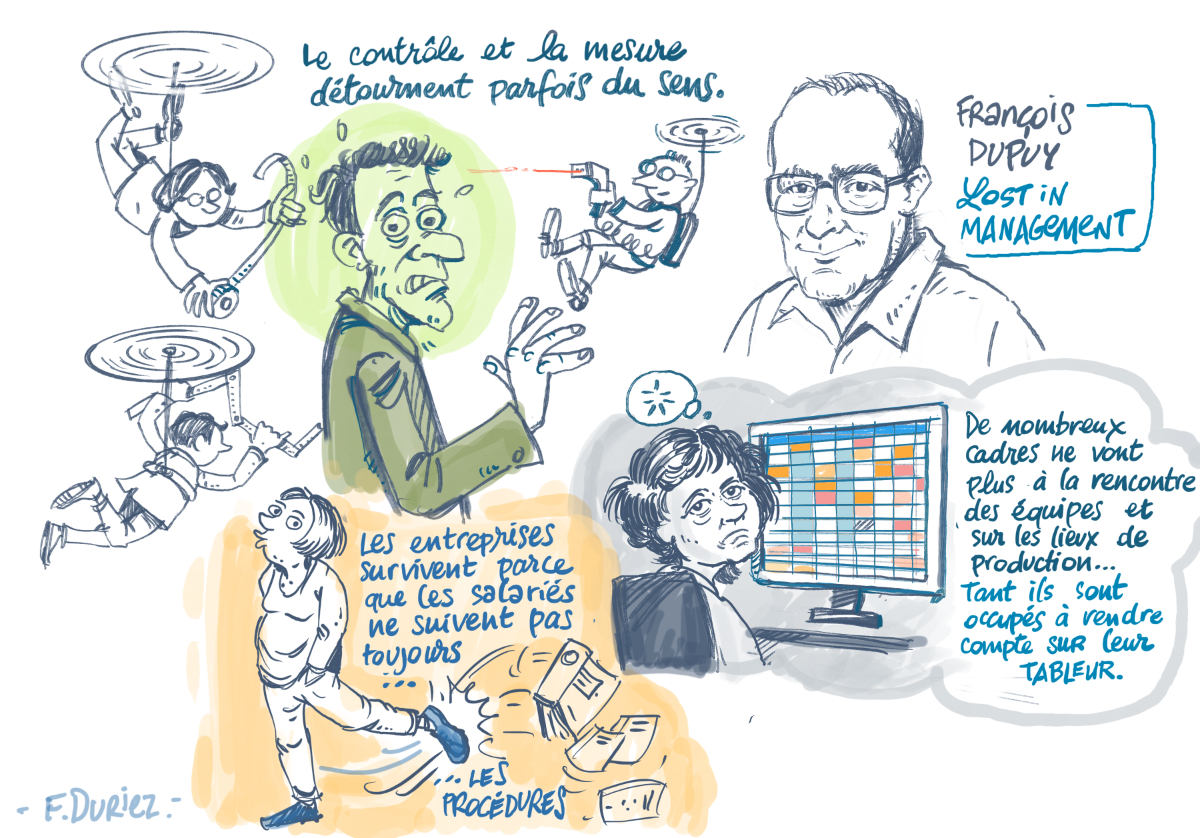
The structure or operation as the thought of by the leaders of a company thus often has little to do with its actual organization. But François Dupuy takes his criticism a step further. He shows us how managers multiply controls and procedures, to reassure themselves or give themselves a feeling of control.
This formalization has a cost: it leads to more meetings, minutes, Excel spreadsheets at the expense of time spent in the field. In production companies, managers no longer go to the manufacturing sites. They confine themselves to their offices and produce documents to report to their superiors. They no longer accompany their teams, they ask them for figures.
When it Becomes Impossible to Follow the Rules
Informing the hierarchical lines and support functions wastes precious time for organizations. François Dupuy explains with a touch of irony that to justify their position, some managers ask for more information from operational staff and formalize operations evermore. But the moment soon arrives when no one is in a position to know all the rules and when these rules contradict each other.
François Dupuy gives us a few examples, including that of a tragic railway accident in France. Investigations have shown that many procedures existed, that they were often respected but that they could also be contradictory... An employee confronted with a whole series of inconsistent instructions has no other option than to make choices. He/she thus finds a zone of freedom, but may also be anxious about the impossibility of complying with everything.
Strictly Following the Rules Kills Functioning
The work-to-rule strike is a paradoxical mode of protest. It consists of strictly and blindly enforcing the rules, without making the appropriate measure to it, and thus blocking the workings. Controllers who check every planned control point, a judge who postpones hearings if the planned conditions are not met, and these actions rapidly translate into the freezing of an entire organization! The site Intime Conviction explains in 2010 how this paradoxical form of protest since it is based on meticulous respect for procedures, can quickly paralyze a structure.
When a Sense of Urgency Becomes Normality
Hélène L'Heuillet takes a psychologist's approach. In her book In Praise of Delay, she shows us another harmful aspect of this desire to organize everything:
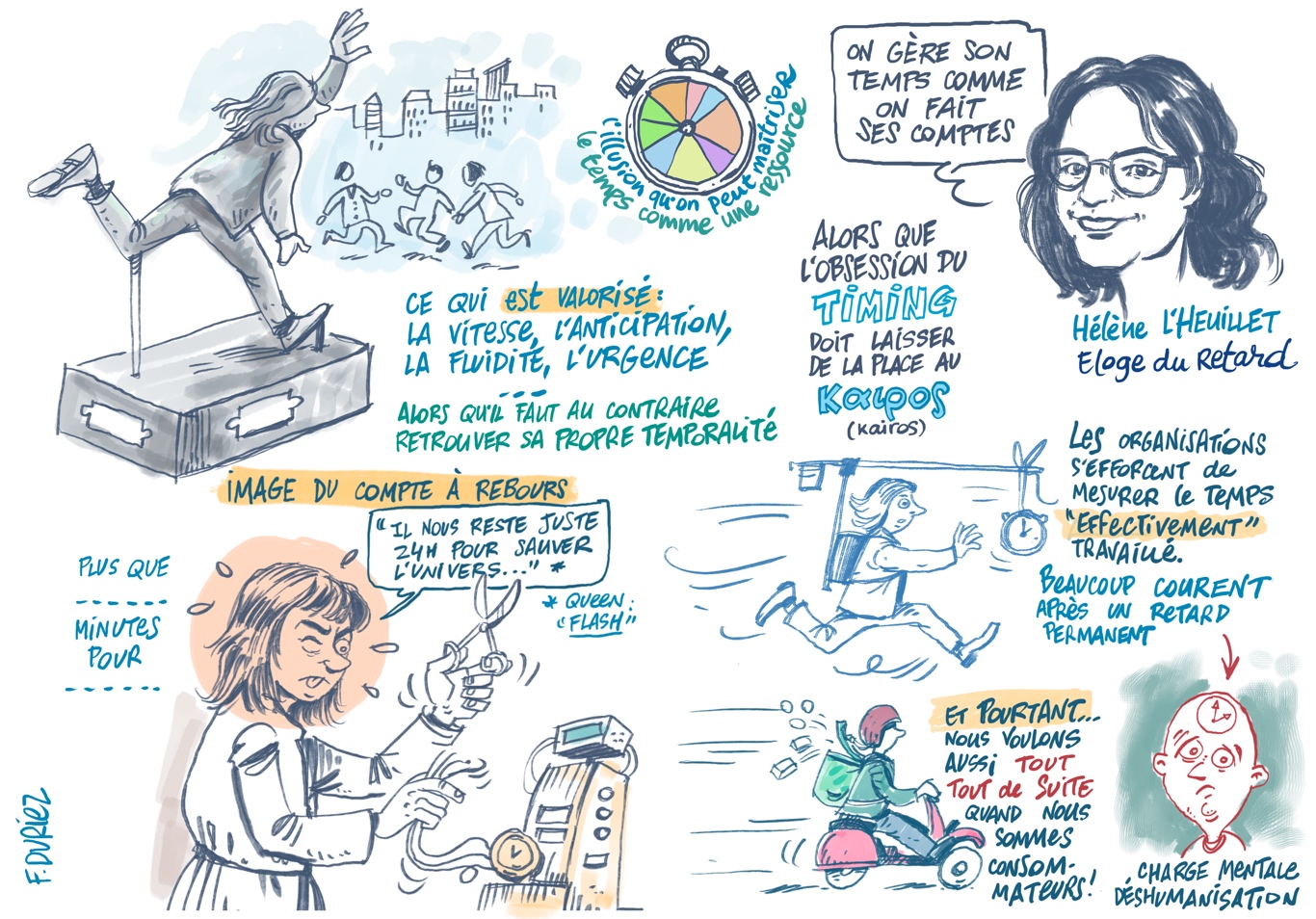
Chasing downtime and trying to anticipate everything can lead to the loss of a sense of one's existence. We have kept Giacometti's Walking Man as an image of the 20th century. Our century is the century of the race, of the pursuit of time, and an irrecoverable delay. We value urgency, fluidity, and short deadlines. And we are complicit in this as consumers. We are seduced by advertisements that boast of one-hour delivery of curtain rods or bedside lamps.
Countering the image of the countdown clock and the structuring of time to increase "effective working time," Hélène L'Heuillet brings us praise for the delay. To find one's equilibrium, one must rediscover one's temporality, through times that are inactive, but necessary for inner life and creativity. Time is not a resource like any other, which should be optimized.
The analyses of François Dupuy and Hélène L'Heuillet are very useful in preventing organizations from suffocating through excessive monitoring and control. They extend the earlier ones by Christophe Dejours who in Suffering in France already noted how much the feeling of being behind, of no longer being able to give meaning to one's work, could weigh on some employees.
See more articles by this author