The threshold effect in group learning
Studies attest to the importance of collective ecosystems conducive to "exponential learning" within a group.
Publish at October 12 2021 Updated February 25 2026


At the beginning of the 21st century, the presence of artificial intelligence (AI) still seemed like the stuff of science fiction. Today, algorithmic interfaces are legion. Whether it's social networks, online shopping sites or the Internet of Things, avoiding AIs seems an increasingly difficult exercise. On the contrary, all sectors are seeking to use algorithms to improve services for citizens, patients and even students.
However, the use of these algorithms is not without its problems. Specialists are noting and denouncing algorithmic biases. Let's be clear: machines do not discriminate on purpose. Rather, they reproduce the biased judgments that are still strongly present in our societies, despite the advances of recent decades. For example, job ads on social networks are displayed according to the user's gender: engineering or construction jobs for men, nursing or teaching for women.
Users of Facebook, Twitter and other social networks also experience the sometimes unfair decisions made by algorithms. Although the GAFAMs employ manpower to moderate what is said online, these employees cannot analyze the millions of interactions that take place every second. As a result, artificial intelligences punish terms that run counter to the site's policy. But this can lead to absurd situations, since they can't take context into account.
For example, defamatory words about LGBTQI2S+ people are generally banned. This led to an advocacy group denouncing such language... being censored for hate content. The algorithm being unable to understand that many militant associations are trying to reappropriate insults in order to make them lose their homophobic power.
However, the most obvious examples can be found in the US healthcare sector. Algorithms are capable of assisting medical staff in diagnosing patients. However, an artificial intelligence system has been shown to disadvantage black patients with kidney failure from receiving the transplants they need. It's a dangerous bias, with little explanation.
This is probably one of the main criticisms of AI: it's hard to understand how it makes these decisions. For example, algorithms have demonstrated their ability to differentiate between the X-rays of patients of different ethnicities. Yet even the authors of the study fail to understand how AIs achieve a minimum success rate of 80%, or even 99% for some. This raises serious questions in a field where systemic discrimination leads to more deaths.
Racial bias is probably the highest, according to a report by the Institute for Human-Centered Artificial Intelligence at Standford University. Their analysis of the last five years shows that the risks have not diminished - on the contrary. Facial recognition AIs analyzing a black person's face have offered users videos about primates... This is a cause for concern in the justice sector, for example, where algorithms are increasingly being used to determine sentences and fines. It will therefore be necessary for justice personnel to maintain a human approach despite the machine's suggestions.
Indeed, the solution to countering these biases will lie with those who designed them. Because machines have just as much difficulty as humans in recognizing their errors of judgement. We need to understand, as Aurélie Jean argues, that algorithmic science is not Manichean. Clearly, there are modifications to be made in order to combat bias. In fact, it's important to remember that algorithms are tools. Fundamentally neutral, they can help humanity as much as harm it.
So what can be done to eliminate these biases? Some have technical proposals. Major technology companies already organize "bug-finding" programs, whether for operating systems or Internet browsers. In this way, hunters spend their time looking for vulnerabilities and reporting them so that companies can fix them with updates. What if such an initiative were implemented with AI? Specialized people could analyze decisions and see where the algorithm errs, so as to improve it.
To counter gender bias in hiring algorithms, specialists have established a statistical definition of equality. This gives a green light to intelligence that balances male-female data well, and a red light to those with biases. Such a data-driven approach could more easily be integrated into AI code and adapted for the race question too. But developers still need to be willing to implement such mechanics. Many of them prefer to jealously guard the secrets of their programs. Will laws then have to be introduced to make AI companies accountable in the event of discrimination?
Another part of the solution involves representativeness. The vast majority of AI designers are white men. Is it any wonder, then, that biases affect women and people of other ethnicities? So, integrating these groups into companies producing algorithms could help to greatly reduce these biases. Increasing the presence of non-white faces in databases to improve facial recognition, among other things.
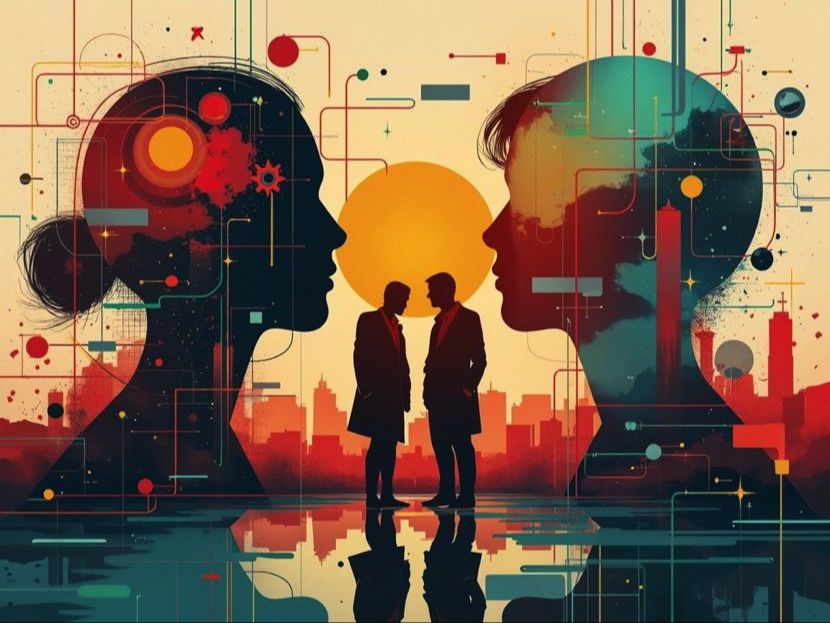
Illustration : Fakurian Design on Unsplash
References
Eikholt, Sebas. "Expert Warning In The Exploitation Of AI And Its Hidden Biases." Smarthealth. Last updated September 23, 2021. https://smarthealth.live/fr/2021/09/23/les-experts-mettent-en-garde-contre-les-prejuges-lies-a-lia-dans-les-soins-de-sante/.
Grison, Thibault. "AI And Social Network Moderation: A Textbook Case Of 'Algorithmic Discrimination'." The Conversation. Last updated September 9, 2021. https://theconversation.com/ia-et-moderation-des-reseaux-sociaux-un-cas-decole-de-discrimination-algorithmique-166614.
"Artificial Intelligence: Weapon Of Massive Discrimination?" Décideurs Magazine. Last updated: December 11, 2020. https://www.magazine-decideurs.com/news/intelligence-artificielle-arme-de-discrimination-massive.
Jean, Aurélie. "La Science Des Algorithmes N'est Pas Manichéenne." Le Point. Last updated: May 23, 2021. https://www.lepoint.fr/invites-du-point/aurelie-jean-la-science-des-algorithmes-n-est-pas-manicheenne-23-05-2021-2427670_420.php.
Leprince-Ringuet, Daphné. "Repérer Les Biais Algorithmiques De L'AI Grâce Aux Programmes De Bug Bounty?" ZDNet France. Last updated March 16, 2021. https://www.zdnet.fr/actualites/reperer-les-biais-algorithmiques-de-l-ia-grace-aux-programmes-de-bug-bounty-39919477.htm.
Maquet, Clémence. "Artificial Intelligence: What Approach To Algorithmic Bias?" Siècle Digital. Last updated: May 11, 2021. https://siecledigital.fr/2021/05/11/intelligence-artificielle-quelle-approche-des-biais-algorithmiques/.
Mélin, Anna. "Les Biais Algorithmiques : Un Défi Majeur Dans Nos Sociétés Numérisées." Internet Cities. Last updated: July 16, 2021. https://www.villes-internet.net/site/les-biais-algorithmiques-un-defi-majeur-dans-nos-societes-numerisees/.
Nast, Condé. "These Algorithms Look at X-Rays-and Somehow Detect Your Race." Wired. Last updated: August 5, 2021. https://www.wired.com/story/these-algorithms-look-x-rays-detect-your-race/.
Prades, Arnaud. "Pour éviter Les Biais De L'AI, Mieux Vaut S'intéresser Au Facteur Humain Qu'aux Questions Techno." JDN. Last updated: June 30, 2021. https://www.journaldunet.com/solutions/dsi/1503581-pour-eviter-les-biais-de-l-intelligence-artificielle-mieux-vaut-s-interesser-au-facteur-humain-qu-aux-questions-technologiques/.
Pérignon, Christophe. "'A $% Sexist Program': How To Detect And Correct AI Biases." The Conversation. Last updated: March 15, 2021. https://theconversation.com/un-de-programme-sexiste-comment-detecter-et-corriger-les-biais-des-ia-156874.
Richard, Philippe. "Comme Les êtres Humains, L'AI Repère Difficilement Ses Erreurs D'appréciation." Techniques De L'Ingénieur. Last updated: September 13, 2021. https://www.techniques-ingenieur.fr/actualite/articles/comme-les-etres-humains-lia-repere-difficilement-ses-erreurs-dappreciation-99116/.
Trujilo, Elsa. "Aux Etats-Unis, Un Algorithme Accusé D'avoir Défavorisé Des Patients Noirs Pour Des Greffes De Rein." BFMTV. Last updated: October 27, 2020. https://www.bfmtv.com/tech/aux-etats-unis-un-algorithme-accuse-d-avoir-defavorise-des-patients-noirs-pour-des-greffes-de-rein_AN-202010270161.html.
"VIDEO. Are the Algorithms That Surround Us Racist And Sexist?" Franceinfo. Last updated: August 19, 2021. https://www.francetvinfo.fr/societe/droits-des-femmes/video-les-algorithmes-qui-nous-entourent-sont-ils-racistes-et-sexistes_4721831.html.
Zignani, Gabriel. ""Judges, Policemen And Lawyers Will Have To Appropriate Algorithmized Justice"." La Gazette Des Communes. Last updated July 21, 2021. https://www.lagazettedescommunes.com/757552/les-juges-policiers-et-avocats-vont-devoir-sapproprier-la-justice-algorithmisee/.
You might also like:
The threshold effect in group learning
Studies attest to the importance of collective ecosystems conducive to "exponential learning" within a group.
Paths to personal transformation
4 paths to personal transformation, whether conscious or unconscious, voluntary or involuntary. The Personal Transformation Practices Matrix provides a framework for navigating the complex journey of personal development.
Constellation can help relieve guilt, alleviate and repair, at least on a personal level, problems that have been present in families for generations and that manifest themselves through issues encountered in daily family life or relationships.
Artificial intelligence assaults creation
This article explores the effect of generative artificial intelligences on our conception of creativity and innovation. It analyzes their technical prowess, their ethical and societal issues, and their implications for art and creative work. A nuanced look at the place of the human in this new paradigm, between collaborations, challenges and an opening towards stimulating perspectives for rethinking our imaginary in the age of AI.
Recognition in the sense of "thanks" puts us in a dependency on the look of the other. A subjective look oriented by others. How can we build recognition independently of the other's gaze?