Publish at December 14 2021Updated January 20 2022
BDnF - A tool for creating quality illustrated stories
The comic book factory, signed BnF
Initially considered a minor art form, comics have had the greatest difficulty in gaining true recognition. From being a simple entertainment tool aimed at youth, comics have emancipated themselves from their comic status to establish themselves as a new medium of artistic expression. But comics also have an educational and pedagogical role to play.
Focus on the digital creation tool, BDnF - La fabrique à BD de la BnF.
BDnF
BDnF is a desktop or mobile application that allows you to create comics, graphic novels or any other story mixing illustration and text. It is available for free on computer, tablet and in a simplified form on mobile.
The BDnF project is the result of a call for innovative projects launched by the Ministry of National Education and which was jointly funded by the Ministry of National Education and Youth and the BnF. The site tells us that the application is the result of close collaboration between BnF teams and teachers in order to best meet their expectations.
The meeting of comics and heritage
The site explains that one of BDnF's major assets is to provide access to rich and varied resources, which invite the user to constant back and forth between discovery and creation. The reason is simple. The application offers the possibility of drawing from a huge number of iconographic resources (19th century opera sets, photographs by Eugène Atget, mysterious characters from illuminated medieval manuscripts or posters from the Belle Epoque), which can be used alongside one's own drawings or photos. In particular, it is possible for the user of the application to use images from Gallica, the digital library of the BnF.
A creative tool for everyone
The site explains that the application is primarily intended for a school audience, teachers and students in primary and secondary schools. But that beyond the school setting, the app can be used by anyone for recreational use.
Damien Sueur, multimedia project manager at the BNF, at the interprofessional day "Behind the Scenes of Comic Book Publishing" held on May 6, 2021, presents in the following video the BDnF app in practice.
Adrien Martin, an illustrator particularly interested in narrative forms, relied on BDnF to build more classic comic book plates from his drawings, which he was able to embed in the app.
Educational library
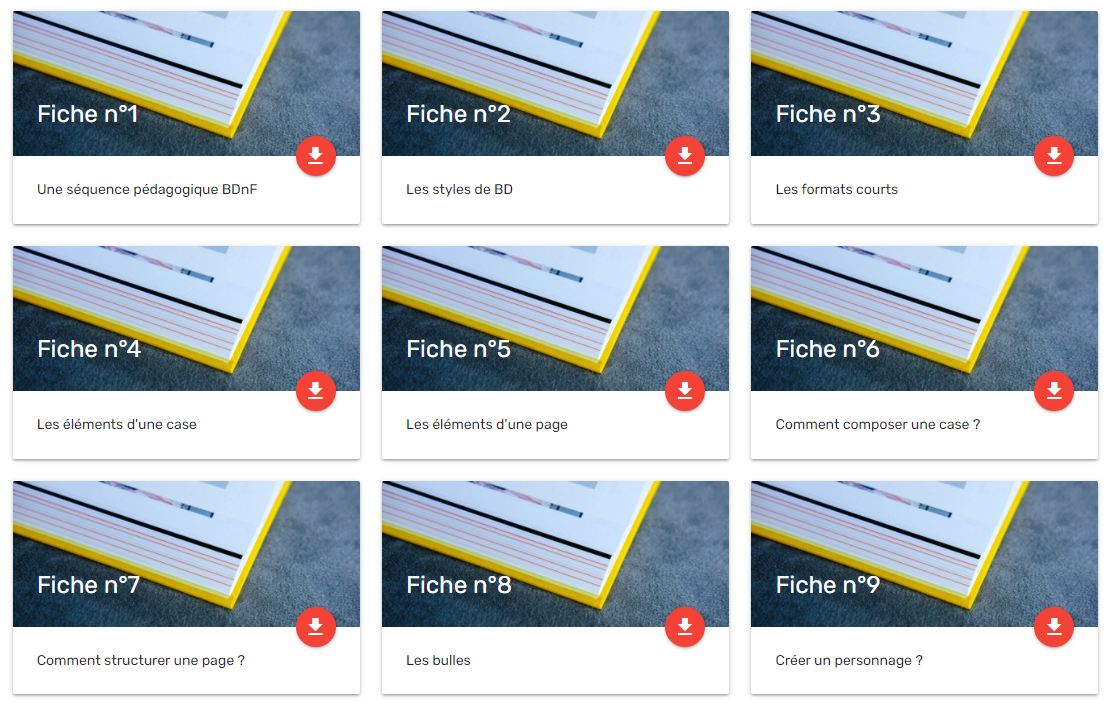
The BDnF site also offers an educational library where one can discover the codes of comics through educational sheets (How to organize an educational sequence with BDnF, Comic styles, Short formats, etc.). The site indicates that these are intended to give teachers and trainers tracks to organize an educational sequence BD in class.
The National Library of France also offers an educational website BnF Classes.
Comics and Education: An Engaging Approach?
The Belgian website LogoPsyCom, which is an educational innovation center specializing in projects focusing on learning disabilities, writes in its online article entitled: "Comics-for-education-an-engaging-approach-to-teaching-and-learning," that more and more teachers are bringing comics into their classrooms, to make the teaching and learning experience engaging, efficient, effective and fun.
The reason for this? The language of comics is engaging and motivating, with storytelling and storyboarding turning lessons into stories and simplifying abstract concepts. Specifically, the site tells us that using comics, comic books or graphic novels for learning can help improve reading, writing, memorization and problem-solving skills.
LogoPsyCom goes further, saying that beyond the real potential of comics as a learning medium, it also helps teachers expand their methodology and resources in all kinds of subjects.
LogoPsyCom is also working on the Erasmus+ project "EdComix" which aims to develop technical skills for teachers to create inclusive digital comics for hands-on use tailored to their classrooms' needs.
Museum collections include thousands of works. It can be overwhelming or even daunting for visitors. Some museums are taking advantage of their digital space to integrate difficult-to-access works with narratives that give them a new dimension. Demonstrating the power of storytelling.
It's all about making robots more friendly, and also making us more open to their presence; the enterprise of robotic inculturation has begun, and is spreading across the board. Asimo is well known, but what can we say about Geminoid F, a real human avatar, Pepper, who goes to a real high school, Aiko Chihira, who knows sign language, Hanako, a typical patient for a dentist, Tipron, the home projector robot and even Hal, who offers human-robot hybridization...
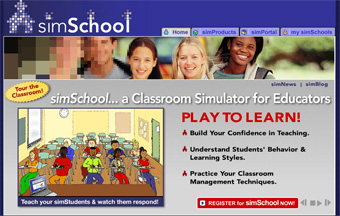
A classroom is a complex environment, and field placements are irreplaceable in learning how to navigate it. In the United States, the first virtual classroom environments have emerged that prepare future teachers to face real students.
By dint of going too fast, we end up neglecting and abandoning our homelands, even to the point of thinking that we could free ourselves from them, or even leave the land that was our cradle, without remorse.