Elude: a serious game for understanding depression
An original approach to depression. The game's metaphor is well conceived, a little dark and informative about a problem that affects millions of people.
Publish at September 21 2022 Updated September 21 2022


Is an economic revolution possible? While neo-liberalism and market capitalism have dominated for at least 40 years, it seems to be running out of steam these days. Other models are emerging and among them, the sharing economy.
Now, platforms make it possible to rent housing, call for transportation or food without having to go through a classic structure. What some have named the uberization, in reference to the giant Uber. However, this economy also comes with many flaws and is increasingly shown as another form of exploitation of workers.
What if this idea was combined with the cooperative? That's what Dardan Isufi, a bachelor of political science at McGill, proposes in this talk at TEDX Montreal. He gives the example of Fairbnb, which aims to be a co-op of people willing to rent out their homes with more respect for the living environment than the giant AirBNB.
This type of more ethical business would be even more possible with another technology: blockchain. Indeed, it doesn't necessarily have immense utility on its own. Yet, for the speaker, it would allow cooperatives to grow better by keeping the trust of members. If votes or shares are counted by the "blockchain" technology, it would be easier in his opinion to propose a real collaborative economy.
Time: 13min32
Picture credit: en.depositphotos.com
Learn more about this resource
You might also like:
Elude: a serious game for understanding depression
An original approach to depression. The game's metaphor is well conceived, a little dark and informative about a problem that affects millions of people.
The Englishes MOOC course was developed by an artist and is designed for anyone interested in the (English) language. It explores the history of English, its pronunciation, and its relationship to the art world.
"Space Shelter: Google's cybersecurity game
All our lives have an online component. As a result, a large proportion of Internet users are at risk of being tricked by hackers. A short game invites Internet users to remember certain elements of cybersecurity using a space theme.
Newscraft: the game that puts you in the shoes of a reporter
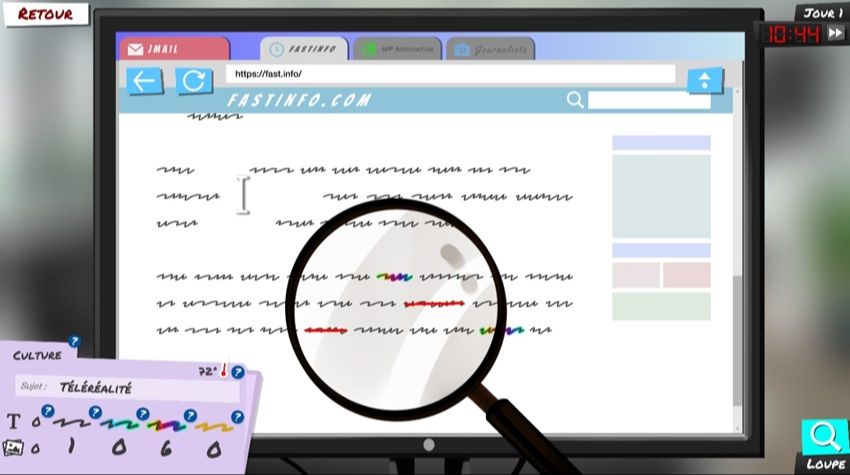
A serious game that explains and brings to life the notion of news selection and the editorial line of different types of media.