 Source:
Human capital theory and the unspoken
The theory of human capital in society can be flawed on several levels.
Publish at October 04 2022 Updated October 04 2022


The press, scientists and political powers are talking about global warming and its effect on humanity and the planet. On the other hand, when it comes to the waste emitted by our civilizations, we find less publications. Let's see what it is !
Waste can have various origins. waste can have various origins. We often think of household waste, but there is also waste from business activities, waste from companies, waste from administrations and various suppliers.
According to Europe's official website, in 2018 (2020 being skewed with the COVID), it was 2,338,530,000 tons of waste that European citizens European citizens produced.
At the level of French-speaking countries :

Source: https://ec.europa.eu/eurostat/databrowser/view/ten00108/default/line?lang=fr
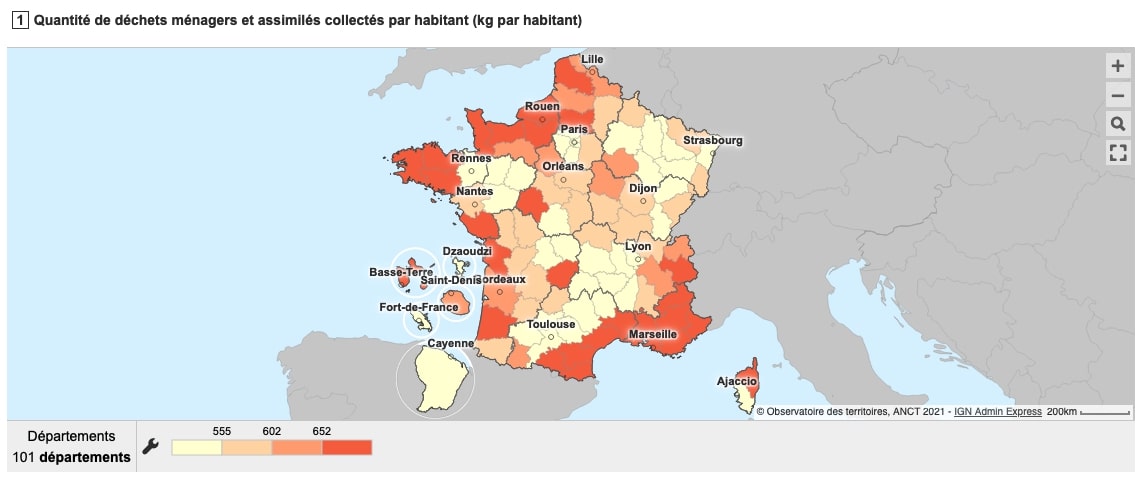
According to the site of the observatory of territories, we observe that the the Mediterranean and the Atlantic and the French Channel are the biggest producers of manche are the biggest producers of domestic waste. The Finistère and the Alpes Maritime are at the top of this inglorious ranking with more than 770 kg per inhabitant. The Rhone with 447 kg being the best pupil.
Plastic plastic packaging is a waste disaster. If manufacturers manufacturers use them so massively is for their convenience. They have many virtues in their eyes:
The best waste is that which does not exist. Recycling is a second-best option. It is also and above all an industrial sector that can profits by recovering waste but also by consuming a lot of energy. A lot of energy.
For example, glass is 100% recyclable.
We are therefore good citizens by going to deposit our used glasses
in the dedicated bubbles. If we think about it, we are going to deposit
that could still be used, so that they can be broken and then heated for
broken and then heated to sometimes make new containers that are identical or almost
identical or almost identical to those " recycled ". If a part of the financial efforts
financial efforts made by the states would allow the standardization of
containers and to make a deposit, it could reduce the energy bill of this "
the energy bill of this "recycling" and a small part of the emissions that
emissions generating the greenhouse effect.
It should also be noted. that recycling plastic is not simple. Plastics must be sorted, some composed of different molecules (layers of different plastics) are plastics) are not recyclable at all and therefore must be burned or buried. be burned or buried.
Various streams have been created by people who are sensitive to the problem of the amount of of the amount of waste we generate. Of course, it is a matter of to act according to one's possibilities and progressively by setting reasonable The term "minimalism" is used in different contexts. According to the dictionary, the meaning of the word is as follows:
Minimalism is the conscious limitation to a minimum, to the bare essentials.
Minimalism minimalism is to get rid of what is not important to focus on the to focus on what is essential. This may involve unnecessary objects or unnecessary or activities that do not serve an important purpose. If you banish from your life what is not important to you and free up and free up space, time, money and attention for what is important to you. for what is important to you. Only what is pleasant and satisfying. Minimalism maximizes what is meaningful and value.
The minimalism has nothing to do with renunciation, deprivation or asceticism.
Some people some people try to simply produce no or almost no waste. waste. Their production over the course of a year is limited to what fits in a jar or a bucket. Getting to this point can only be done by winning small victories every day or every week thanks to a waste that victories each day or week with a waste product that we have avoided producing.
The
easiest to implement, for those who are not in an apartment, is a
apartment, is a composting to make use of organic waste.
For those living in apartments, the vermi or lombri-compost solution exists.
As stated above, recycling is only a stopgap. The 5R rule is there to remind us of that. Here's what it means in order :
As As consumers, we have the choice to buy waste or to refuse it. refuse it. Bulk has its advantages but also its disadvantages, so Opt for bulk or the least packaged products. Avoid buying pre-packaged sandwiches at train stations or highway stations, don't accept plastic spoons with your coffee, etc. It's easy, you just have to be there. easy, just pay attention.
 One article wouldn't be enough to describe all the consequences on
of the waste we produce. However, you can
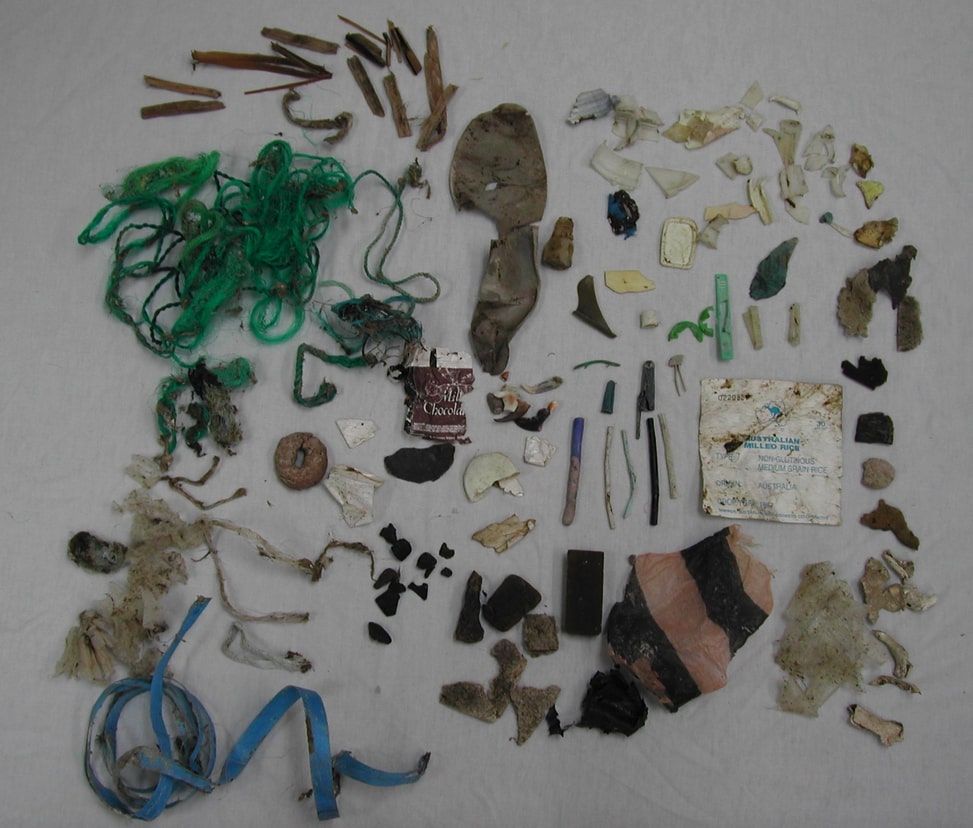
visit the Turtle Hospital in the Florida Keys. Here's everything this hospital has harvested from the digestive tracts of these poor animals.
One article wouldn't be enough to describe all the consequences on
of the waste we produce. However, you can
visit the Turtle Hospital in the Florida Keys. Here's everything this hospital has harvested from the digestive tracts of these poor animals.
So waste can cause suffering to some living things.
It becomes important to reduce the waste we produce. Everyone can make a contribution. everyone can make a contribution, it's just a matter of thinking about it and paying attention. What reasonable waste reduction goal could you set for yourself?
You might also like:
Human capital theory and the unspoken
The theory of human capital in society can be flawed on several levels.
Congruence, the key to credibility
The importance of congruence among teachers to be credible in the eyes of students. To ensure this, self-evaluation through techniques such as viewing one's own lessons and personal reflection are effective tools. The pleasure a teacher takes in teaching has a direct influence on student motivation and involvement.
Animals that listen and are not stupid
To what extent can our animals understand us? Can they distinguish languages? Are they sensitive to words or sounds? Why does the snake stand up to the snake charmer? So many questions about our animal friends, not so stupid!
Does a training organization have a pedagogical soul?
There is something about learning and learners that no one can see but that makes things flat and boring when it is dispensed, this extra thing is the pedagogical soul.
How can we make the most of the knowledge commons?
The knowledge commons is an emerging concept that opens up new and collaborative pedagogical perspectives.