Our world has never been so data-producing. Every day, we are reportedly producing the equivalent of 10 trillion photos. And that's only going to continue to increase over the next few years. Since 2012, we've gone from 500,000 data centers on the planet to 8 million. Servers crammed with information, 80 to 90% of which is considered cold. That is, it's not really used anymore but it still exists on a server. Whether it's that photo from 8 years ago put on Facebook or that email kept for years in the inbox.
Engineer Melpomeni Dimopoulou says in her talk (in English with French and Spanish subtitles) that we need to turn to a way to keep this data while gradually reducing the centers that consume crazy energy and participate in accelerating climate change. For her, the solution is a DNA code. It seems that science is now able to transfer a binary code such as the one used in computers into a quaternary code such as the one used in genes. Thus, it would be enough to transcribe from one to the other and to conceive synthetic strands of DNA. Without being able to create life, these could be decoded later by sequencers.
The energy requirement of this type of archive would be zero and all the information could fit in the equivalent of a drawer. The strands would be stored in water- and shock-resistant capsules. And they could be preserved for thousands of years, unlike today's physical media that become obsolete after 10 years.
The only two flaws are the risk of errors in the encoding, which will therefore require almost infallible algorithms, and the rather high cost of the method for the moment. Yet, when you see the price of server maintenance, backups and electricity, adopting DNA would ultimately be more economical.
Not to mention that inevitably, the technology will become more and more accessible over time like computer processors, for example.
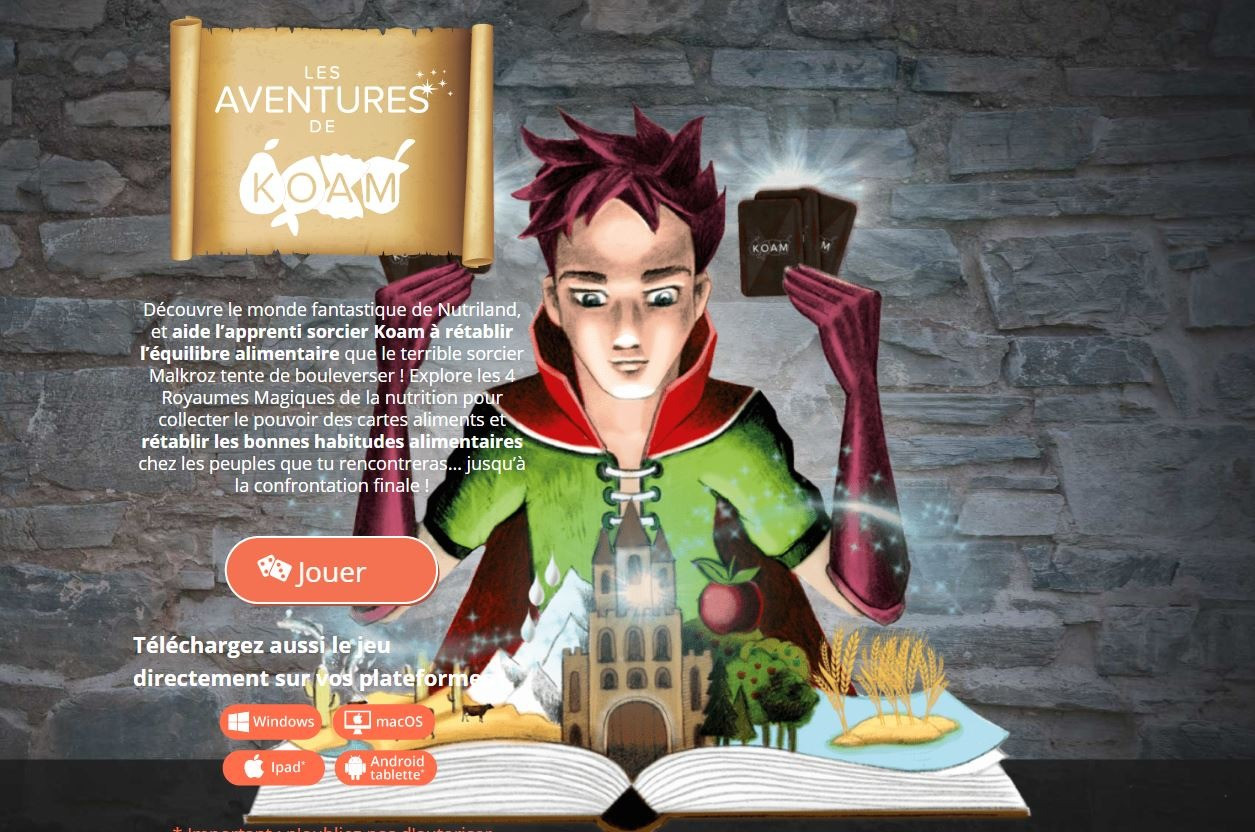
A veritable showcase for public health, Koam was developed by Nutrikeo, a consulting firm specializing in nutritional strategies. Supported by BPI France, the Nouvelle Aquitaine region and Europe, Koam is the result of two years' work by a team of leading specialists in nutrition, childhood, pedagogy, sociology, digital and behavioral theory.
Video games designed for people with disabilities are already a rare resource. An experience that allows multiple players is even rarer. Yet this latest creation from "Ludociels for All" challenges players to light up an entire maze by walking balls of light.
The Englishes MOOC course was developed by an artist and is designed for anyone interested in the (English) language. It explores the history of English, its pronunciation, and its relationship to the art world.
How do you talk to children about genetics and heredity? A British museum has come up with the method: design a game in which you create a line of adorable creatures with precise objectives. The game is fun, colorful and easy to learn. Even adults will succumb to the charms of the bugs and their large families.