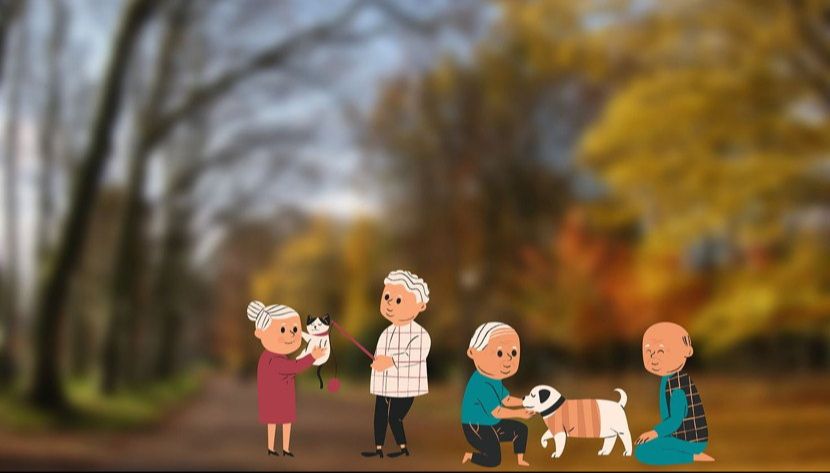
The effect of pet therapy on non-verbal communication in Alzheimer's patients
Animal-assisted therapy, a solution for limiting non-verbal language disorders in some patients with Alzheimer's-type dementia.
Publish at November 22 2022 Updated November 22 2022


Are training platforms, or LMSs, still adapted to our learning styles? We can doubt it. They don't handle inconsistency, informality, and the need for speed. Perhaps it's time to look at LXPs, or learning experience platforms: more social, dedicated to micro-learning, rich in content libraries, they also seduce with their ergonomics and modern look. But do they have all the answers?
This article is reserved for subscribers to the full edition. You can subscribe Here.
You might also like:
The effect of pet therapy on non-verbal communication in Alzheimer's patients
Animal-assisted therapy, a solution for limiting non-verbal language disorders in some patients with Alzheimer's-type dementia.
Criteria to Qualify Training as Innovative
These criteria to try to define what might be innovative in training. Many innovations are not adopted, many so-called innovations only respond to criteria alien to the function. So what are the real pedagogical innovations?
Initiating and integrating interdisciplinary projects into the curriculum
Integrating interdisciplinary projects into higher education prepares students for the complex challenges of the real world. Despite the challenges of implementation, these projects offer many advantages: development of cross-disciplinary skills, complex problem-solving, creativity and innovation. Strategies are proposed for successful integration.
Reenchanting public discourse with dialogue circles
Dialogue circles transform democracy by rehabilitating slow, embodied and shared speech, capable of producing in-depth common ground rather than mere opposing positions.
How to stabilize the price of currencies and crypto-currencies
Stabilizing the price of currencies and crypto-currencies seems to be the goal to achieve to stabilize prices and in particular the price of energy, but isn't the solution rather to go back to the origin of money and reformat a stable survival economy?