The issue of climate change is not a happy one. The most pessimistic scenarios of rising seas seem closer to reality than ever. Consequently, island populations are at risk in the medium and long term future of being below sea level. What to do with these populations?
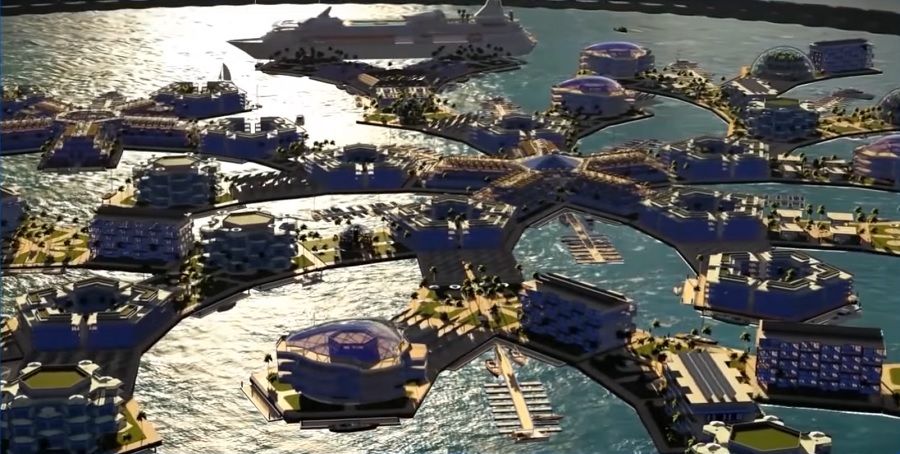
The city of Busan, South Korea, may be on the mainland, but it is very much afraid of rising seas that could harm its activities and city residents. Thus, a Korean company called Oceanix, in collaboration with the United Nations, has developed an idea for a floating city. 3 modules would be created to accommodate nearly 30,000 people: the first to house citizens, the second to provide entertainment and the third for scientific research. The platforms would be designed to fit well into the ocean world, avoiding more pollution. The required energies would be all green and no cars would circulate in this city, only pedestrians and cyclists.
The United Nations hopes that other countries will follow suit with this solution in order to be able to accommodate, among others, climate refugees if necessary. Construction of this first floating city in Korea will begin in 2023 and is expected to be ready around 2035. Obviously, other measures are considered by some territories such as the possibility of raising the level of the islands to avoid being flooded. Nevertheless, the most valid answer remains to avoid such a significant warming that could lead to a too high water rise.
How do you talk to children about genetics and heredity? A British museum has come up with the method: design a game in which you create a line of adorable creatures with precise objectives. The game is fun, colorful and easy to learn. Even adults will succumb to the charms of the bugs and their large families.
Many serious games address the topic of sustainable development. Yet before such solutions were proposed, innovative people had to go against the social grain and fight to improve their environment. A humorous adventure game, hosted by the National Film Board, teaches children the attitudes they need to adopt to make a difference.
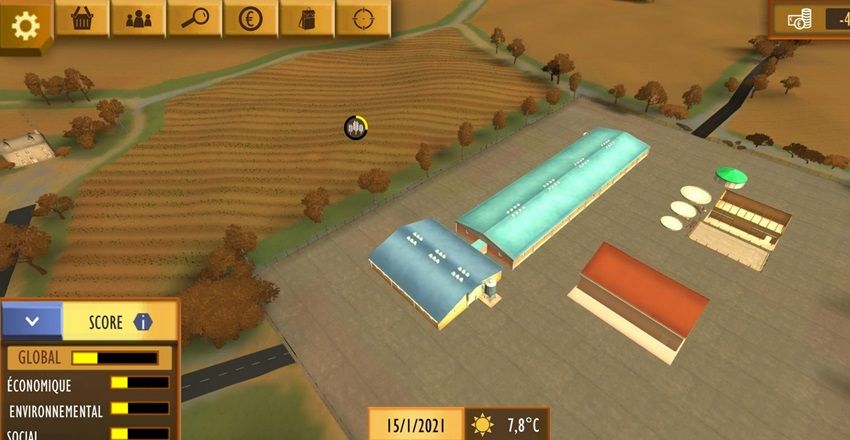
There's nothing simple about being a farmer. You have to plan your activities throughout the year, make sure you have the right machinery, maintain it and so on. All with a view to ecology. A serious French game seeks to teach agroecology.
The sharing economy has led to small changes in various economic sectors such as transportation, housing, etc. This approach has changed the relationship of citizens for different services, now cheaper and offered by their fellow citizens. However, who actually benefits from this new economy? The people or the companies in question? A U.S. newsgame shows how the life of Uber drivers isn't as lucrative as one might think.