Lying is wrong. That's what we're taught from an early age. Most philosophers and religions forbid lying. And yet, we all do it at one time or another. After all, don't our parents expect us to thank our grandparents for a gift, even if it's totally out of character?
Classic psychological experiments show that if a group of children sees one put a doll in one place and another change it, when asked where the owner of the toy will look, they will en masse say it will be in the hiding place. Because they don't yet understand the "theory of mind", i.e. that each human perceives the world differently and according to his or her memories and thoughts. This discovery will lead them to the first falsehoods.
The idea of lies as agents of social breakdown is greatly exaggerated. On the contrary, the ability to adapt to the situation allows us to create bonds with others, whether in business or in love. All the more so as we are very bad at discerning impostures. Despite thousands of theories and supposed machines, we generally assume that the other person is telling the truth. This phenomenon is called the "illusory truth effect": our brain first believes what it sees to be true. If it were constantly to do the opposite, it would overheat.
Consequently, in a world of truth manipulation, this can become more problematic. Nevertheless, lies lead to mechanisms to counter them. Fake news online has led to the development of fact-checking. Children develop their logical minds from the moment they understand that Santa Claus is fictional.
So lying isn't always a bad thing. When it serves as a social lubricant and bond-builder, it's fine. If we constantly told each other the pure truth, it would often end in bigger arguments. Instead, it's the selfish lies that are really reprehensible.
Video games designed for people with disabilities are already a rare resource. An experience that allows multiple players is even rarer. Yet this latest creation from "Ludociels for All" challenges players to light up an entire maze by walking balls of light.
The sharing economy has led to small changes in various economic sectors such as transportation, housing, etc. This approach has changed the relationship of citizens for different services, now cheaper and offered by their fellow citizens. However, who actually benefits from this new economy? The people or the companies in question? A U.S. newsgame shows how the life of Uber drivers isn't as lucrative as one might think.
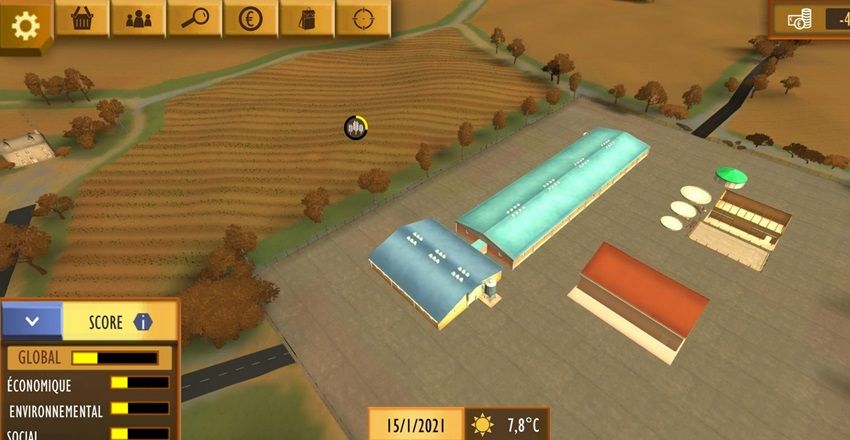
There's nothing simple about being a farmer. You have to plan your activities throughout the year, make sure you have the right machinery, maintain it and so on. All with a view to ecology. A serious French game seeks to teach agroecology.