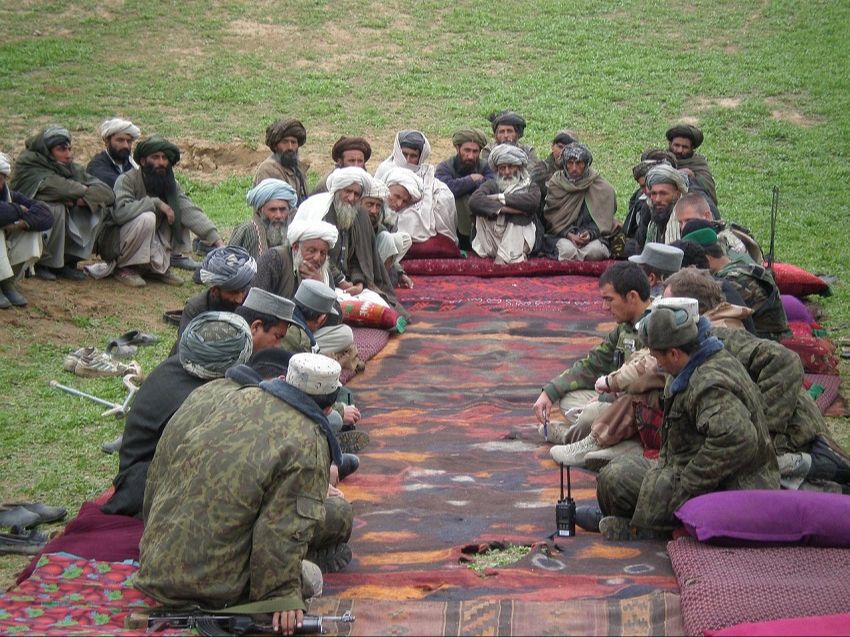
No one is fundamentally in favor of conflict or war. But that doesn't mean they don't happen all the time around the world. All it takes is religious differences, encroachment on territory or a race for political control of a region for bullets to fly and shells to explode. Yet these disputes have to end, or at least leave space for humanitarian workers to enter, populations to leave, and so on.
This is the role of private mediators in conflicts. Pierre Hazan of the Centre for Humanitarian Dialogue explained his tasks and the issues surrounding his work in a lecture given to Médecins sans Frontières. Because there's nothing simple about it.
We find ourselves in real gray areas where it is generally necessary to negotiate with groups or individuals considered almost as "absolute evil". For example, many have argued that we must not compromise with Russia's bombing of Ukraine. Yet private negotiators succeeded in obtaining a right for grain to leave Ukrainian territory and avert potential famine in several countries.
This explains why there is little media coverage of such events. It comes into play especially when a peace agreement is imminent, in order to put a little pressure on both parties. It's a delicate balancing act, and one that can quickly fall apart if the backers (generally states, who do it discreetly) don't take into account the realities of a conflict, the local stakes, and so on.
Mediators often start by working on humanitarian objectives before tackling the end of a confrontation, which is the most difficult to resolve.
How do you talk to children about genetics and heredity? A British museum has come up with the method: design a game in which you create a line of adorable creatures with precise objectives. The game is fun, colorful and easy to learn. Even adults will succumb to the charms of the bugs and their large families.
Video games designed for people with disabilities are already a rare resource. An experience that allows multiple players is even rarer. Yet this latest creation from "Ludociels for All" challenges players to light up an entire maze by walking balls of light.