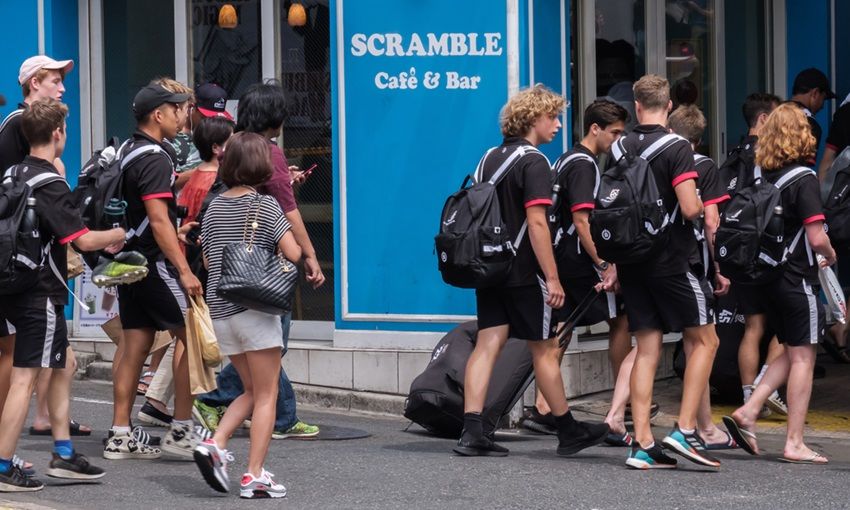
We love to move. Perhaps it's due to our nomadic ancestors or our insatiable curiosity, which always pushes us to push back the frontiers of exploration. Because the world is so vast, it's hard not to want to explore even a small part of it. These days, travel doesn't require as much preparation. All you need is the means (and even then, there are ways of cutting prices), a little digging into online offers, and in less than a few clicks, you're ready to hop on a plane to the destination of your choice.
Except that this ease of tourism comes at a cost. For starters, it puts a strain on some of the world's most popular tourist destinations. Just think of the Venetians, who took advantage of the break in the coronavirus confinements to calm the influx of travelers.
What's more, it has environmental effects: aircraft use rather polluting fuels, contributing to climate change and general environmental degradation (contrail, noise, traffic...).
Admittedly, the air transport industry is quietly trying to reduce its footprint, but this is still very limited, particularly at a time when air traffic has never been so intense.
Revisiting tourism
More and more tourists are taking sustainable issuesinto account when choosing their destination. As a result, the concept of responsible tourism has gained in popularity in recent years. Rather than succumbing to instantaneity, it means thinking about your journey to reduce its impact on the environment. As for transport choices, it means choosing more often in the country ecological means such as walking, cycling or public transport instead of renting a car.
Responsible tourism comes in a variety of forms:
- Solidarity tourism:this is organized solely with local populations, so that they benefit rather than the big travel companies. In the same vein, community tourism puts local people at the heart of the tourism offering.
- Slow tourism:a time of discovery where travelers savor local landscapes and gastronomy, and use "slower" means of transport that emit far less carbon dioxide.
- Ecotourism: tourism in the wilderness, with the aim of protecting biodiversity, can be accompanied by ecovolunteer missions in local communities.
There are many labels certifying responsible tourism - too many, according to some- which can guide travellers in their choice. But only if they do so in good faith, and not just for appearances' sake.
Turning to this type of travel implies a genuine desire to explore. When you consider that 95% of tourists are concentrated in only 5% of the areas that can be visited, it's easy to understand why some places are so vulnerable and sometimes fall under visitor quotas. This also means that host communities have to work hard to use natural amenities in their promotion, while ensuring that they are protected.
The Agence Nationale de la Cohésion des Territoires (ANCT) has even published a survey on the subject carried out in French intercommunalités.
In Quebec, the Ministry of Tourism has made it a priority to roll out an action planto ensure that all the province's regions offer responsible, sustainable tourism solutions. Each region is working to protect its ecosystems, from riverbanks to mountains, and is also collaborating with First Nations to develop slow-moving tourist circuits.
This means that those who work or will work in the tourism sector in the future will have to take these realities increasingly into account. For tourism students, a serious board game has been created by Excelia Tourism School to raise awareness of responsible tourism.
Green school outings
School outings are no exception to this need to take responsibility either. Schools and teachers must increasingly take into account the possible footprints of their trips with pupils.
Among the various specialist companies, Vefe prides itself on offering tours and programsbased entirely on sustainable development. For example, they will suggest that classes take an interest in the ecological parts of London, offer excursions to the city of Hamburg, which balances commerce and the environment, or visit the pioneering green city of Freiburg. They are not alone, however, and the Double Sens agency also offers such tours.
Without having to go through agencies, it is possible for teachers to prepare more responsible and sustainable outings. All they need to do is rethink certain aspects, such as transportation. Do we have to hire a bus at all costs? Sometimes it's necessary, but in many situations, especially in Europe, the train can be more advantageous and less expensive. It requires a little more organization, but the effects on the ecological footprint can quickly become significant. Reducing waste by using water bottles instead of gourds and, for meals, using boxes to transport items, avoiding individually-wrapped food, and so on. What if a competition were organized among students to be among those who produced the least litter?
Asking people not to travel seems difficult and even a little counter-intuitive. Getting out of the house and out of the classroom has an important educational value. On the other hand, given today's environmental challenges, it seems necessary to rethink our approach to tourism, in order to create wealth in the communities we visit, while at the same time reducing the footprint of our journeys.
Photo: en.depositphotos.com
References
Clastres, Geneviève. "School trips, educational and sustainable against all odds!" Responsible Travel And Sustainable Tourism. Last updated: September 22, 2020. https://www.voyageons-autrement.com/des-voyages-scolaires-educatifs-et-durables.
"Tips for a more responsible school trip." Visites Contées De Lyon - Cybèle. Last updated March 13, 2021. https://visite-lyon.fr/scolaires/conseils-pour-un-voyage-scolaire-plus-responsable/.
Girard, Charles-Édouard. ""Responsible tourism is first and foremost about restoring the desire to travel soberly."" Le HuffPost. Last updated: December 7, 2022. https://www.huffingtonpost.fr/life/article/le-tourisme-responsable-c-est-d-abord-redonner-envie-de-voyager-sobrement_211127.html.
"Sustainable tourism, a complex and necessary challenge." Neo Sphere. Last updated: March 8, 2023. https://neo-sphere.fr/le-tourisme-durable/.
Nurdane, Bilmis. "Responsible Tourism." Village Magazine. Last updated: September 18, 2023. https://villagemagazine.fr/le-tourisme-responsable/.
"Planète tourisme: un jeu pédagogique pour former les futurs acteurs du tourisme durable" Acteurs du Tourisme Durable. Accessed October 27, 2023. https://www.tourisme-durable.org/bonnes-pratiques/mobilite-et-transports/item/1951-planete-tourisme-un-jeu-pedagogique-pour-former-les-futurs-acteurs-du-tourisme-durable.
"Sustainable tourism: the latest trends in responsible travel." Bolt. Last updated: August 9, 2023. https://bolt.eu/fr-fr/blog/tourisme-durable-tendances/.
"Tout le Québec prend le virage du tourisme responsable et durable." La Presse. Last updated: June 5, 2023. https://www.lapresse.ca/xtra/2023-06-05/bonjour-quebec/tout-le-quebec-prend-le-virage-du-tourisme-responsable-et-durable.php.
Triomphe, Chloé. "Le tourisme durable à l'épreuve de la réalité." Le Figaro. Last updated: October 29, 2022. https://www.lefigaro.fr/voyages/les-contours-encore-flous-du-tourisme-durable-20221029.
"Vacances "vertes" : choisir le tourisme éco-responsable." AXA. Last updated: June 30, 2023. https://www.axaprevention.fr/fr/article/vacances-vertes-le-tourisme-eco-responsable.
VEFE - Educational School Trips. Accessed October 27, 2023. https://www.vefe-voyages.com/.
"School trips: which destinations for a solidarity adventure?" Double Sens. Last updated: April 15, 2020. https://www.doublesens.fr/blog/post/257-quelles-destinations-choisir-pour-un-voyage-scolaire-solidaire.
See more articles by this author