85% of the jobs that will be practiced in 2030 do not yet exist... probable or improbable?
Let's try to see more clearly what is really evolving in the professions, beyond the job titles.
Publish at December 13 2023 Updated December 13 2023


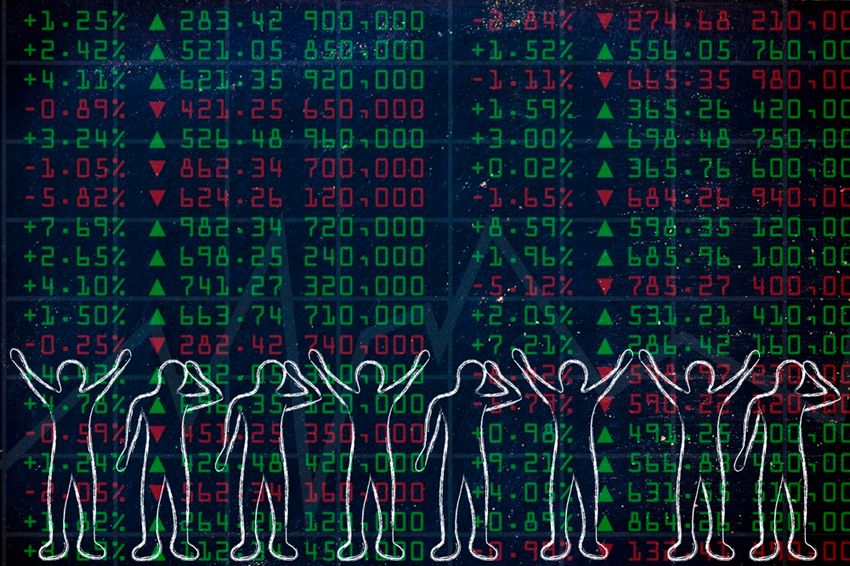
For some, the financial markets are seen as a way to make money without a traditional job, for others it's a huge casino and for still others it's the evil that rules our lives.
These views are fueled by stories of dazzling success, the emergence of cryptocurrencies or layoffs that benefit shareholders. To demystify all this, it seems useful to educate pupils and students about how financial markets work and how to understand the economy.
A stock market game is an interactive simulation of the stock market and other financial instruments. It enables participants to learn and practice investment strategies in a virtual environment without financial risk. These games offer a realistic experience of market fluctuations, enabling players to test their hypotheses and understand the impact of economic events and corporate decisions on asset values. They are often used for educational purposes to teach the basic principles of investing and finance.
Discover a list of stock market simulation games on this page.
Stock market games offer several advantages for young people:
Investing in financial markets requires an understanding of the economy, as market performance is influenced by many economic factors. Investors need to familiarize themselves with economic indicators such as GDP, unemployment rates, monetary and fiscal policies, which can affect the value of investments. Understanding business cycles, sector trends and overall macroeconomic conditions is essential for making investment decisions and managing risk effectively.
There are many highly didactic channels on YouTube, such as"Un Peu Mieux" or"Institut des Libertés". Students and learners will see that there are different economic theories, and that depending on which one is preferred to the other, political decisions vary greatly.
Investing in financial markets involves important psychological aspects. One of these is managing emotions: investors often have to deal with fear and greed, which can influence their decisions. Another is risk perception, as markets are by nature uncertain and can generate anxiety.
Discipline and self-control are also crucial to following a long-term investment strategy, despite market fluctuations.
The biased confirmation effect, where investors seek information that confirms their pre-existing beliefs, plays a significant role in investment decisions. In the game, we quickly notice that our minds work differently before and after taking a position.
Crypto-currencies can indeed restore the appeal of stock market gambling, especially among young people. Their innovative nature and high earnings potential make crypto-currencies fascinating and draw attention to financial markets in general. This fascination with crypto-currencies can lead to increased interest in learning the basics of investing and understanding the markets, which is beneficial for educational stock market games.
Young people are often attracted to cryptocurrencies for a number of reasons. Firstly, there's a strong appeal for novelty and technological innovation that characterizes cryptocurrencies. What's more, social media and stories of quick, big gains amplify their appeal. Unlike traditional stocks and bonds, which are perceived as more complex and less accessible, cryptocurrencies offer an impression of ease of access and rapid earning potential, although this comes with significant risks.
When offering a stock market game with cryptocurrencies to teenagers, it's important to structure the approach carefully:
To get the most out of the stock market game from an educational point of view, it's important to educate students before launching into the game, otherwise the experience will be more like a lottery than anything else.
Teaching the basics of financial markets and crypto-currencies involves covering topics such as how stock exchanges work, the principles of buying and selling shares, and how crypto-currencies like Bitcoin work differently from traditional currencies. There are many sites that explain how cryptocurrencies work, so it's worth making a selection to get a base of knowledge.
It's relevant to discuss how their value can fluctuate considerably due to factors such as government regulations, variations in market demand, and media influences, while also highlighting the absence of a central regulatory authority as is the case with traditional currencies.
The volatility of certain financial products means that learners need to be well prepared. This requires a good understanding of reality, toavoid associating financial markets solely with theimage of a game.
This means making young people understand that stock market games are simulations where financial risks are non-existent or controlled, unlike the real market where investments can lead to real financial losses.
This means highlighting the financial, emotional and sometimes even social impact of poor investment decisions, underlining the importance of careful thought and a well-defined strategy before any financial commitment is made.
They need to understand that financial markets are not a casino, but a long-term investment tool. Giving examples of people who have lost their savings can make them aware of the risks involved.
Insisting on risk management and investment diversification means teaching young investors not to put "all their eggs in one basket". This means investing in a variety of assets to minimize potential risks.
Encouraging a cautious, considered approach to investing means promoting the need to do thorough research, understand markets and not act on impulses or fleeting trends. This approach emphasizes the importance of patience and long-term strategy, rather than the pursuit of quick, risky gains.
The teacher can also promote responsible and informed behavior among young investors. Their task is to encourage them to adopt a thoughtful and ethical approach to their investment decisions. This means making decisions based on rigorous analysis, understanding the impact of their investments and avoiding impulsive or speculative behavior.
It's also an opportunity to talk about finance and responsible investment. Discussing the importance of relying on verified and reliable information underlines the need to rely on credible and official sources, thus avoiding rumors or unfounded advice, which is crucial in a complex and constantly evolving field such as the financial markets.
Photo : Faithie / DepositPhotos
You might also like:
85% of the jobs that will be practiced in 2030 do not yet exist... probable or improbable?
Let's try to see more clearly what is really evolving in the professions, beyond the job titles.
AI is an aid to scientific research, but its use requires an ethical approach.
Avatars and projected identities
Avatars are such simple accessories in our digital connections but they carry all the complexity of our personalities and our world. Let's take a look at the various dimensions of this subject.
Back to the land and technology, an attractive duo for young people
Many young adults are keen to take over the family farm, or even start their own agri-food business. Why is this? Agricultural technology (agtech) undoubtedly has something to do with it.