Elude: a serious game for understanding depression
An original approach to depression. The game's metaphor is well conceived, a little dark and informative about a problem that affects millions of people.
Publish at February 14 2024 Updated February 14 2024


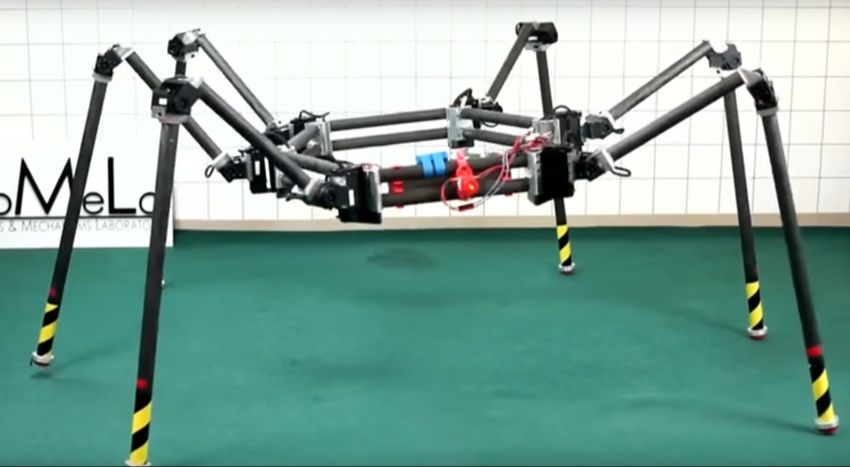
Robotics is a rapidly evolving sector. Many individuals and groups are investing in what is likely to fundamentally change the way we operate in the decades to come. Dennis Hong is one of the roboticists who has made great strides in his laboratory at UCLA. Since then, he and his students have built several types of robot.
He has noticed that, while technology allows for humanoid machines, they are generally not very stable, because specialists cannot reproduce the flexibility of human legs as well. So Hong and his team came up with robots that could walk flexibly on two legs, even if they couldn't change direction. Other multi-legged models (4 to 6) demonstrated their strength and ability to move over uneven terrain, and even to jump or dance. Because, yes, in the university laboratory, fun is a watchword, and this good atmosphere facilitates innovation.
Among the most interesting advances is a robot with spindly legs whose body is a helium balloon capable of moving, falling from great heights without damage, and walking on water. However, it remains sensitive to wind and is not ideal for outdoor use.
Nevertheless, all these advances enable the robotics laboratory to prepare a generation of robots in the shape of humans that will be more stable and mobile: a model called Artemis. At the time of this talk, they were just starting to build it. It remains to be seen how this model will become a robotics benchmark once experimentation has been completed.
Running time: 18min41
You might also like:
Elude: a serious game for understanding depression
An original approach to depression. The game's metaphor is well conceived, a little dark and informative about a problem that affects millions of people.
Develop your musical ear through play with Meludia
To a layman, music is just a tune performed by a musician. Yet, if he were to play Meludia, he would learn all the rudiments and terms associated with musical practice.
A series of games that require an ear.
Newscraft: the game that puts you in the shoes of a reporter
A serious game that explains and brings to life the notion of news selection and the editorial line of different types of media.
A serious game on social engagement
Many serious games address the topic of sustainable development. Yet before such solutions were proposed, innovative people had to go against the social grain and fight to improve their environment. A humorous adventure game, hosted by the National Film Board, teaches children the attitudes they need to adopt to make a difference.