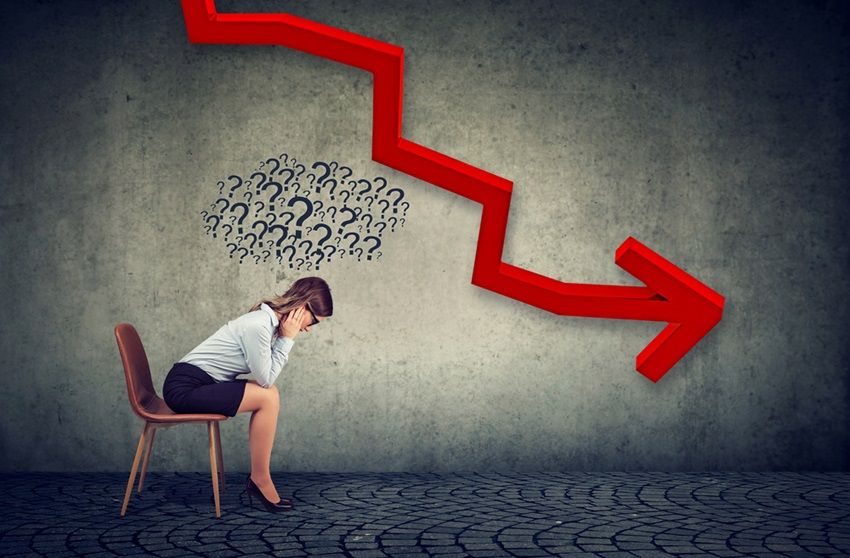
Since 2022, the economy has been in a state of flux. The covid had already shaken all sectors of activity with the various confinements, and just as the world was coming to terms with it, a major conflict broke out in Ukraine. Nothing to reassure febrile markets seeking to regain strength after two years of slowdown.
Other crises also added to the picture, giving a very pessimistic outlook for the future. At least, if you regularly consult the mainstream media on financial issues.
Can these rather negative messages about the state of the world have any real effect on the economy? Until now, economics has been divided on the question. Some analyses say yes, while others cast doubt on this.
Dalibor Stevanovic, a professor in the Department of Economics at ESG UQAM, has carried out a study that seems to show more of a causality between the degree of optimism of investors and individuals and gross domestic product (GDP). They used the Conference Board of Canada's quarterly confidence data for these two groups. They used a vector autoregression (VAR) model to note the causal link.
It would appear that, over two years, business confidence is responsible for one-sixth of the variation in GDP. Over three years, consumer confidence would be responsible for 19.46% of interest rate fluctuations, an even greater effect. However, this concerns the Canadian economy, as that of its American neighbor is much less affected by these changes or pessimism. An analysis would be all the more interesting to understand the differences between the two countries in this respect.
Nonetheless, Professor Stevanovic warns economists against feeding what could be a self-fulfilling prophecy. He is rather surprised to see such pessimistic discourse when, for example, employment figures do not tend to show a recession.
To read the article
Learn more about this
resource