Reflecting on the limits of power with Harry Potter
Parallels between this fictional world and our own
The beauty of fiction is that it always parallels our world, its systems and philosophies. The world of Harry Potter is no exception to this rule, as this episode of a series produced by France Culture shows. The young wizard's saga raises many philosophical questions that have been pondered by thinkers throughout human history.
This episode looks at the limits of power. Because even a world of magic has a few laws. Some spells are forbidden, which could be compared to fundamental human rights. Spells may not be used in the presence of non-wizards (muggles), but the legal sphere is blurred on this point. The hero of the saga was forced to do so once, but was not convicted by the court. Political power is also much vaguer than in our world: there is a minister, but no a priori electoral system.
There is also an inequality of rights reminiscent of apartheid, in that house elves, goblins and giants do not have the same rights as wizards. In the fifth instalment of the saga, a delegate sent from the Ministry of Magic becomes a teacher and then a Confessor intent on ruling Hogwarts entirely. This underlines the fact that state-of-emergency measures and actions against terrorism are often counterproductive, since they create more resistance. Indeed, the principal of the school himself plays on the limits, preferring to protest in the knowledge that it will lead to the end of the diabolical Voldemort.
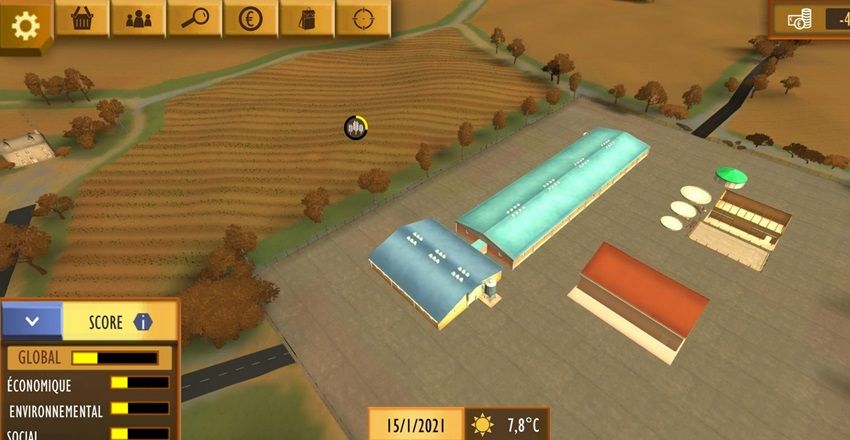
There's nothing simple about being a farmer. You have to plan your activities throughout the year, make sure you have the right machinery, maintain it and so on. All with a view to ecology. A serious French game seeks to teach agroecology.
Many serious games address the topic of sustainable development. Yet before such solutions were proposed, innovative people had to go against the social grain and fight to improve their environment. A humorous adventure game, hosted by the National Film Board, teaches children the attitudes they need to adopt to make a difference.
An original approach to depression. The game's metaphor is well conceived, a little dark and informative about a problem that affects millions of people.
The Englishes MOOC course was developed by an artist and is designed for anyone interested in the (English) language. It explores the history of English, its pronunciation, and its relationship to the art world.